The Carat Ladder: From Three to Twenty-Five
Carat weight is the first number every buyer learns and the last one anyone truly understands. A walk up the ladder, landing by landing — what each weight actually looks like, how its price behaves, and where the air gets thin.
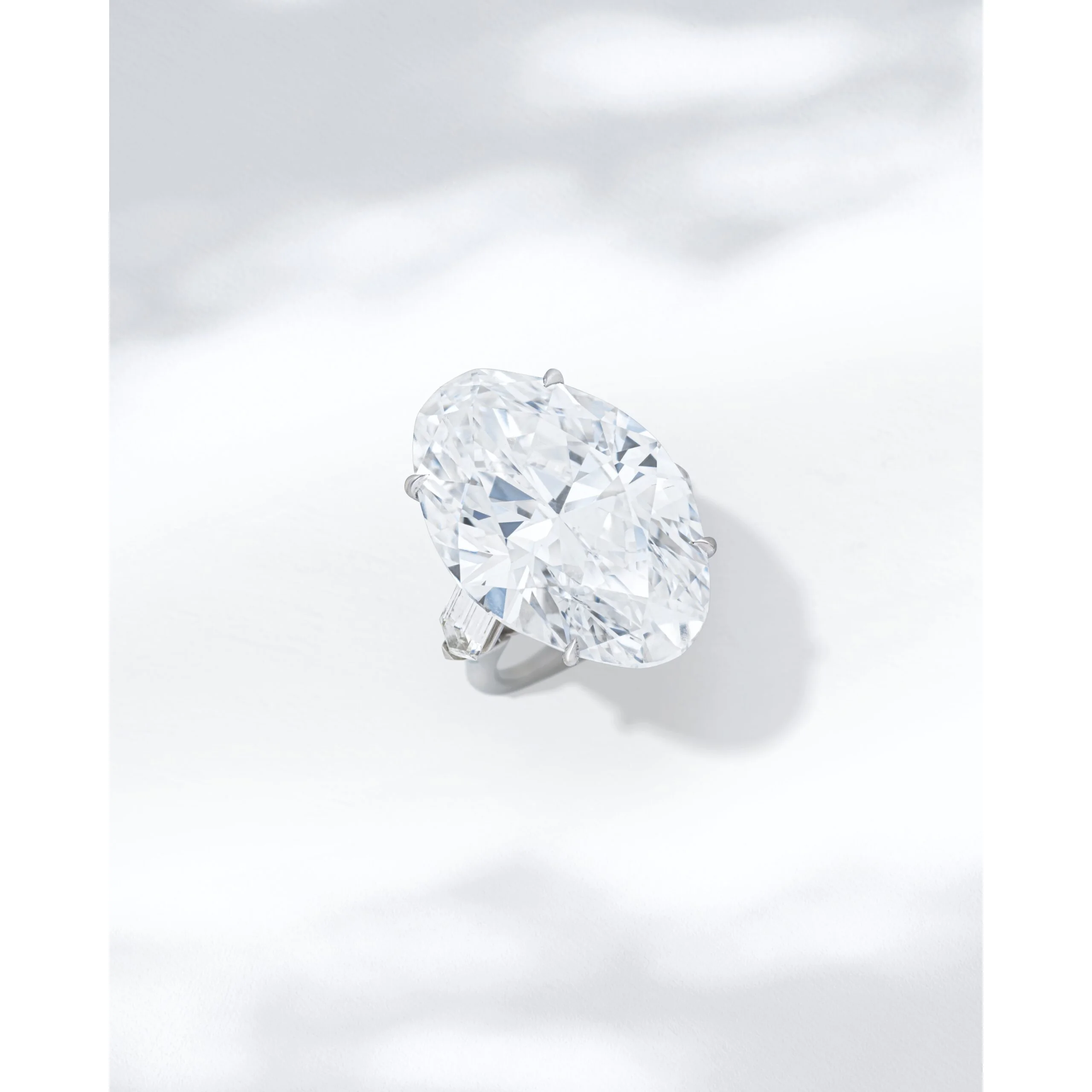
Nobody forgets their first carat conversation. A number that sounds like arithmetic turns out to be geography — a ladder whose rungs are spaced further and further apart the higher you climb, until somewhere past ten carats the ladder stops being a ladder and becomes an expedition. This guide walks it rung by rung, with the stones themselves as witnesses. Every photograph below is a piece from our own vault, shot against white, uncropped — the piece decides the frame.
Three carats: the threshold
Three is where a diamond stops being a detail and starts being the subject. On the hand, a well-cut three-carat stone reads across a dinner table; in conversation, it is the weight at which strangers stop guessing. It is also the last landing where the price curve behaves politely — a fine three-carat stone in the J colour range with VS clarity can be had in the tens of thousands, not the hundreds.
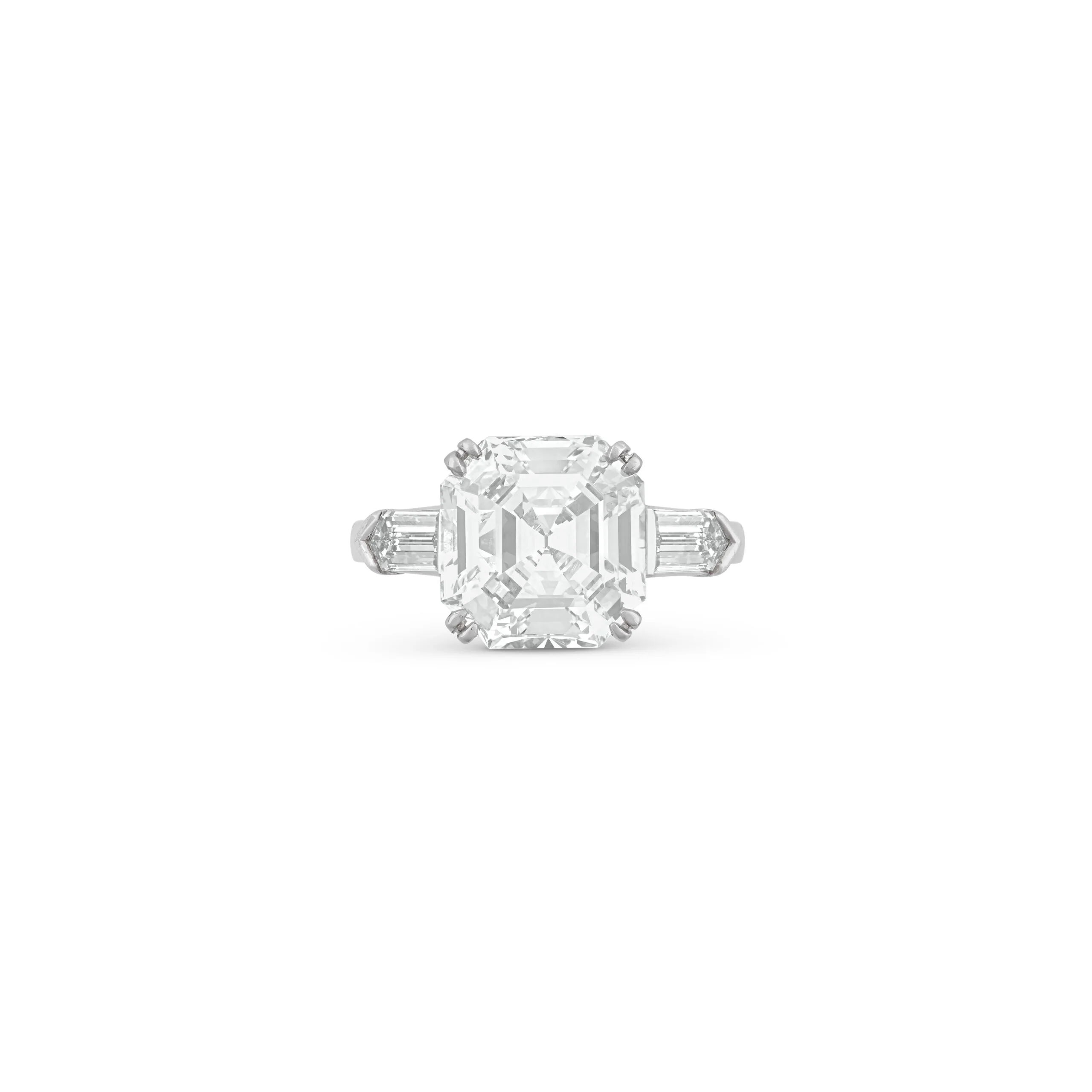
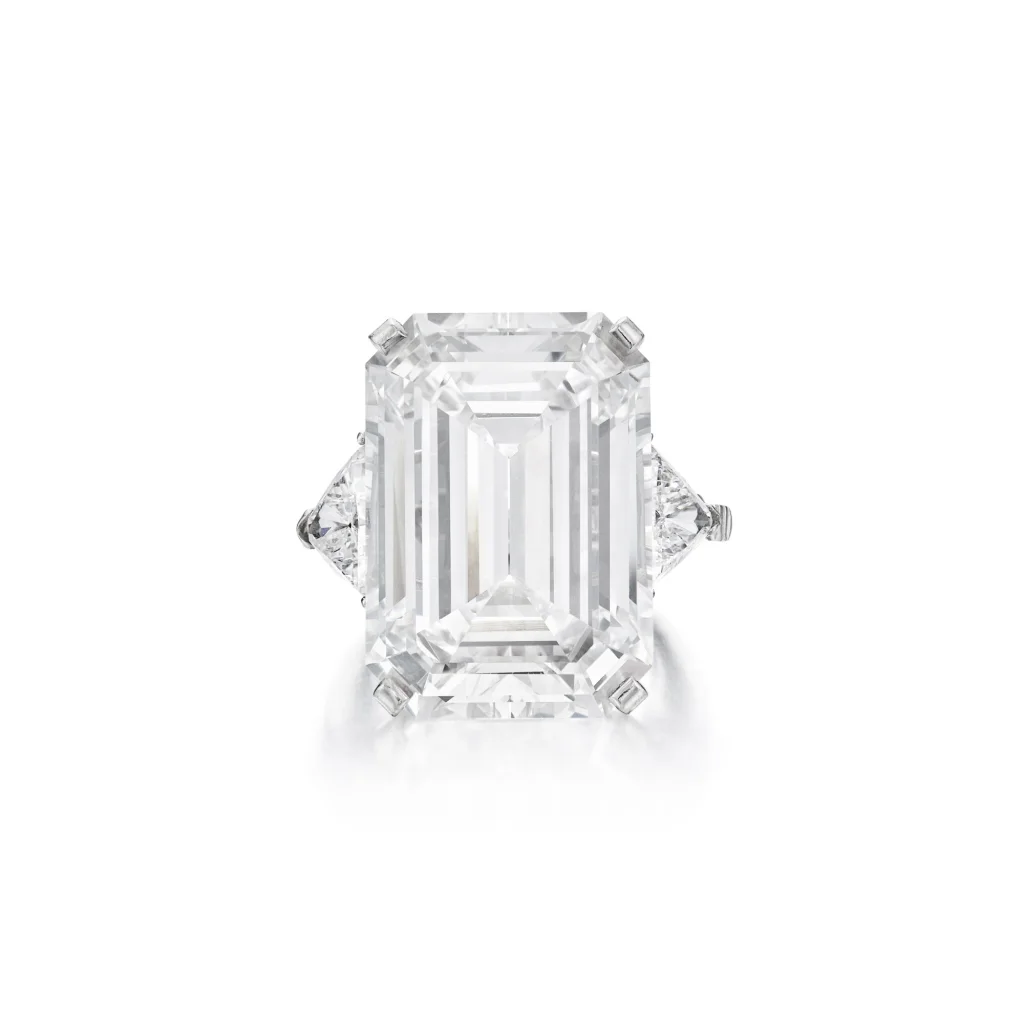
The three-carat Asscher above makes the case for the step cut at this weight: nothing hides in an Asscher, and at three carats there is finally enough window for the hall-of-mirrors effect to perform.
Four to five: the corridor begins
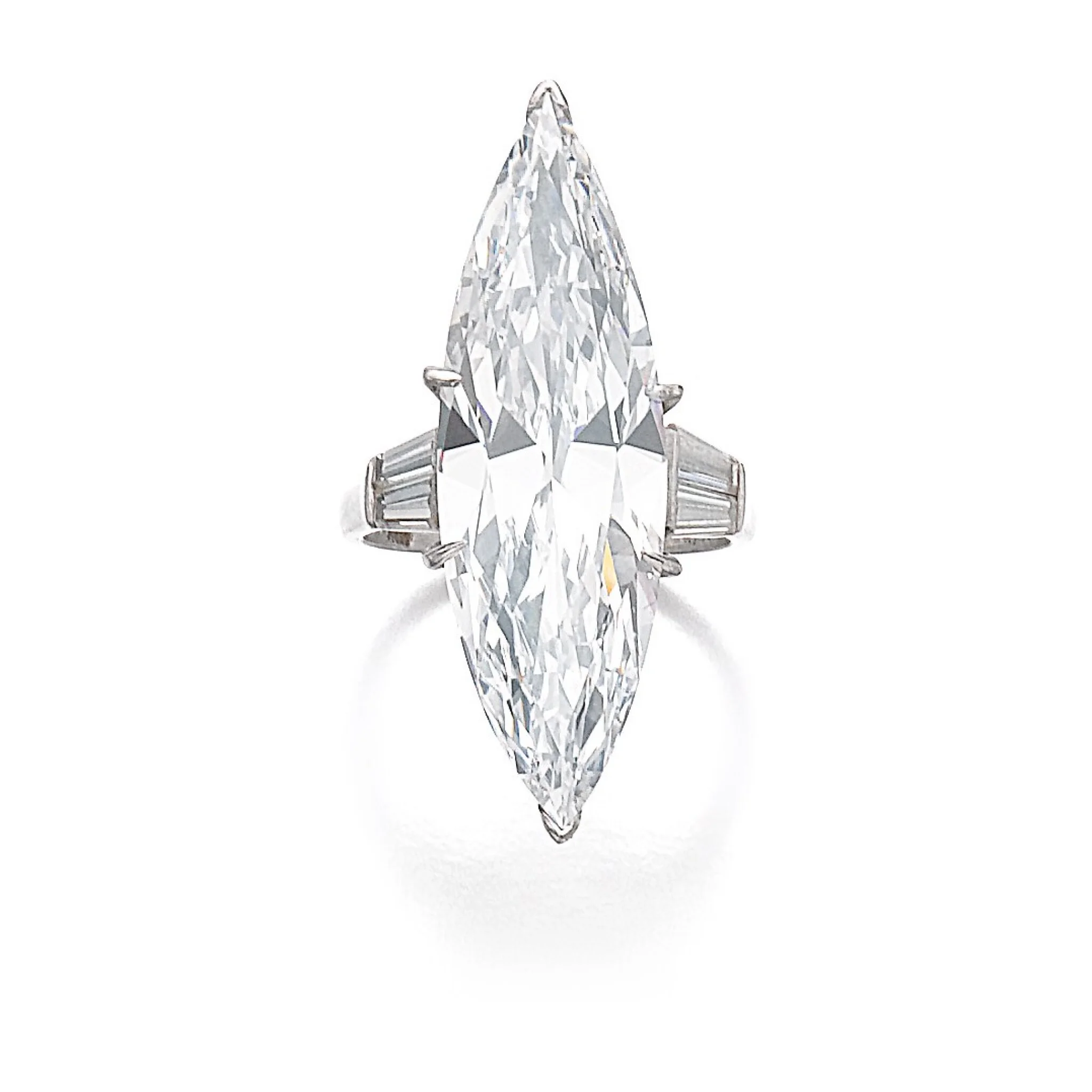
Between four and five carats the buyer enters what our Stone Market desk calls the quiet corridor — the weights serious American buyers actually pursue. Shape begins to matter as much as weight: elongated cuts spread their carats across the finger and read a full size larger.
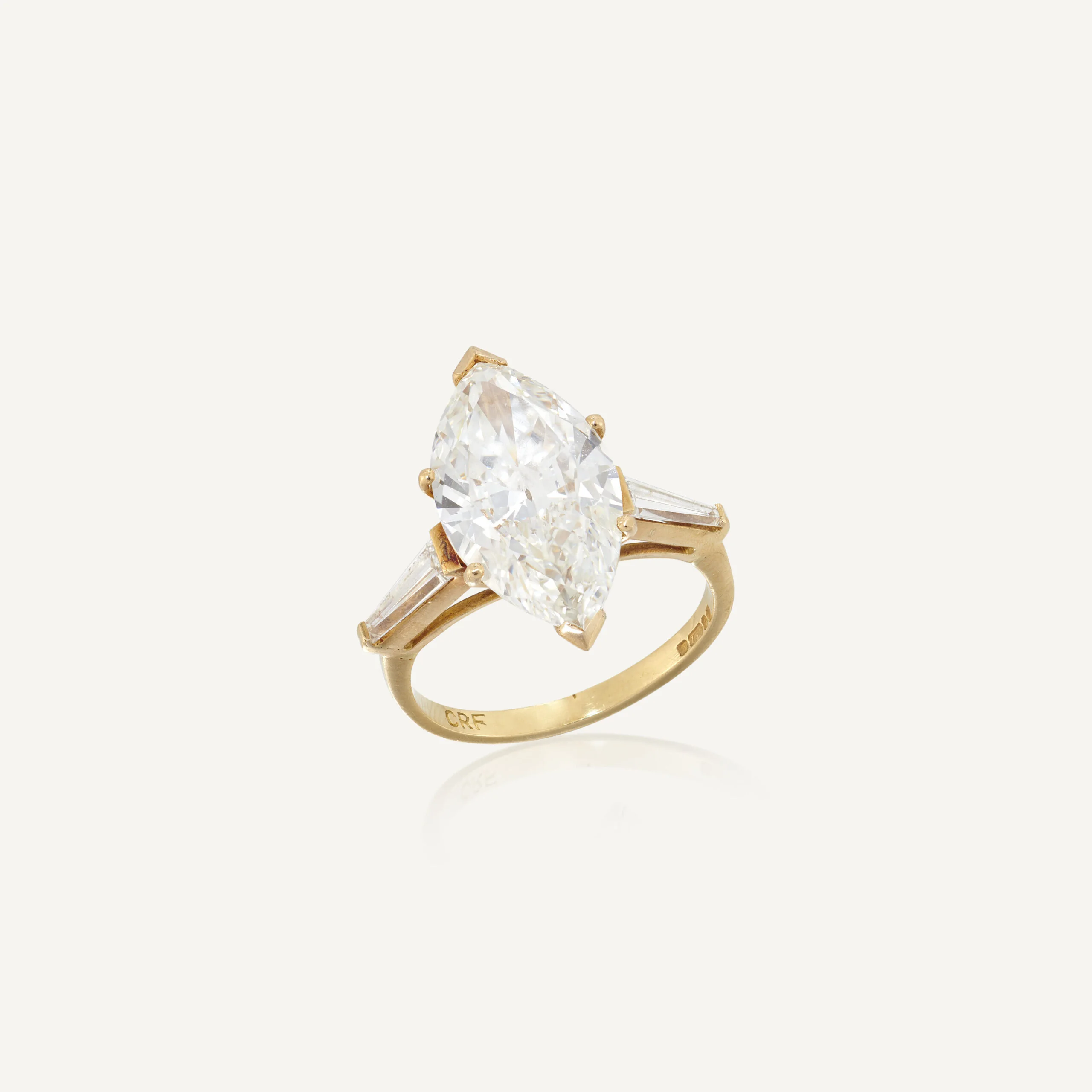
Below five carats you buy a diamond. Above it, the diamond starts buying its own vocabulary — papers, provenance, a seat at the table.
Seven: the first thin air
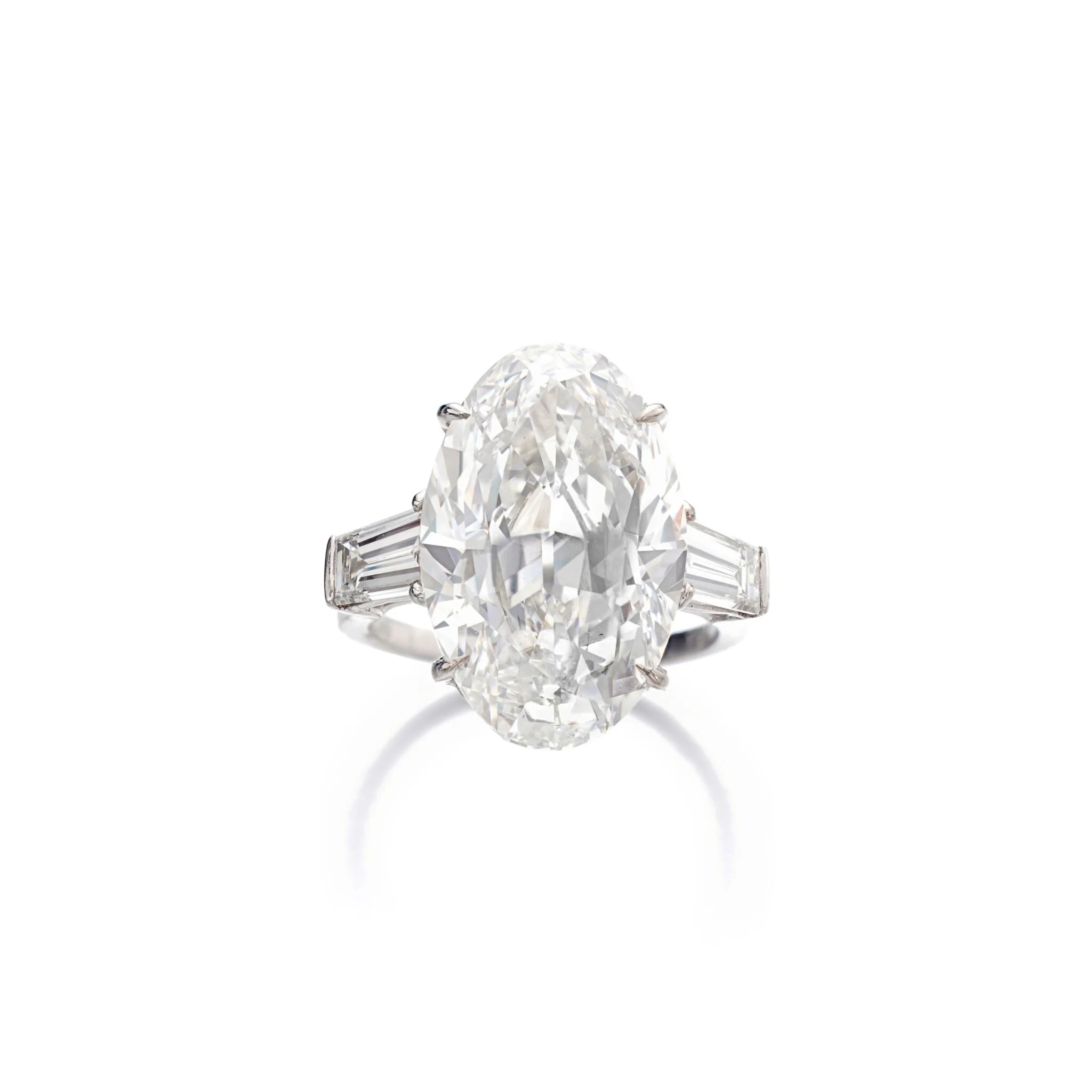
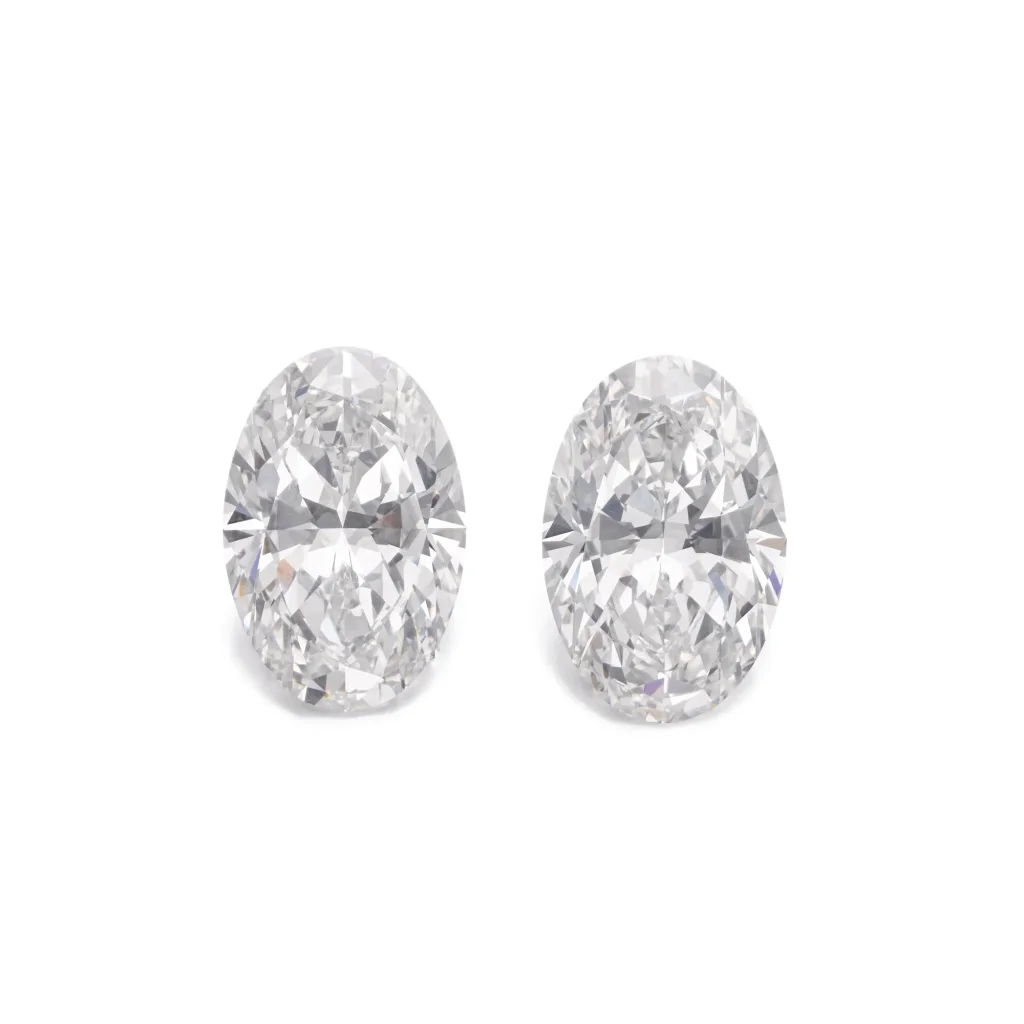
At seven carats the supply story changes. Fine rough that yields a seven-carat polished stone is rare enough that each one is negotiated, not shopped. Prices step rather than slope: the seven-carat oval below, VVS and brilliant white, is listed in the half-million register — roughly five times the price of a comparable three-carat stone for a little over twice the weight. The ladder is not linear; it never was.
Ten: the institution
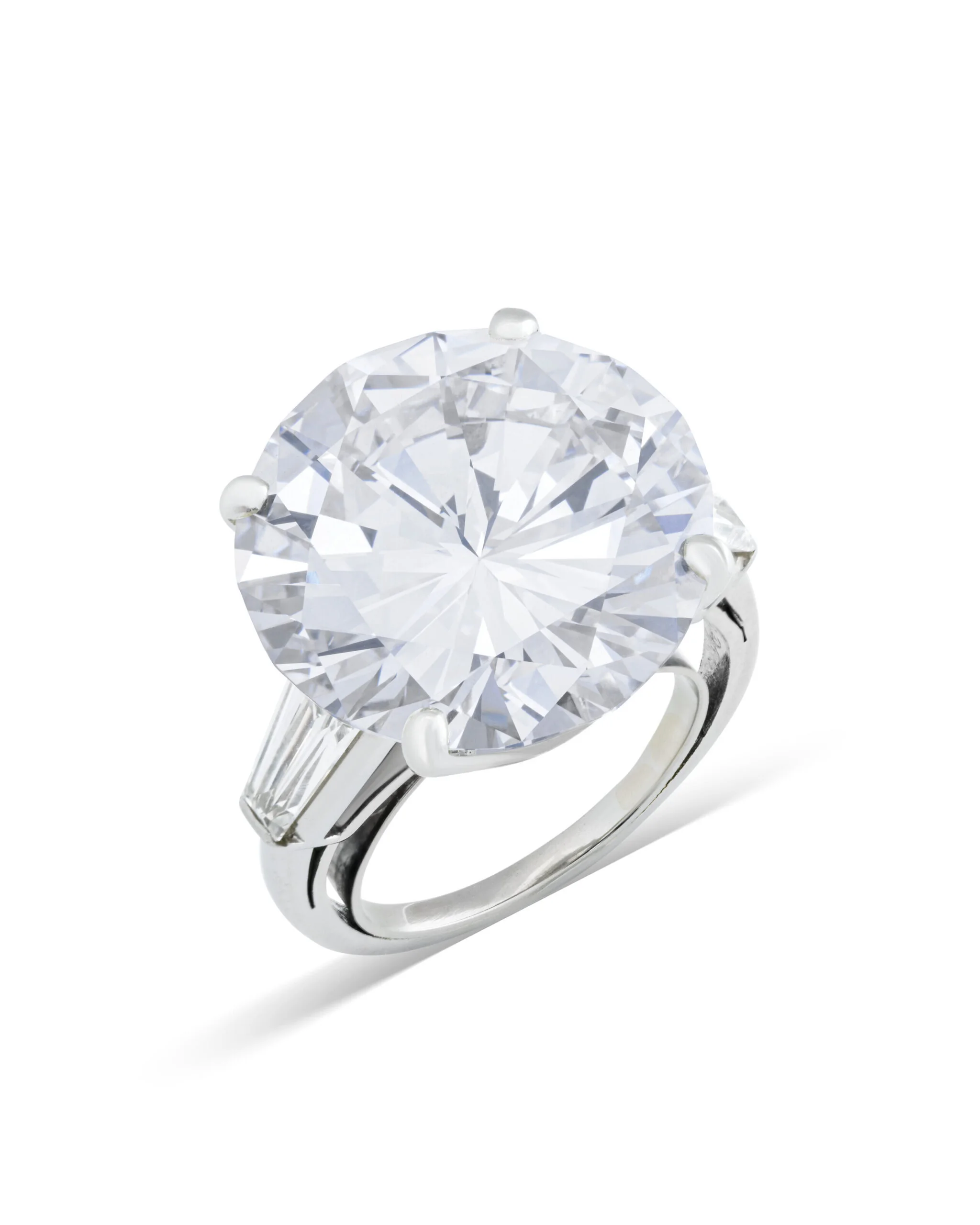
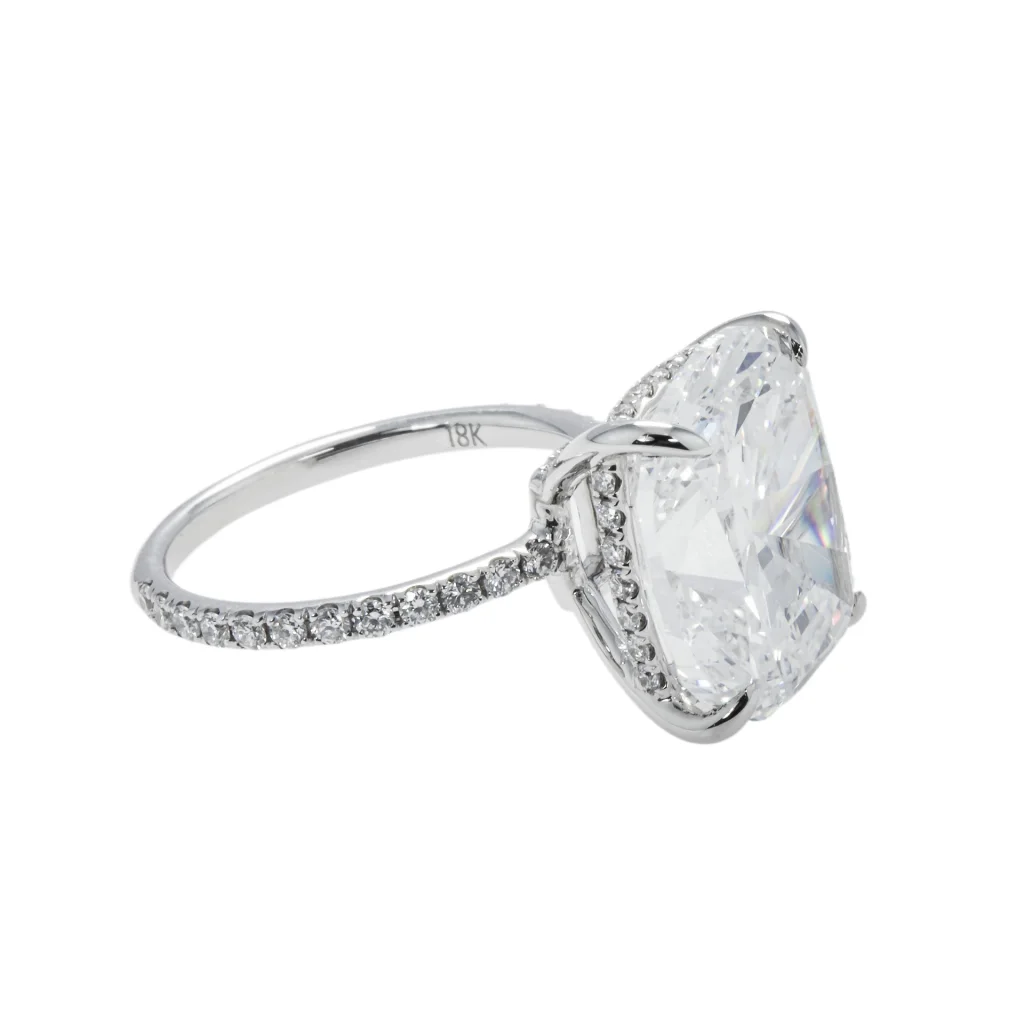
Ten carats is a word people say when they mean serious, and the stones live up to the reputation. On the hand a ten-carat round reaches nearly 14 millimetres across — the diameter of a dime is 17. This is the weight at which insurance underwriters ask for their own photographs and estates begin to list the stone as a named asset.
Fifteen and beyond: the expedition
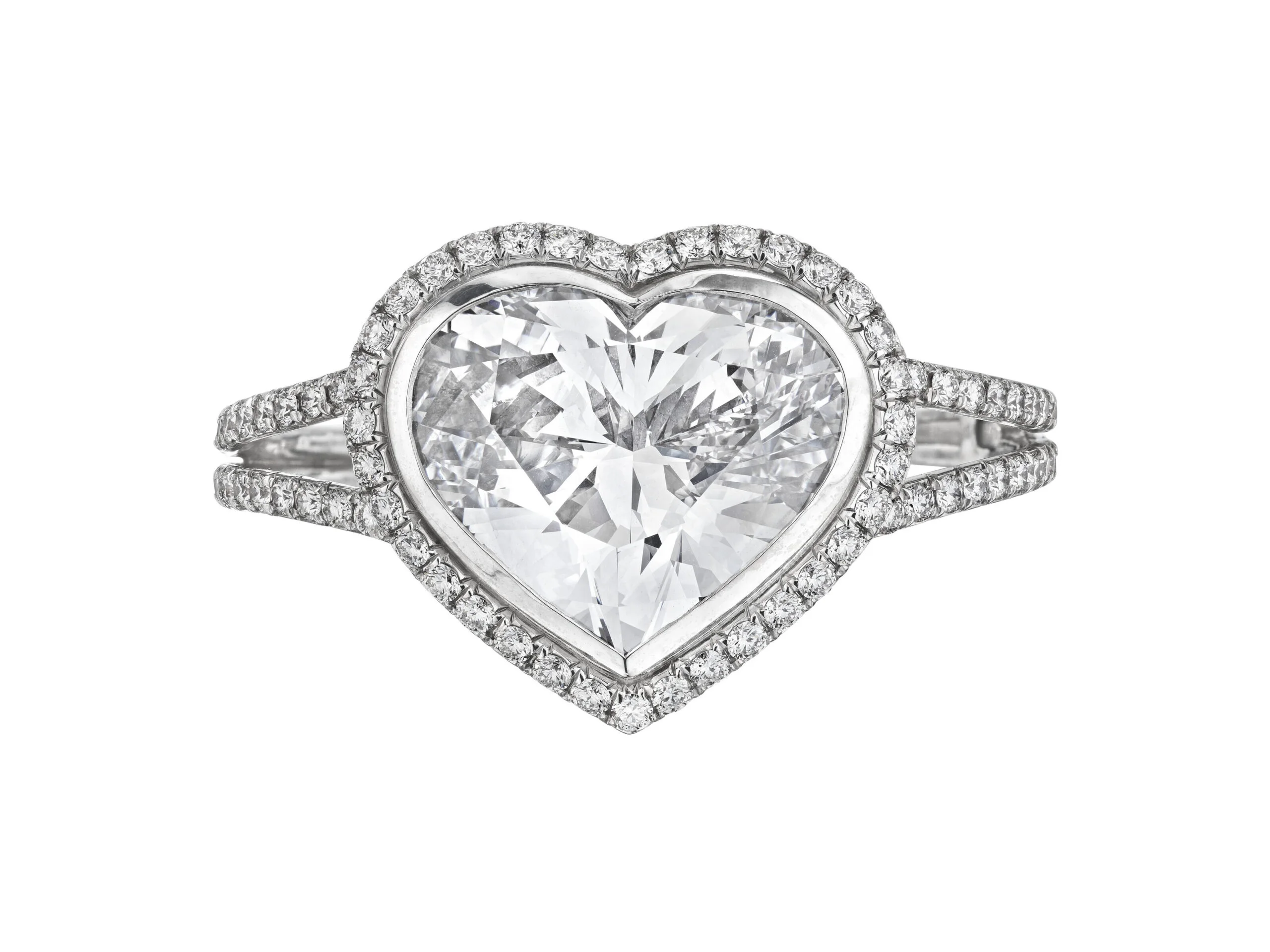
Past fifteen carats, comparison shopping ends because comparables end. Each stone is its own market, priced on its own biography — colour grade, clarity, whether it is a Type IIa chemical purity, and increasingly, whether anyone can find another like it at all.
And at the top of this ladder — for today — sits the twenty-five-carat class, where the oval in our cover image resides. Stones of this weight in D-Flawless grades are not purchased so much as succeeded to. They pass between vaults the way paintings pass between museums, and the price of admission is conversation, not comparison.
How to use the ladder
Three rules survive every rung. First, buy the cut before the carat — a superbly cut stone one rung down outshines a lazy one above it. Second, elongated shapes (oval, marquise, pear, emerald) return more visible stone per carat than any round. Third, when your budget lands between rungs, take the finer stone, not the heavier one; the ladder rewards quality at every landing. For the full arithmetic of a corridor purchase, our flagship guide Buying a 5-Carat Diamond in 2026 does the work, and the vault’s ring collection holds every rung of this ladder in inventory, photographed and papered.
The Stones in This Story
From the Legacy vault — each one-of-a-kind, independently certified.

Our atelier sources rare stones privately — tell us the cut, the colour and the moment.
More from Education
 Education · The Measure
A Carat Is a Weight, Not a Size
The most misunderstood word in jewellery measures nothing you can see. A carat is 200 milligrams on a…
 Education · The Report
Reading a Ten-Carat Diamond: What the Report Settles, and What Only the Eye Can
At ten carats, the grading report stops being paperwork and becomes the first act of connoisseurship. It settles…
 Education · The Duel
Emerald Cut vs. Round Brilliant: The Honest Comparison
One cut is engineered to return every photon it is given; the other declines to perform at all…
The LEGACY List
One letter a week — the stones, the stories, the numbers that matter. Discretion is the house rule.