Anatomy of a Maharaja Necklace
The great court necklaces of India were not jewellery but engineering — transformable, hierarchical, built to outrank rooms. One such piece resides in our vault. We took it apart, on paper, to show how the grammar works.
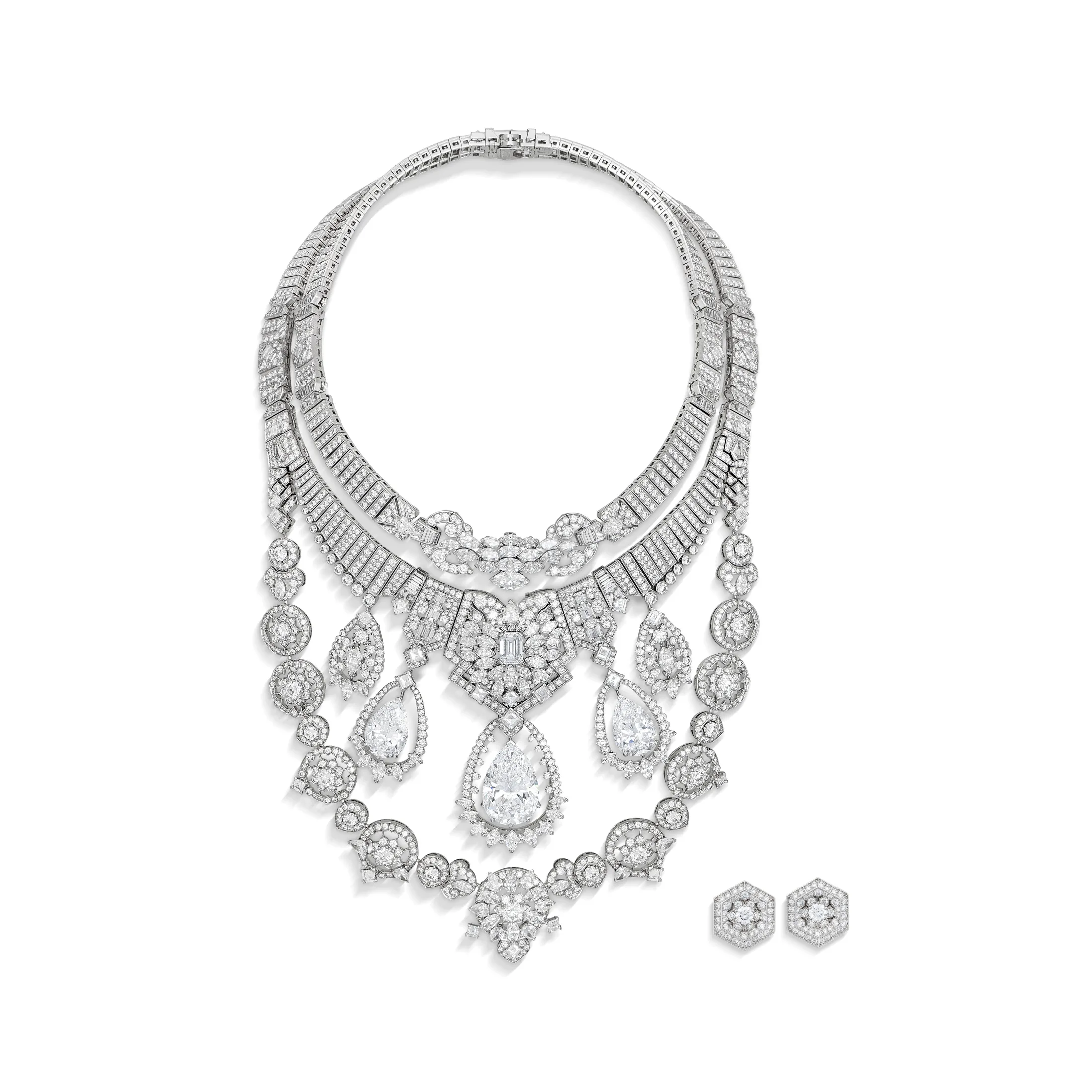
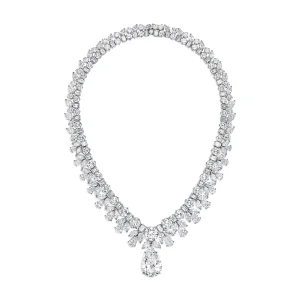
Our Archive has already told the story of the greatest commission of them all — the Patiala necklace, a century on — as history. This piece tells the same story as engineering. In the vault sits a necklace built in the full court grammar: pear brilliants descending to a 25.50-carat principal stone, convertible to earrings, wearable four ways. The trade calls such objects transformable. The courts that invented them called them something more accurate: infrastructure.
Rule one: the necklace outranks the dress
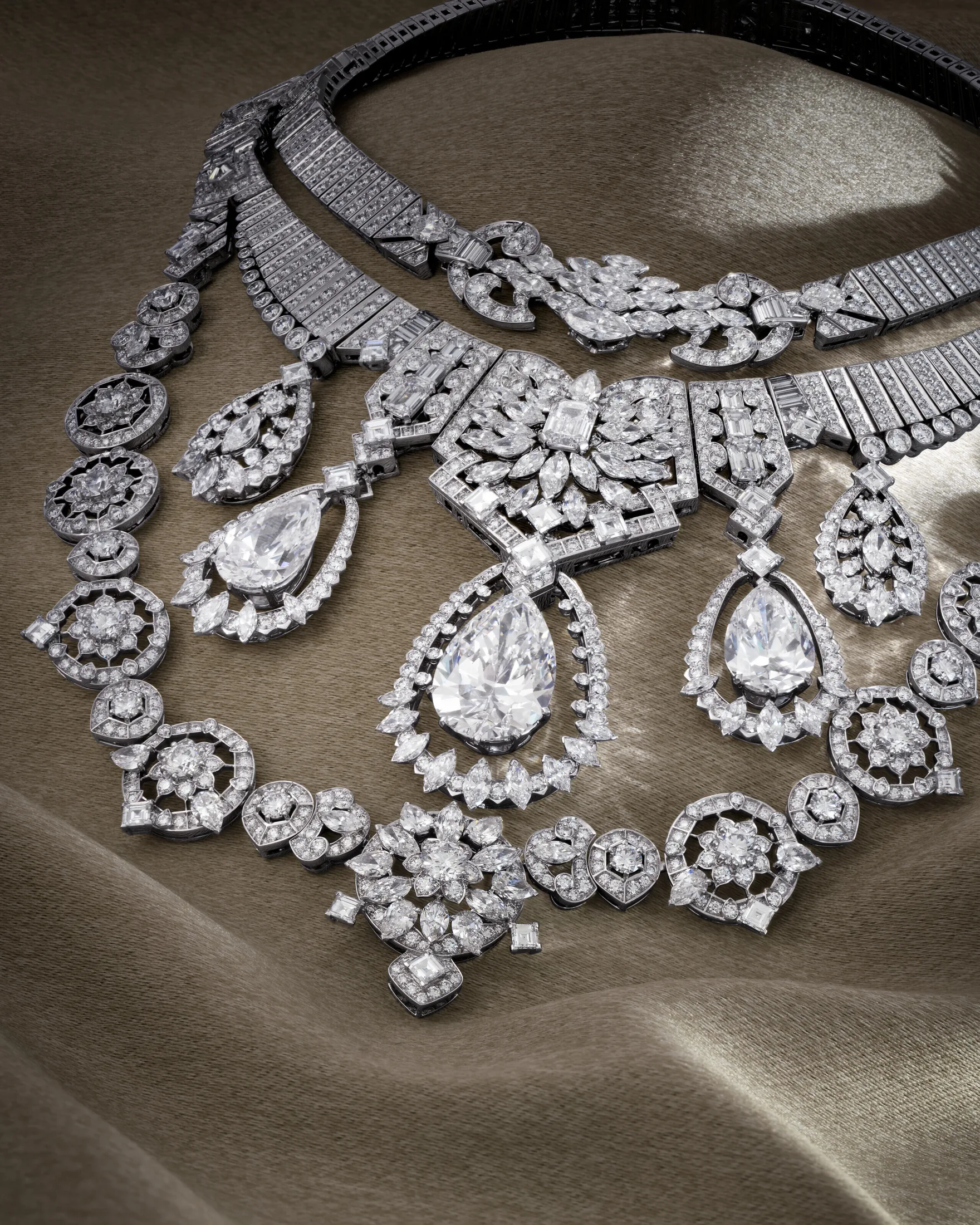
European jewellery was designed to finish an outfit. Court jewellery of the maharajas was designed to be the outfit — worn over brocade, layered piece upon piece, the textile merely the gallery wall. That is why the great Indian necklaces read as architecture: bibs, tiers, cascades. Nothing about them is an accent. The composition assumes it is the most important object in any room it enters, and the stones are graded to sustain the claim.
Rule two: one piece, many offices
The transformable principle is the court’s great practical invention. A necklace that divides into earrings and a shorter collar is not a convenience — it is a treasury being worn. Courts commissioned jewels the way states commission fleets: capital had to serve multiple deployments. The vault’s Maharaja necklace detaches its principal drops to serve at the ear; the remaining line holds rank on its own. Four configurations, one treasury entry.
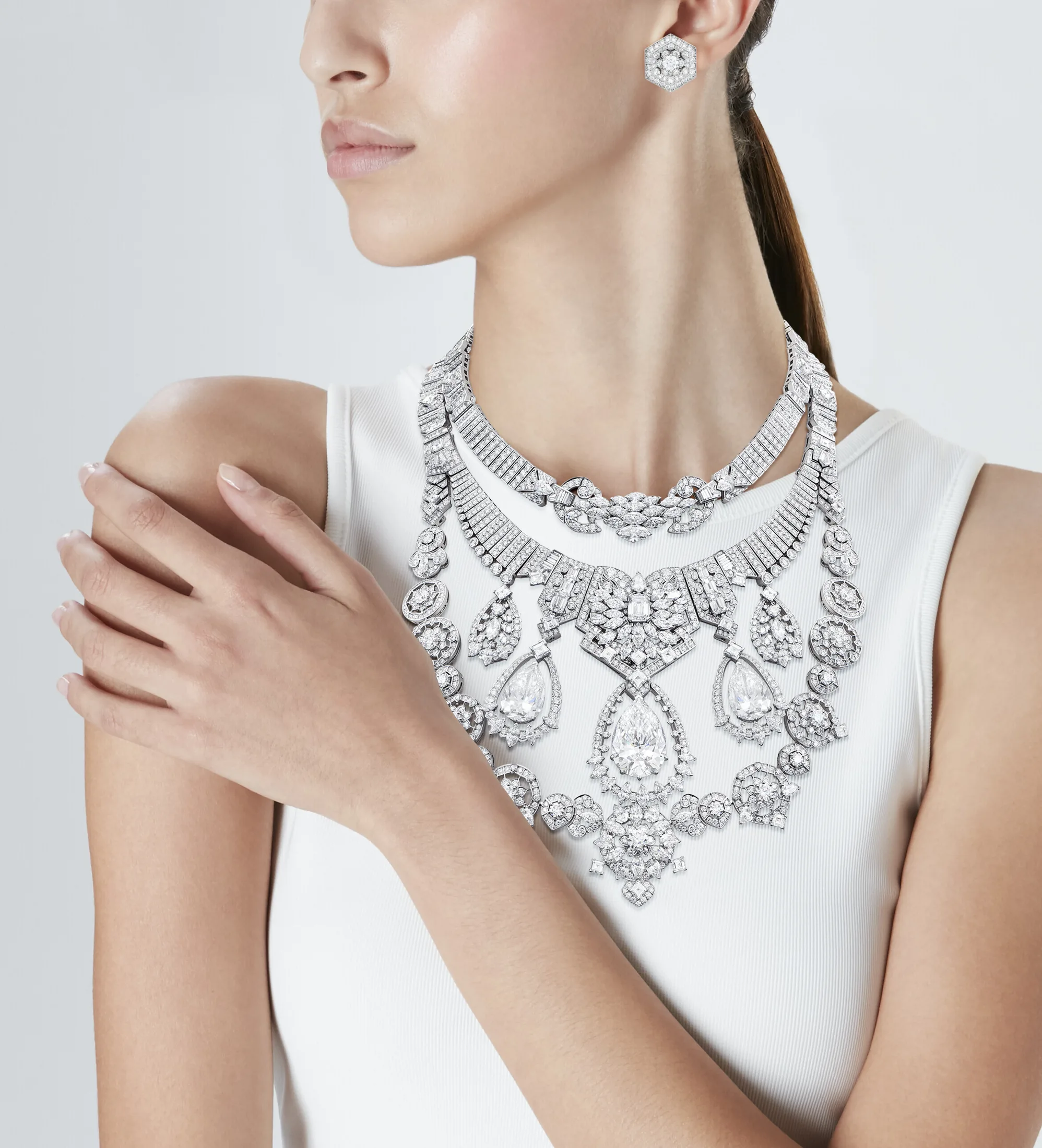
European jewels were designed to be worn. Court jewels were designed to be deployed.
Rule three: the principal stone is a title, not a decoration
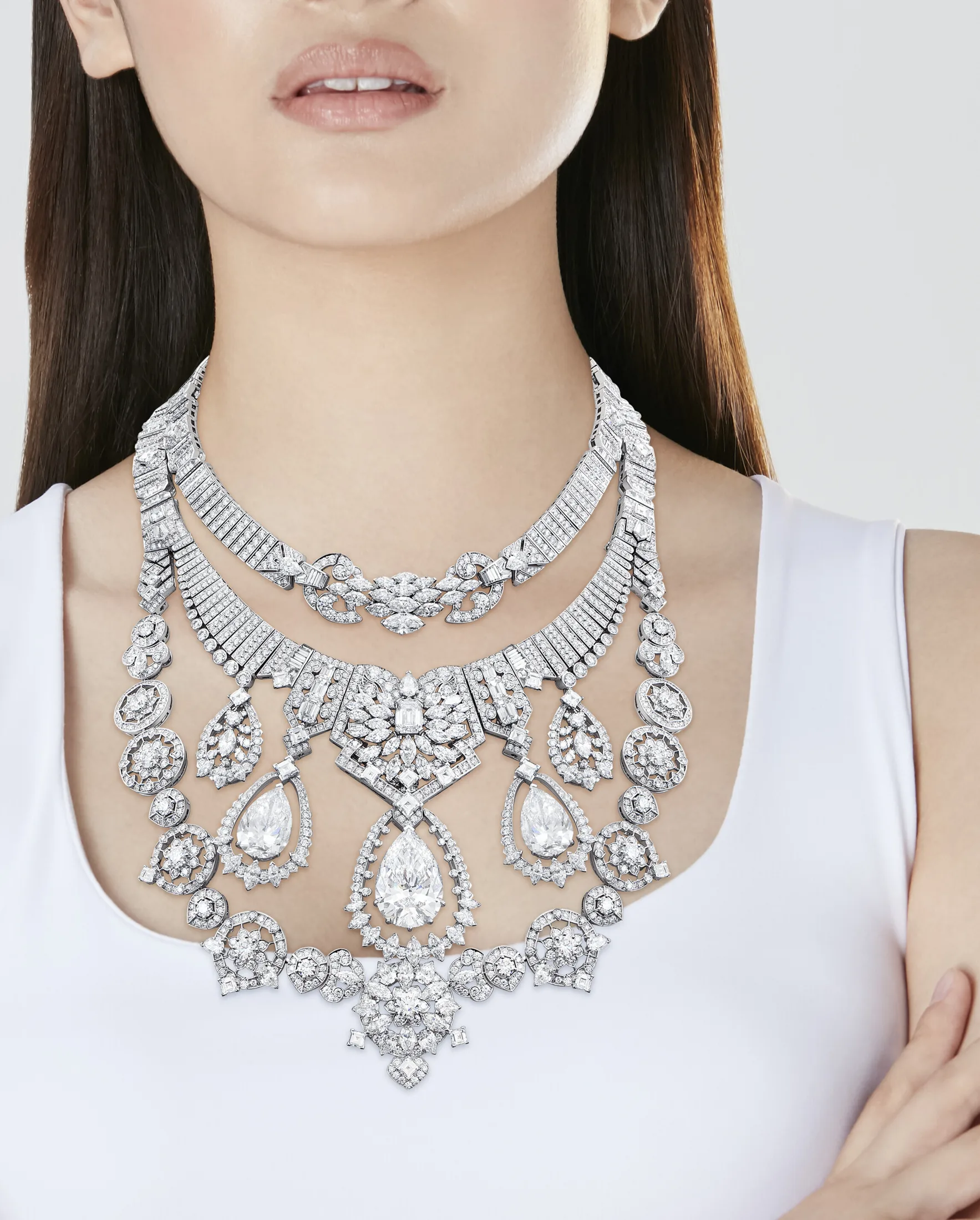
Every court necklace is a monarchy in miniature: lesser stones exist to establish what the principal stone rules. At 25.50 carats, the pear brilliant at the centre of the vault’s example is not the largest element by accident — the entire graduation exists to walk the eye there and hold it. Remove it and the necklace does not become smaller; it becomes headless. This is why fine transformables are matched with such fanatical discipline: any stone promoted to the centre must be able to govern.
What the anatomy teaches a modern collector
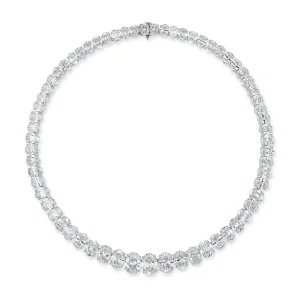
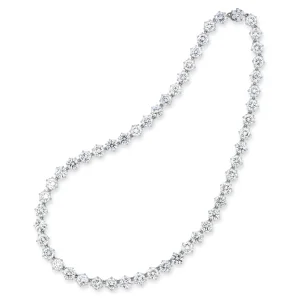
Three lessons survive the durbars. Buy compositions, not accumulations — a piece with internal hierarchy holds attention and value in a way a parade of equal stones cannot. Prize convertibility — the transformable is having a quiet modern revival for exactly the court’s reasons, one treasury serving many evenings. And respect the grammar when wearing it: a piece built to outrank rooms should be given rooms worth outranking, and nothing else at the neck, wrist or ear competing for the same office. The full court register lives in the vault’s necklace collection — led by the anatomy lesson itself — and the dynasties that wrote the grammar hold court in the Icon Archive.
The Stones in This Story
From the Legacy vault — each one-of-a-kind, independently certified.
Our atelier sources rare stones privately — tell us the cut, the colour and the moment.
More from From the Archive
 From the Archive · The Long View
The Rivière: Three Centuries on a Single Thread
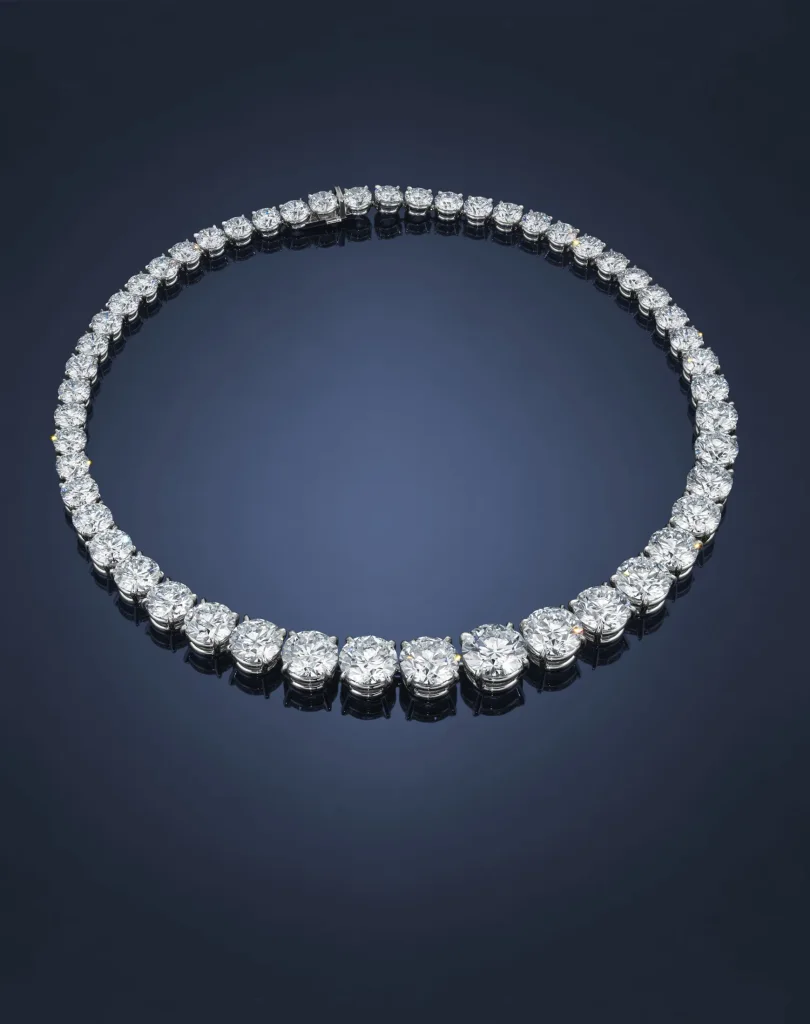
It is the simplest idea in jewellery — matched diamonds in a single graduated line — and it…
 From the Archive · An American Original
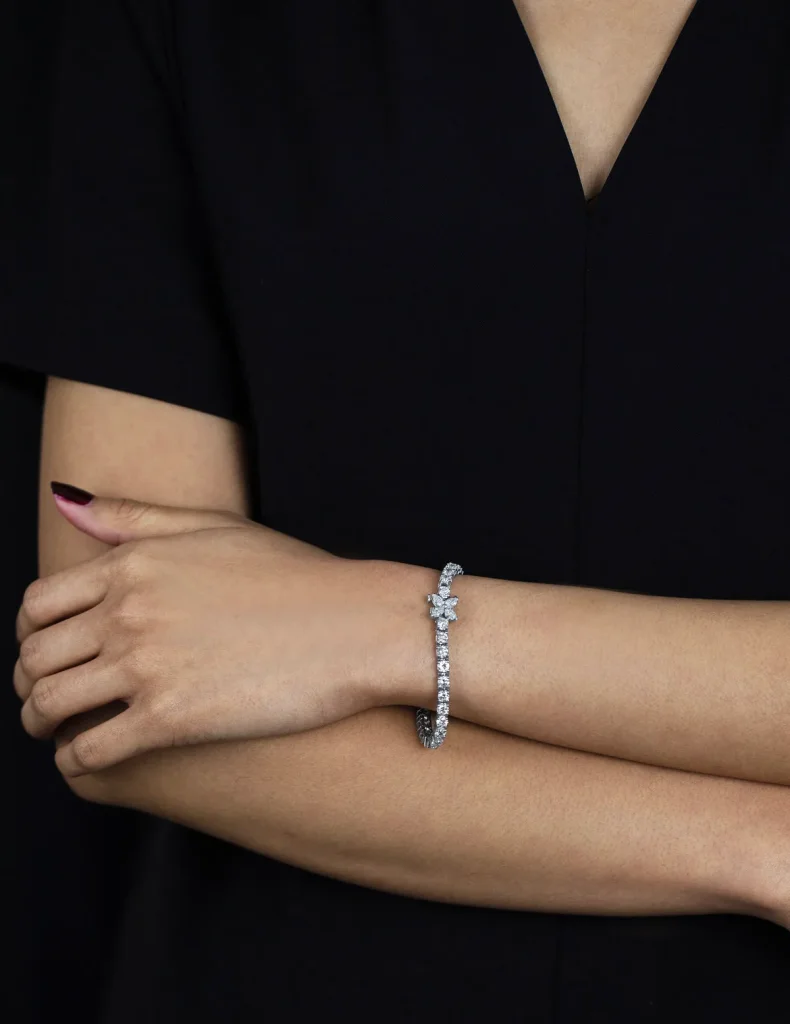
The Bracelet That Stopped the US Open
A clasp failed on a Flushing Meadows hardcourt, a champion refused to play on without her diamonds, and…
 From the Archive · Provenance
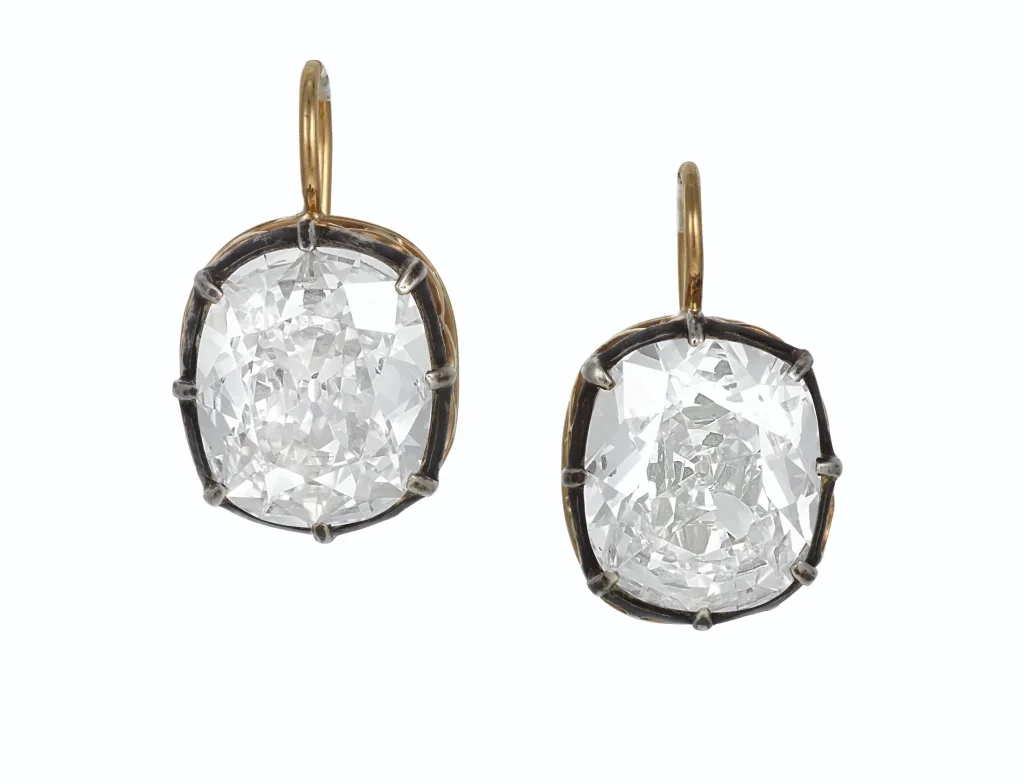
A Short History of the Engagement Ring
Five and a half centuries ago an Austrian archduke set a fashion no empire has managed to end.…
The LEGACY List
One letter a week — the stones, the stories, the numbers that matter. Discretion is the house rule.