The Rivière: Three Centuries on a Single Thread
It is the simplest idea in jewellery — matched diamonds in a single graduated line — and it has outlived every empire that wore it. A river of light, followed from Georgian candlelight to the present vault.
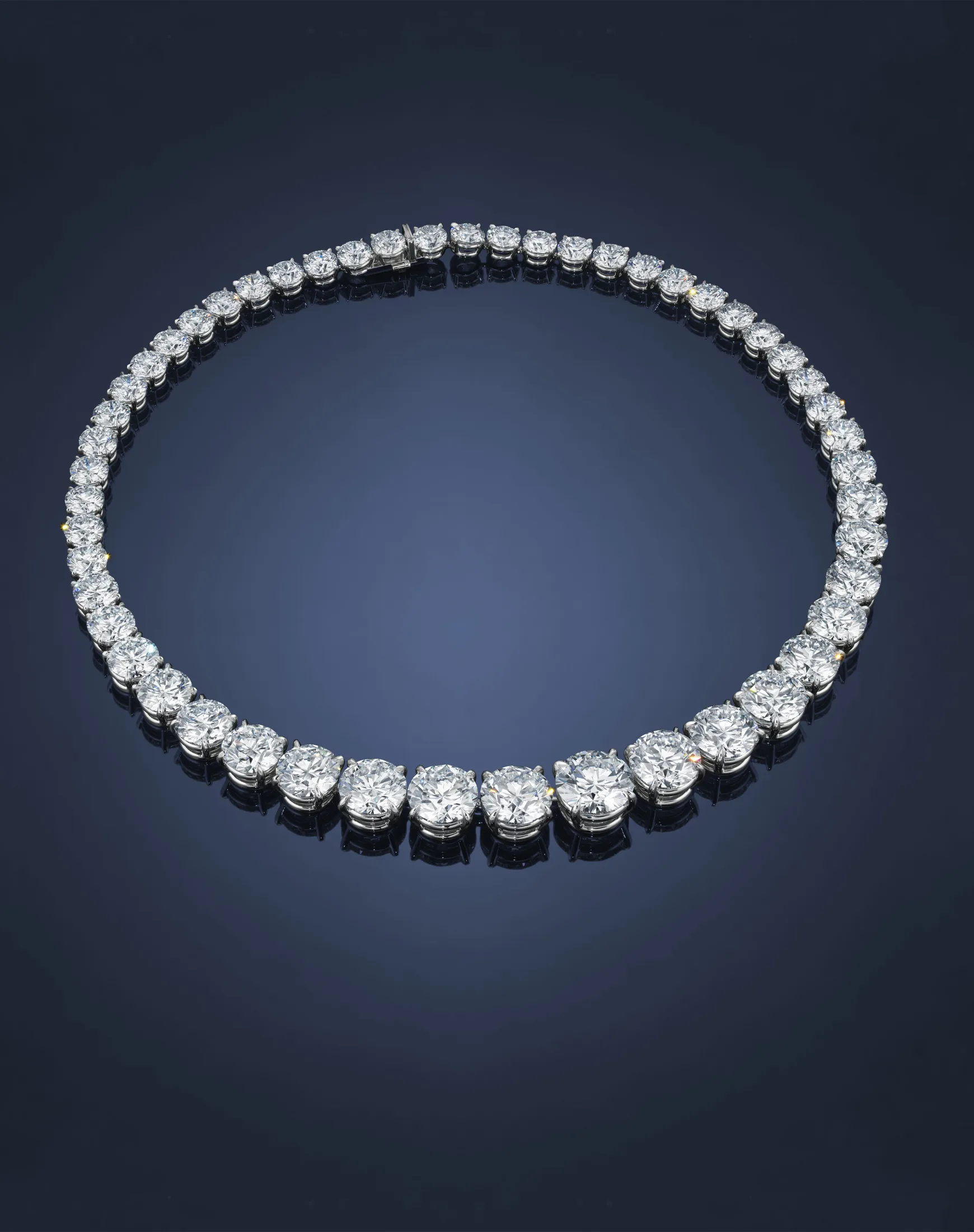
Every category of jewellery is an argument, and most arguments date. The brooch argued for the bodice; the ferronnière argued for the forehead; both lost. The rivière — French for river, a single graduated line of matched diamonds around the neck — has argued the same thing since the seventeen-sixties and has never once been out of print. Its argument is the simplest in the trade: enough, in a row, is everything.
Candlelight: the Georgian river
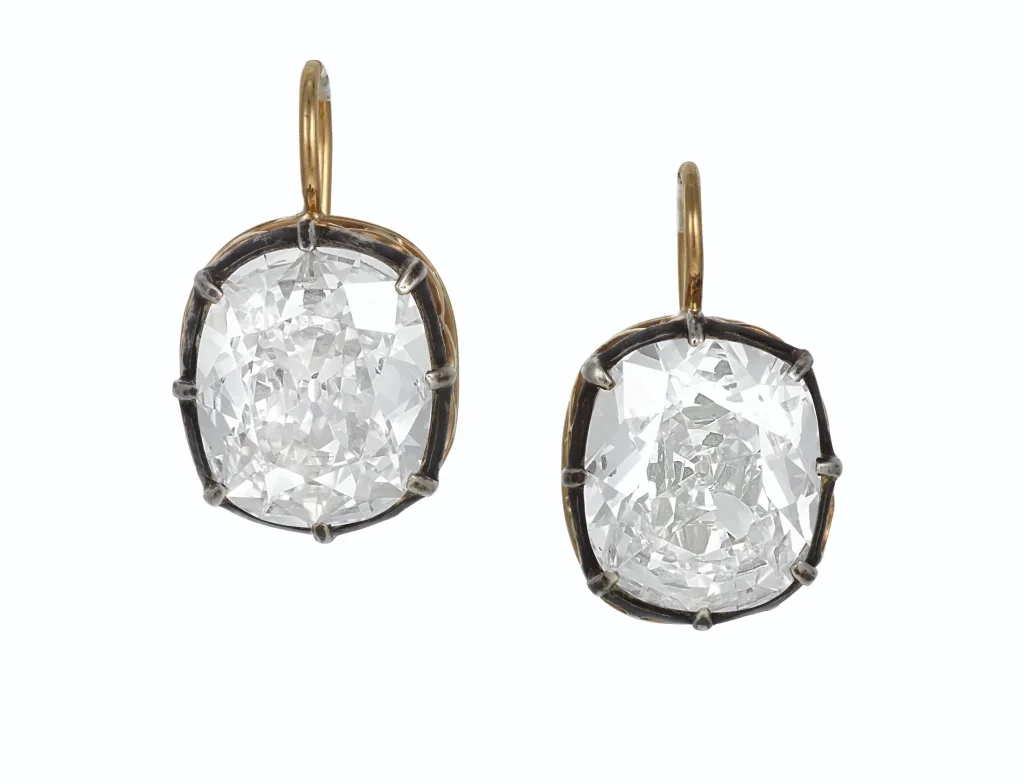
The rivière was born for rooms lit by flame. Georgian jewellers set old-cut stones in closed silver backs lined with foil, and in candlelight the effect was said to move like water — the name followed the effect. A rivière then was the most expensive sentence a family could write: matched stones, in an age before mines were industries, took a generation to assemble. It was worn by women whose necklaces outranked their titles.
Electricity: the river learns transparency
Two inventions remade the form. Open-back settings let daylight through the pavilion for the first time, and platinum — jewellery’s great structural revolution — let the stones appear to float with almost no visible metal. The rivière shed its foil and its secrecy together. By the nineteen-twenties it had become what it remains: the definitive formal necklace, the piece against which every gala photograph is quietly measured.
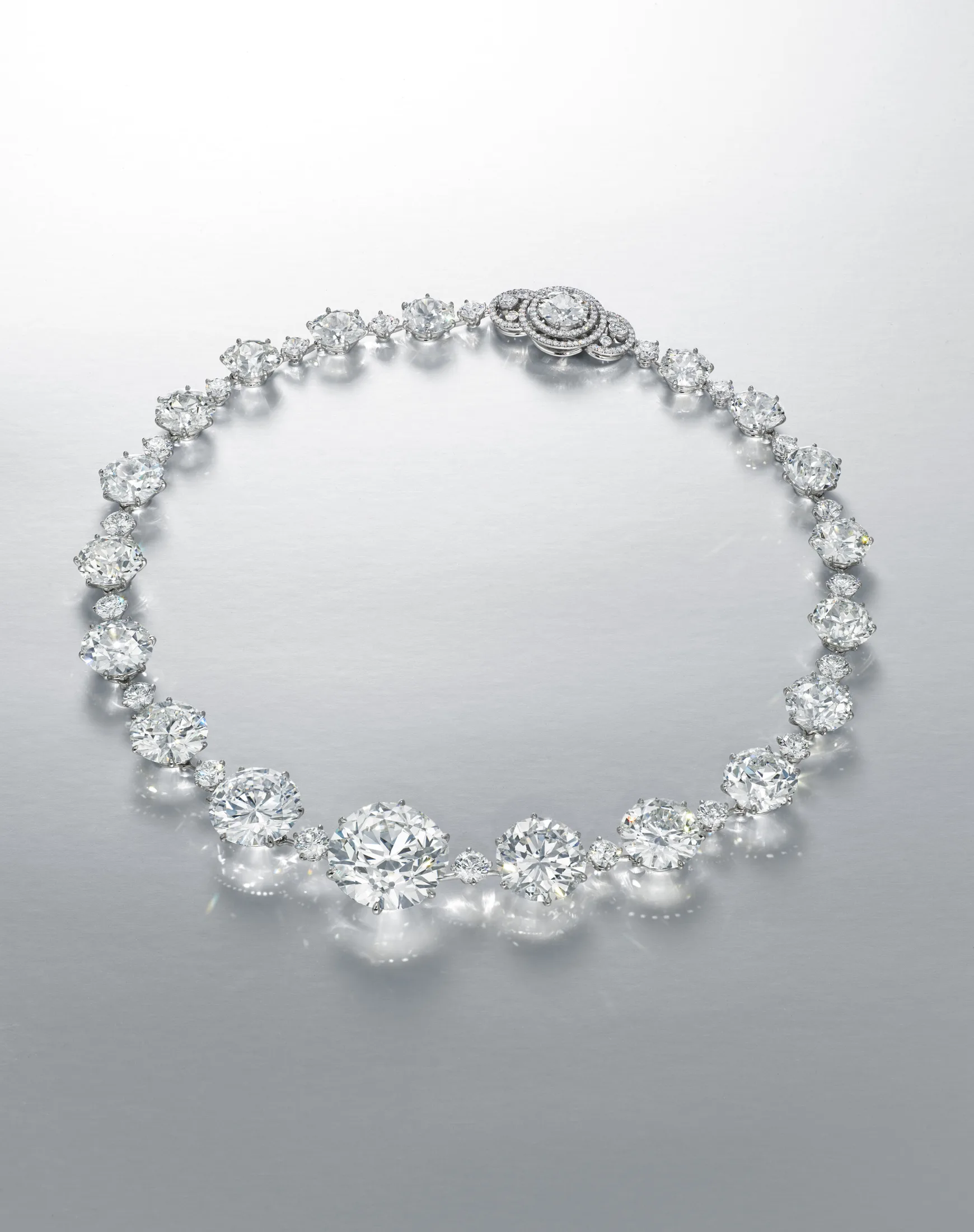
Fashions argue with each other. The rivière has spent three centuries declining to join the conversation.
The grammar of the river
What separates a rivière from a merely expensive necklace is discipline in three clauses. Graduation: stones swell toward the centre in a curve the eye reads as motion. Matching: colour and clarity must hold hands down the entire line — one warm stone breaks the river like a dam. And continuity: no pendant, no station, no interruption; the line is the jewel. The fifty-one-stone platinum rivière in our cover image holds all three clauses across six carats of graduation, which is why it reads as one object and not fifty-one.
The river now
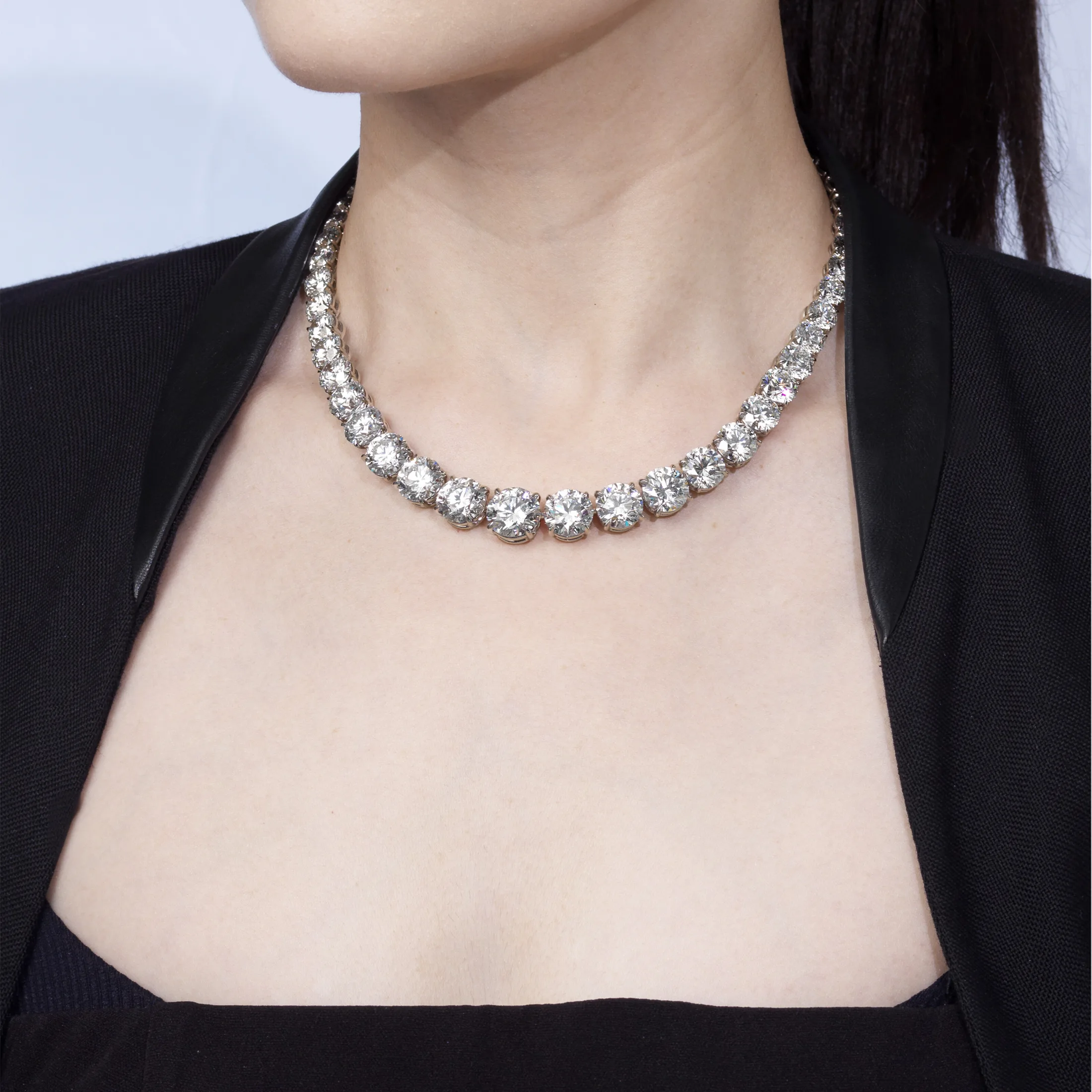
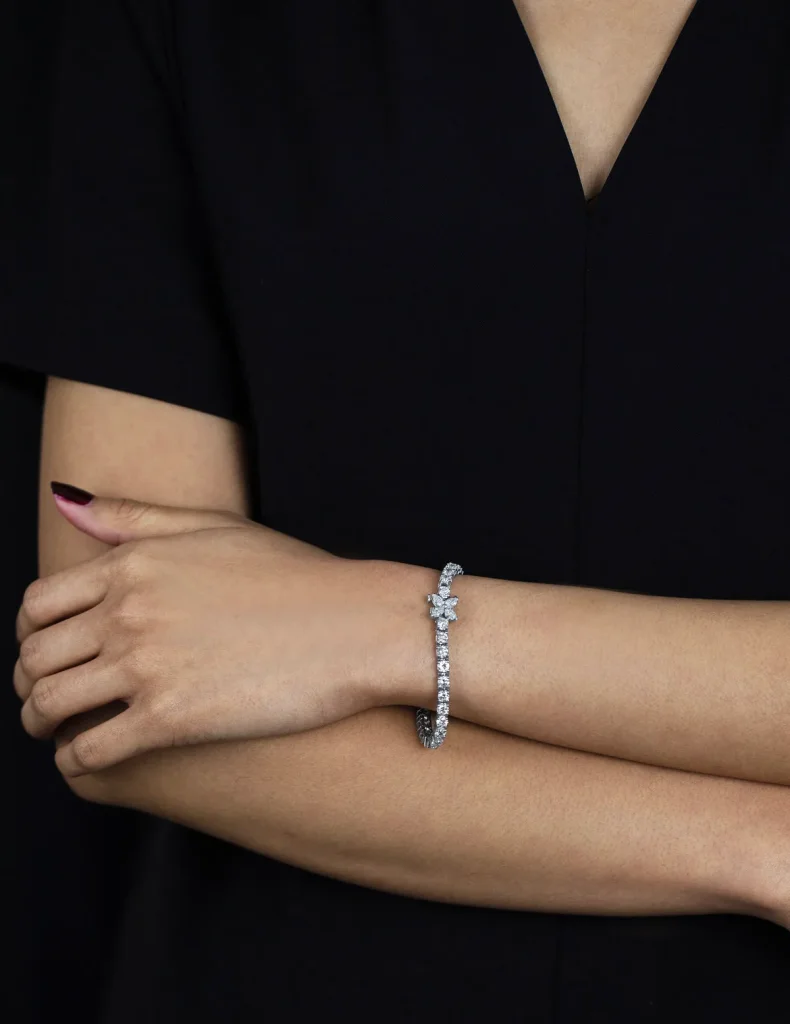
The present century wears the rivière two ways. The formal river survives intact — stones of consequence, platinum, worn against skin exactly as 1925 intended. And a supple descendant, the tennis line, has carried the idea into daylight; our Archive desk told that American story separately. Between the registers sits the rivière’s quiet advantage: because the form spreads its weight across many stones rather than one, forty carats of river carries the presence of great weight in a form more wearable, and more freely worn, than any single stone of the same total — three centuries of magnificence, and still one of the most generous ideas in the necklace vault.
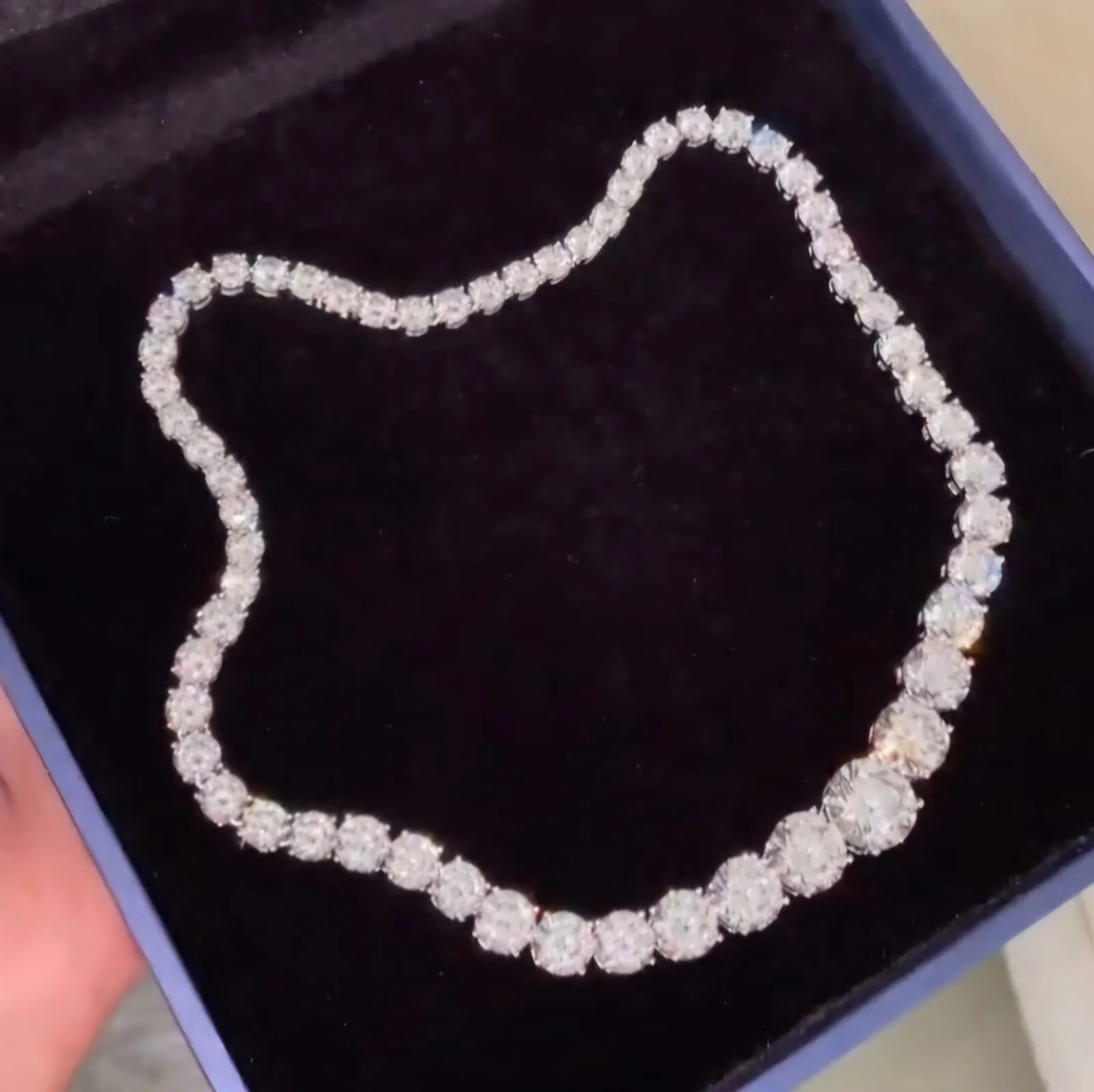
Three centuries, one thread, no revisions. Some ideas arrive finished.
The Stones in This Story
From the Legacy vault — each one-of-a-kind, independently certified.
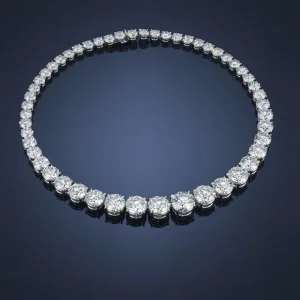
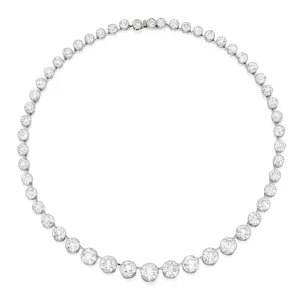
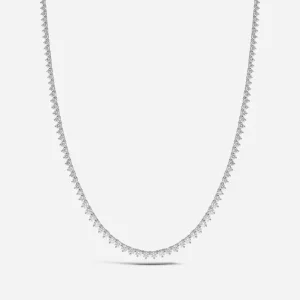
Our atelier sources rare stones privately — tell us the cut, the colour and the moment.
More from From the Archive
 From the Archive · The Object Lesson
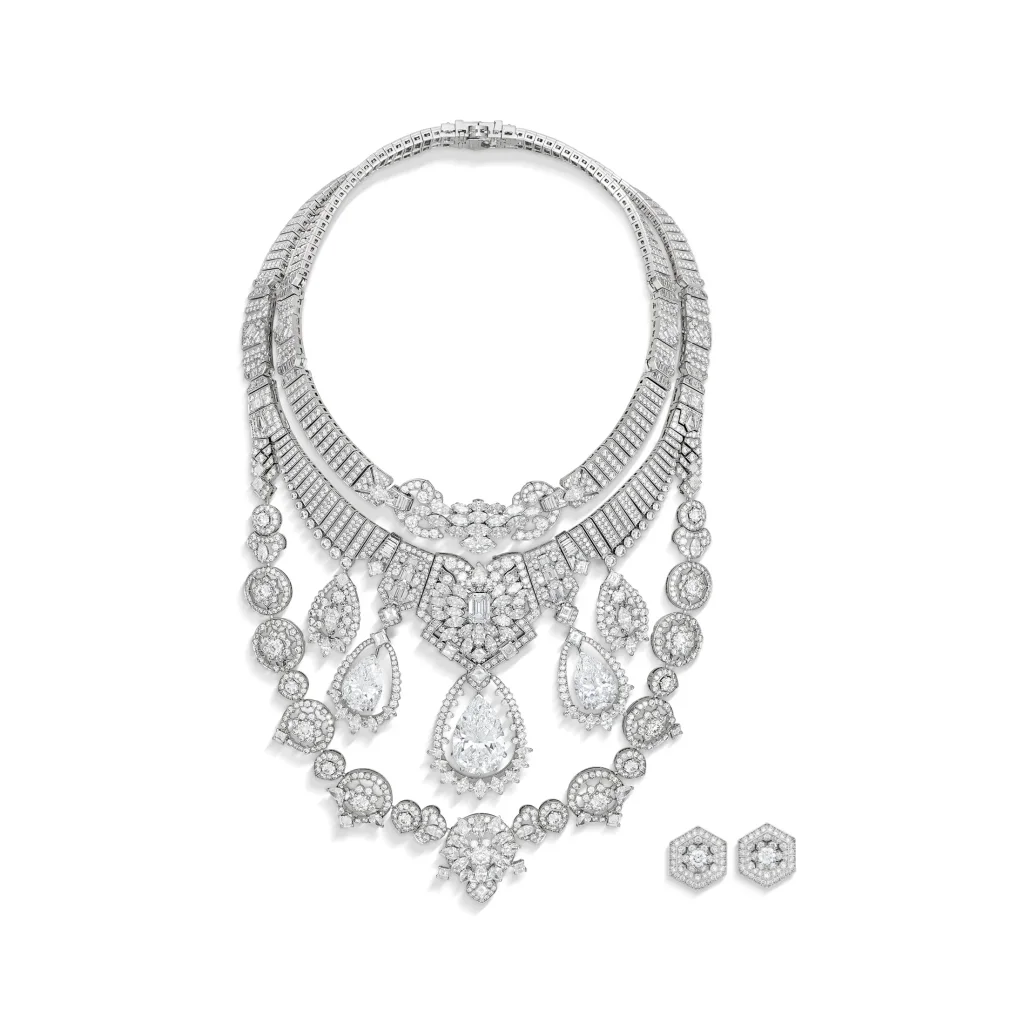
Anatomy of a Maharaja Necklace
The great court necklaces of India were not jewellery but engineering — transformable, hierarchical, built to outrank rooms.…
 From the Archive · An American Original
The Bracelet That Stopped the US Open
A clasp failed on a Flushing Meadows hardcourt, a champion refused to play on without her diamonds, and…
 From the Archive · Provenance
A Short History of the Engagement Ring
Five and a half centuries ago an Austrian archduke set a fashion no empire has managed to end.…
The LEGACY List
One letter a week — the stones, the stories, the numbers that matter. Discretion is the house rule.