The Bracelet That Stopped the US Open
A clasp failed on a Flushing Meadows hardcourt, a champion refused to play on without her diamonds, and a centuries-old form got a new name. The most American jewellery story ever told.
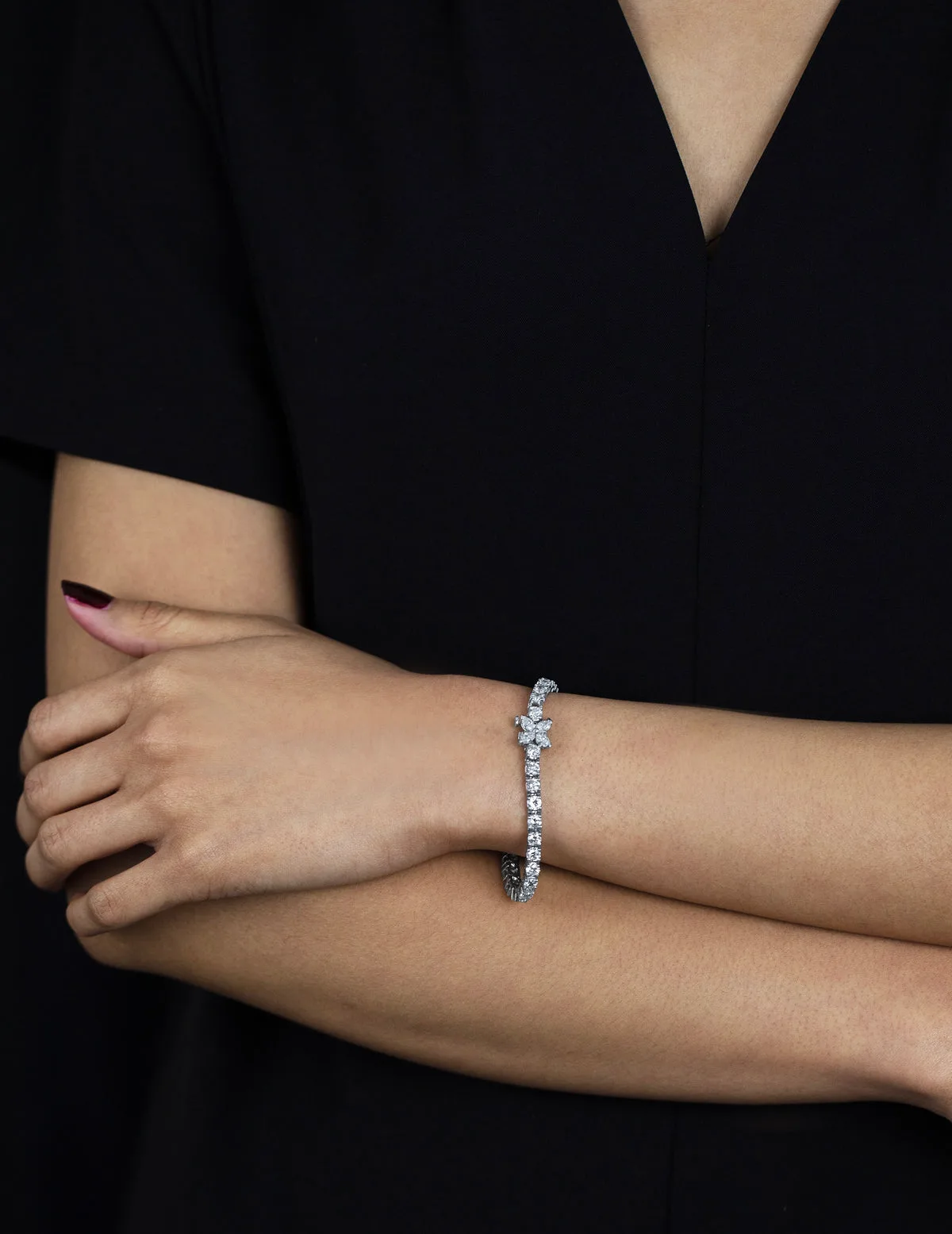
Most jewellery is named in ateliers, by committees, in French. Exactly one great form was named on live television, on a hardcourt in Queens, by an umpire’s stopped clock. The diamond line bracelet — matched brilliants in a supple, continuous row — had existed for generations as the rivière’s daytime cousin. It became the tennis bracelet the moment Chris Evert, the coolest competitor American tennis ever produced, halted a US Open match because her diamonds had left her wrist.
The stopped clock
The scene assembles itself: a clasp gives mid-rally, a line of diamonds skitters across an acrylic hardcourt, and play waits while a champion and a ballboy search the service box on their knees. Accounts differ on the year — the late seventies by some tellings, 1987 by others, and the Archive’s honest note is that the date is disputed while the story is not. What no account disputes is what happened next: Evert asked for time, the umpire gave it, and a form of jewellery acquired the only name in the trade coined by a sporting event.
Why the name held
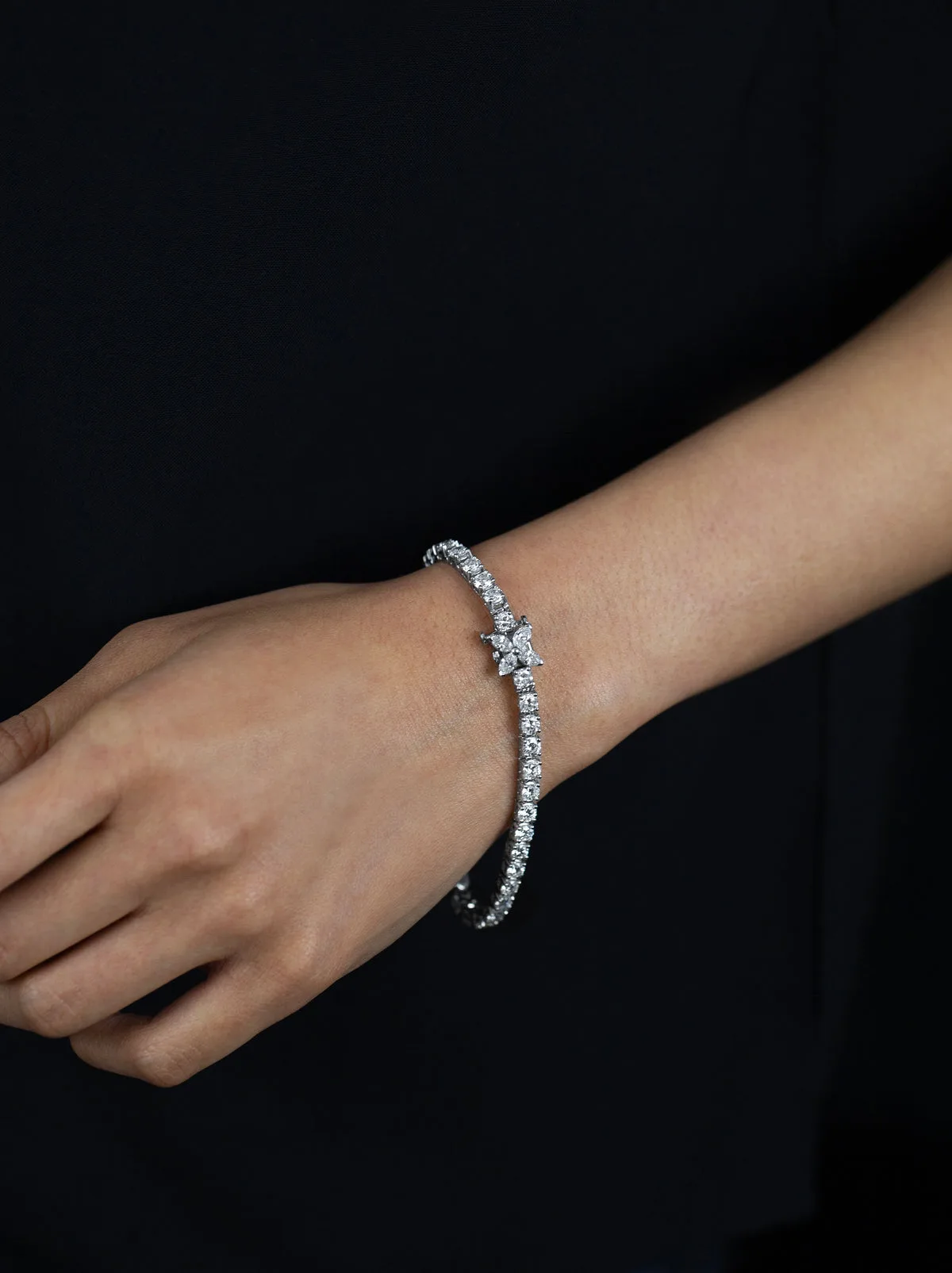
Names stick when they resolve a contradiction, and this one resolved the best contradiction in jewellery: diamonds, worn to sweat. The tennis bracelet is precious and casual at once — serious stones on a wrist that also serves, drives and signs cheques. It made diamonds athletic, American and daily, three words the trade had never before put in one sentence. Europe gave the line bracelet its form; Flushing Meadows gave it its permission slip.
Europe engineered the diamond line. America gave it a reason to be worn on a Tuesday.
The form’s quiet rules
A proper tennis piece obeys three disciplines learned, fittingly, the hard way. Security first: a safety clasp — the lesson of the stopped clock, engineered into every descendant. Suppleness second: each stone in its own articulated link, so the line follows the wrist like fabric rather than armour. Matching third: as with its formal ancestor the rivière, one mismatched stone breaks the whole sentence.
An original, still compounding
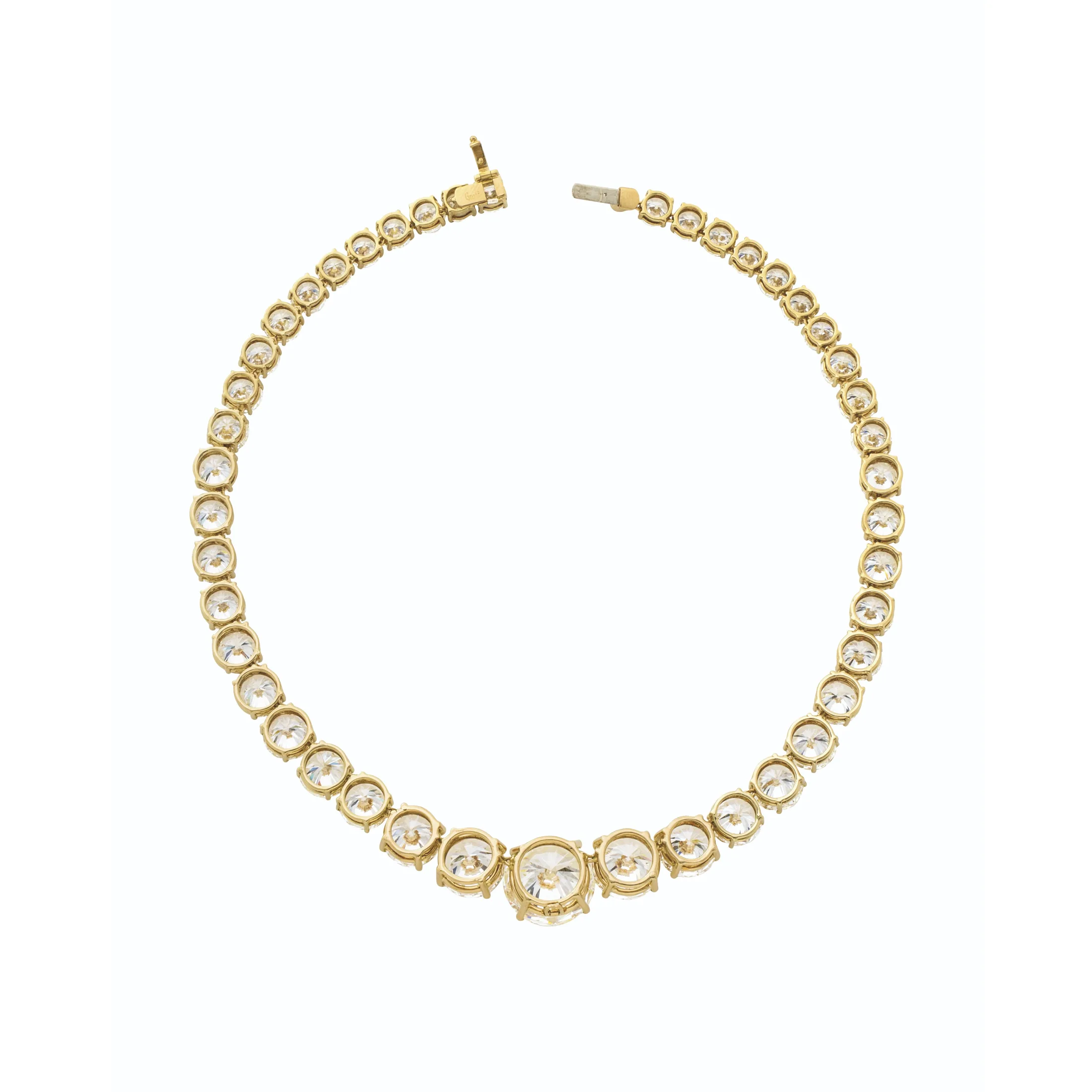
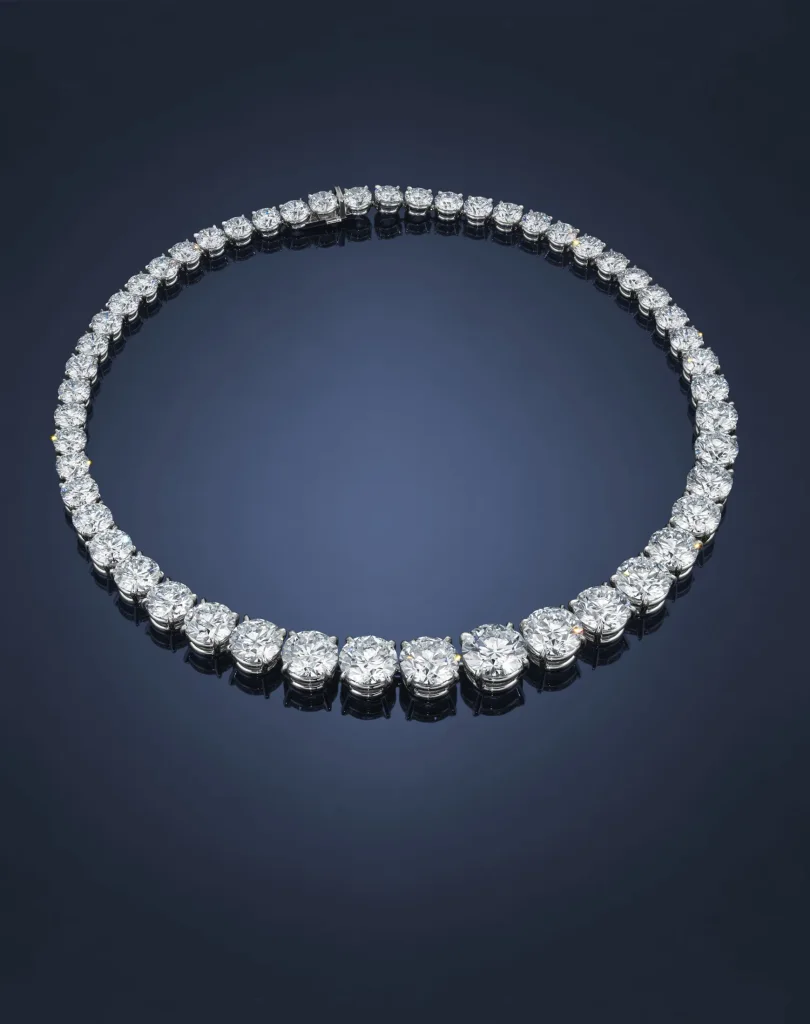
Four decades on, the name has outgrown the wrist. The vault holds the form in every register — platinum lines for the original purpose, and monumental descendants like the 120-carat graduated line that wear the casual name with formal intent. Even colour has joined the game.
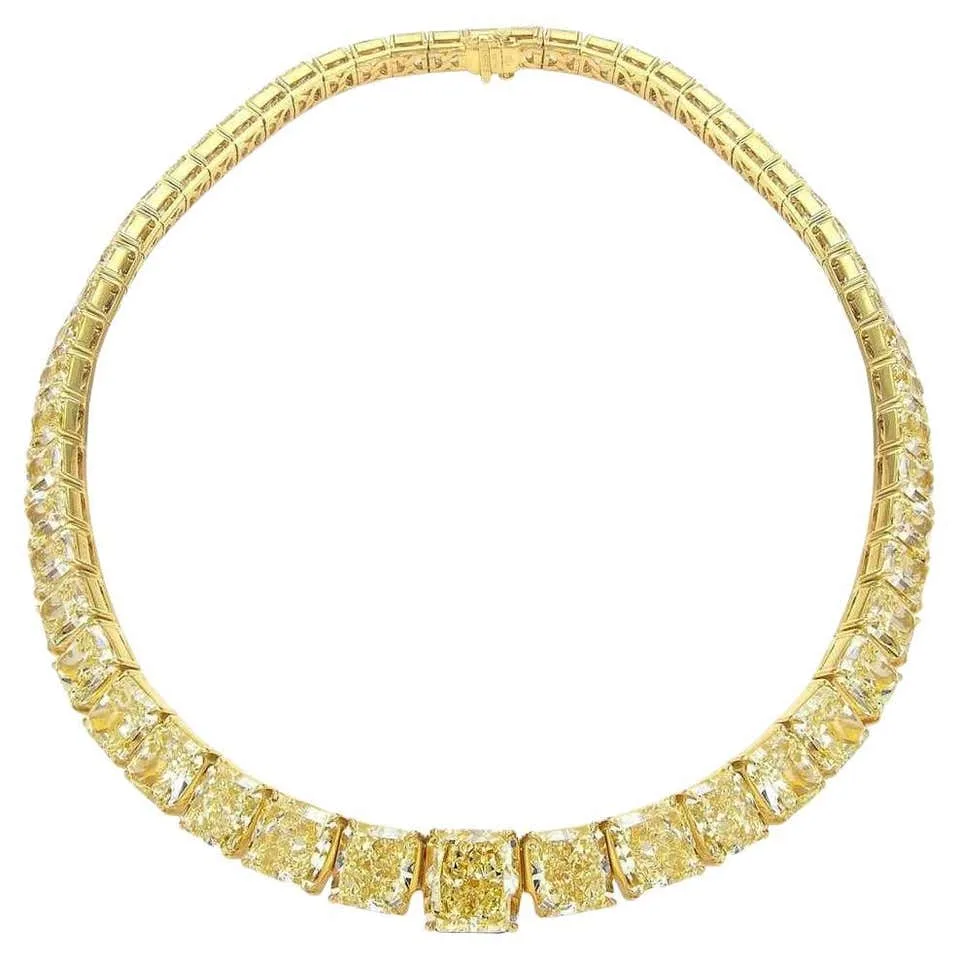
Somewhere in every collection built on the wrist, the stopped clock is still paying dividends. The most valuable thing a clasp ever did was fail.
The Stones in This Story
From the Legacy vault — each one-of-a-kind, independently certified.
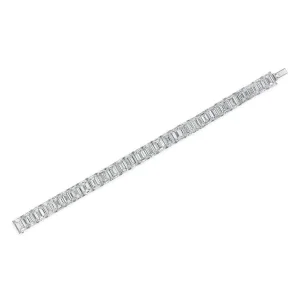
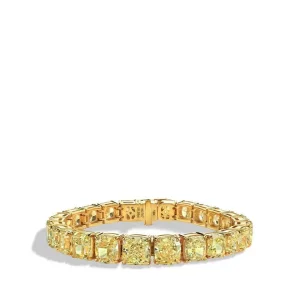
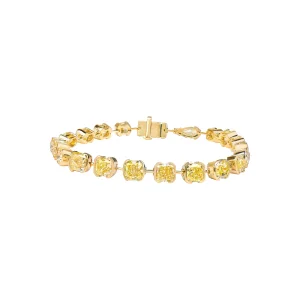
Our atelier sources rare stones privately — tell us the cut, the colour and the moment.
More from From the Archive
 From the Archive · The Object Lesson
Anatomy of a Maharaja Necklace
The great court necklaces of India were not jewellery but engineering — transformable, hierarchical, built to outrank rooms.…
 From the Archive · The Long View
The Rivière: Three Centuries on a Single Thread
It is the simplest idea in jewellery — matched diamonds in a single graduated line — and it…
 From the Archive · Provenance
A Short History of the Engagement Ring
Five and a half centuries ago an Austrian archduke set a fashion no empire has managed to end.…
The LEGACY List
One letter a week — the stones, the stories, the numbers that matter. Discretion is the house rule.