A Carat Is a Weight, Not a Size
The most misunderstood word in jewellery measures nothing you can see. A carat is 200 milligrams on a scale — and the distance between weight and visible size is where diamonds are truly judged.
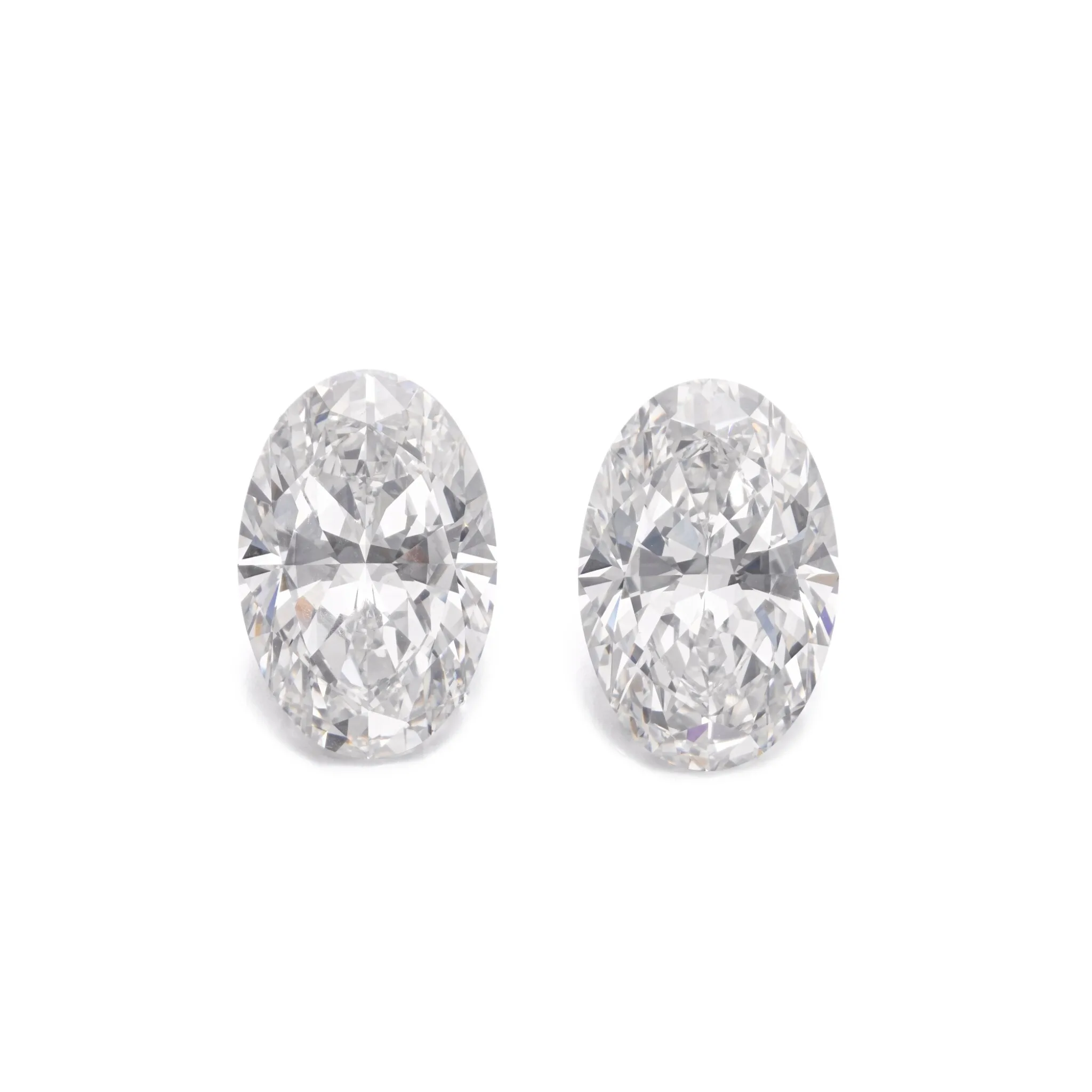
A carat is a unit of mass: 200 milligrams, exactly, everywhere on earth. It is not a length, not a diameter, not a “size.” Double a diamond’s carat weight and you do not double the stone your eye sees — you add roughly a quarter to its width. Nearly everything subtle about choosing a large diamond follows from that one piece of arithmetic.
Where does the carat come from?
From a seed. Gem dealers of the ancient Mediterranean balanced their scales with seeds of the carob tree — remarkably uniform, conveniently small — and the seed’s Greek name, keration, walked down the centuries into “carat.” For most of history the carat then meant slightly different things in different trading cities, which suited nobody weighing something this valuable.
The modern measure dates to October 1907, when the Fourth General Conference on Weights and Measures fixed the metric carat at exactly 200 milligrams — one-fifth of a gram. It is among the few units the entire world’s gem trade shares without exception. Five carats to the gram; one hundred carats to twenty grams. A laboratory report states the weight to the hundredth of a carat — two milligrams — which is the precision at which this trade operates.
Is a two-carat diamond twice as big as a one-carat?
It is twice the weight — and about 26% wider to the eye. Here is the whole trick in one rule: for stones of the same shape and proportions, weight grows with volume, and volume grows with the cube of the dimensions. So face-up width grows only with the cube root of carat weight.
Run the numbers for a classic round brilliant, which spans about 6.5 millimetres across at one carat on standard proportions:
- 1 carat — about 6.5 mm face-up.
- 2 carats — about 8.2 mm: twice the weight, 26% more width.
- 5 carats — about 11.1 mm: five times the weight, 71% more width.
- 10 carats — about 14.0 mm: ten times the weight, 115% more width.
- 20 carats — about 17.6 mm: twenty times the weight, 171% more width.
Derived by cube-root scaling from the ~6.5 mm one-carat reference: diameter ≈ 6.5 mm × ∛(carats).
Read that last line again. A twenty-carat diamond carries twenty times the weight of a one-carat stone — and shows not quite three times the width. This is why weight thresholds mean so much in the trade: the visible difference between ten and twelve carats is modest, but the rarity difference is steep. The eye moves in millimetres; the market moves in carats; they are different scales.
The eye moves in millimetres; the market moves in carats. They are different scales.
Why does an oval look bigger than a round of the same weight?
Because a cutter decides where the weight lives. A diamond’s mass sits in three dimensions, and only two of them face the room. A deep stone hides its carats below the setting line; a well-spread stone carries them where they show. Elongated outlines — oval, pear, marquise — stretch their area across the finger, so at equal weight they read larger than a round, and step cuts like the emerald cut, which run shallower and broader, wear their weight openly.
This is also the honest caveat to the figures above: cube-root scaling assumes the proportions stay constant. In the real market they do not — which is why two stones of identical carat weight can differ visibly on the hand, and why the practised buyer asks for measurements in millimetres, never weight alone. Above ten carats, where the leading shapes are the round, the pear and the emerald cut — counted shape by shape in The Stone Index — how a stone spends its weight becomes the first question of connoisseurship. How to judge that spending in person is the subject of Reading a Ten-Carat Diamond.
Carat or karat — which is it?
They are different words for different worlds that happen to sound alike. Carat with a C weighs gemstones: 200 milligrams. Karat with a K grades gold purity in twenty-fourths: 24-karat gold is pure, 18-karat is eighteen parts gold in twenty-four. A diamond is measured in carats; the ring that holds it is described in karats. The search phrase “20 karat diamond ring” almost always means a twenty-carat diamond — a question of stones, not gold — and what such a ring involves is mapped, numbers and all, in the house’s twenty-carat guide.
Why cut is the C that governs size
Of the four Cs, only cut is a human decision — and it is the one that converts weight into presence. A masterful cut takes the carats nature provided and shows them; a greedy cut banks them in depth, where they weigh on the scale and vanish on the hand. This is why the trade’s oldest paradox holds: the best-made stone of a given weight often looks larger than a heavier, lesser-made one beside it.
The consequence for anyone choosing at scale is a short checklist. Ask the weight — then ask the millimetres. Ask the shape — then ask where the depth went. And judge the stone on the hand it will live on, because presence is measured in the room, not on the scale. Weight is the entry in the ledger; light is the reason anyone looks twice. The stones themselves make the argument better than the arithmetic does — the house keeps them in the rings room.
Questions buyers ask
How many grams is a carat?
One-fifth of a gram — 200 milligrams, fixed internationally since 1907. Five carats weigh exactly one gram; a ten-carat diamond weighs two grams.
How big is a 1 carat diamond?
A round brilliant of standard proportions spans roughly 6.5 millimetres face-up — about the width of a pencil. But the honest answer is that a carat has no size: a deep-cut round can span less, a spread oval more, at the very same weight.
Is carat the same as size?
No. Carat is weight; size is what the cut does with it. Width grows only with the cube root of weight, and the cutter’s choices move visible size at any given weight. Two stones of equal carats can look plainly different; millimetre measurements, stated on every laboratory report, are the true size.
How wide is a 10 carat diamond?
Around 14 millimetres face-up for a round brilliant of standard proportions — roughly the diameter of a small coin’s inner ring, and unmistakable across a room. An elongated ten-carat pear or oval will run longer still along its axis while holding a narrower waist, which is much of why those shapes dominate at this weight. Ten times the weight of a one-carat stone; a touch more than twice the width — the cube-root rule, doing exactly what it always does.
What is the difference between carat and karat?
Carat (C) is gem weight, 200 milligrams. Karat (K) is gold fineness in twenty-fourths. “20 karat diamond ring” is the market’s most common crossing of the two — it means a twenty-carat stone, and the twenty-carat guide answers it in full.
Methodology: diameter figures are derived by cube-root scaling from the widely published ~6.5 mm reference for a one-carat round brilliant of standard proportions, and are approximations — actual dimensions vary with each stone’s make and are stated in millimetres on its laboratory report. The metric carat’s definition (200 mg, adopted October 1907) is a matter of public record.
Last verified 11 August 2026.
The Stones in This Story
From the Legacy vault — each one-of-a-kind, independently certified.
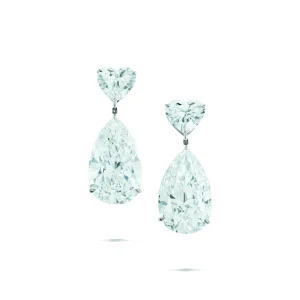
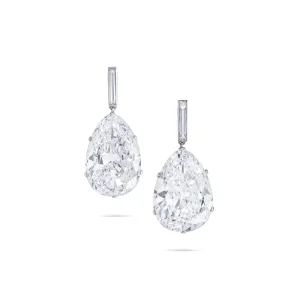
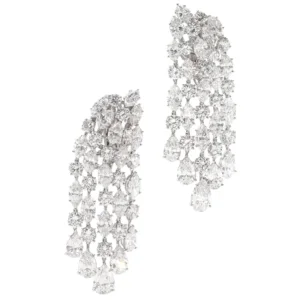
The twenty-carat guide answers carat-or-karat and every number beyond it — then judge presence on the hand.
More from Education
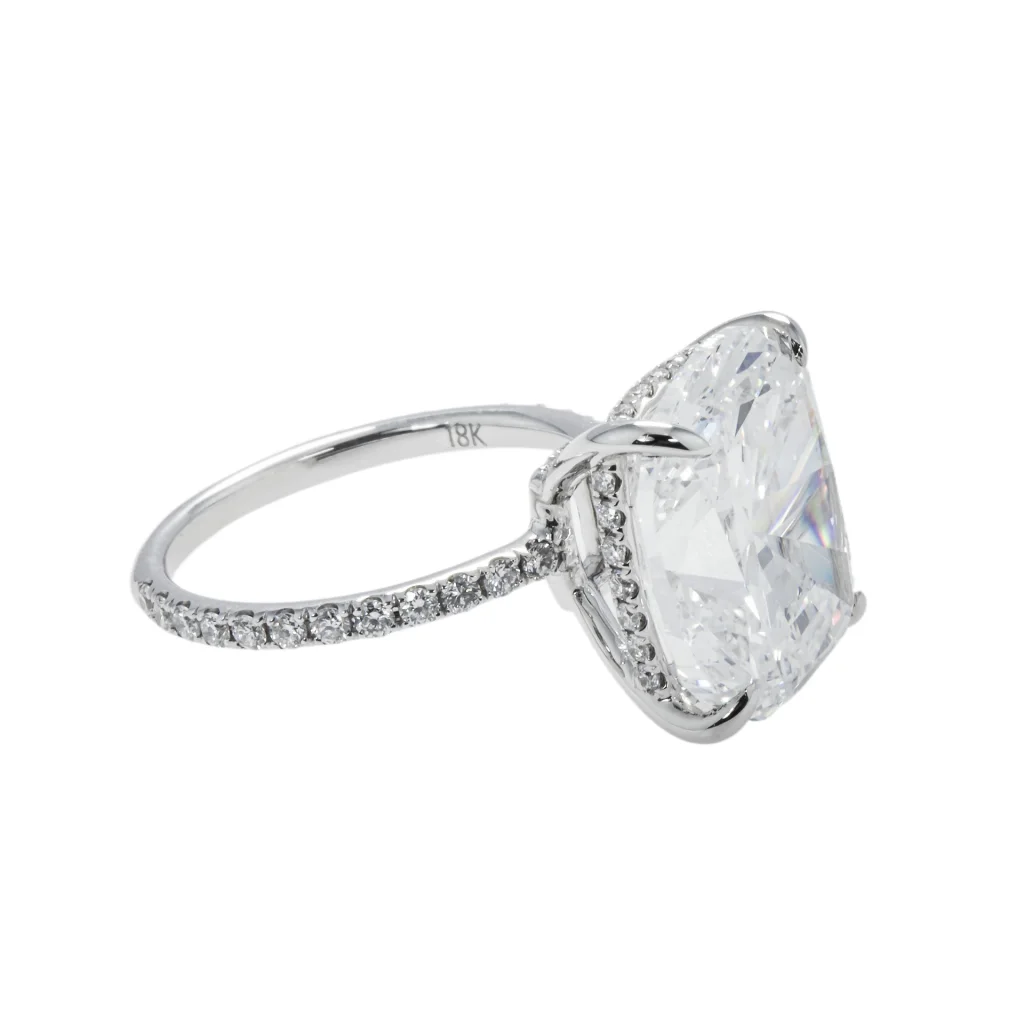 Education · The Report
Reading a Ten-Carat Diamond: What the Report Settles, and What Only the Eye Can
At ten carats, the grading report stops being paperwork and becomes the first act of connoisseurship. It settles…
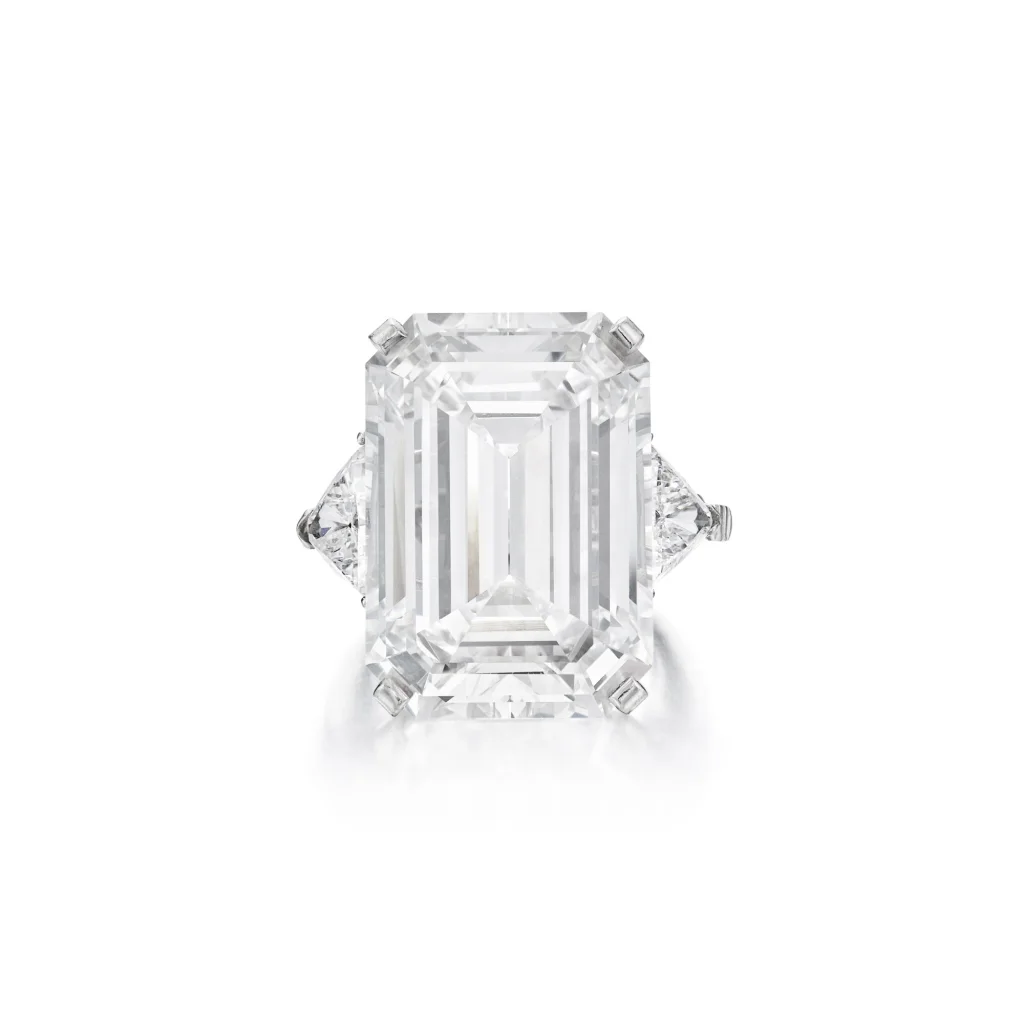 Education · The Duel
Emerald Cut vs. Round Brilliant: The Honest Comparison
One cut is engineered to return every photon it is given; the other declines to perform at all…
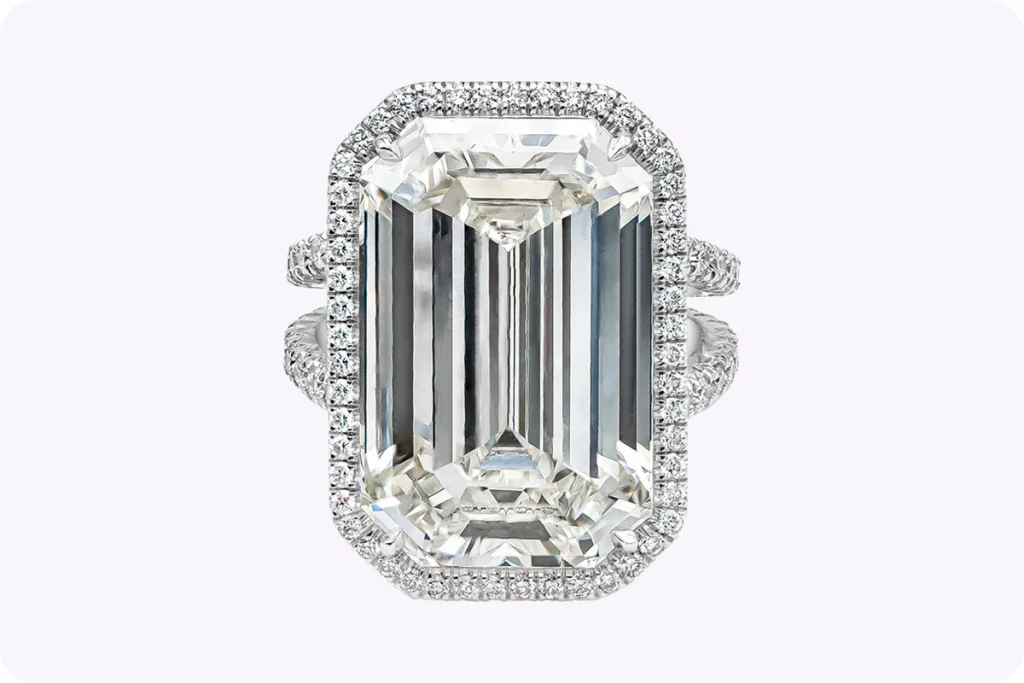 Education · Field Guide
How a Ring Holds Its Stone: A Field Guide to Settings
Prong, bezel, halo, trilogy — the architecture beneath a diamond decides how it sits, how it shines and…
The LEGACY List
One letter a week — the stones, the stories, the numbers that matter. Discretion is the house rule.