One Hundred Carats: What the Number Actually Means
The most searched question about hundred-carat diamonds hides a distinction the market rarely explains: a hundred carats in one stone is an event with a name and a place in history — a hundred carats worn is a necklace. Both are real. They are not the same thing.
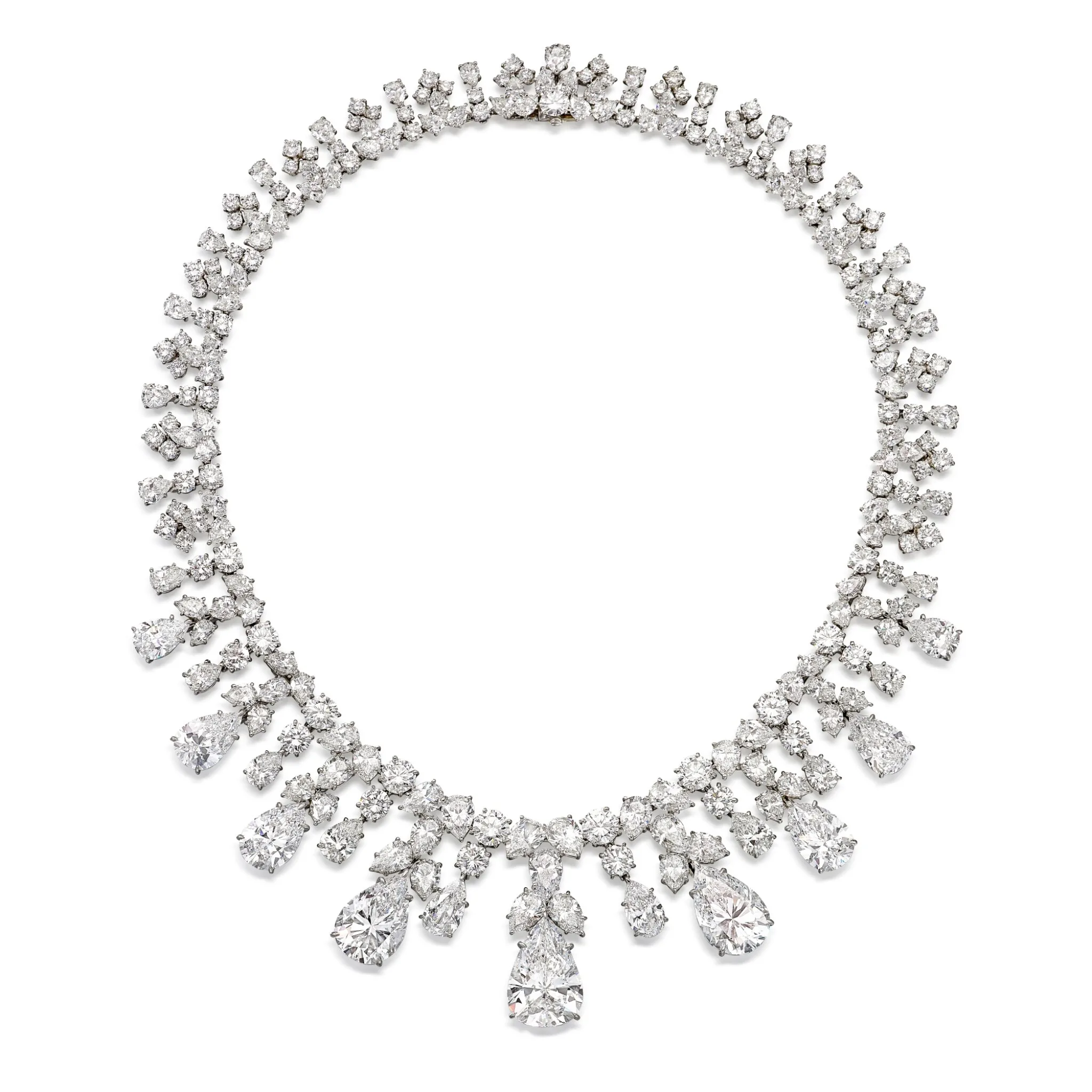
One hundred carats is exactly twenty grams — the metric carat has been fixed at 200 milligrams since the General Conference on Weights and Measures adopted it in 1907. In a single diamond, that weight is so rare the stones which carry it bear proper names. Across a necklace, it is the mark of a serious rivière. Anyone weighing the words “100 carat diamond” is really standing between those two meanings, and everything — rarity, form, and what the figure tells you — depends on which one is meant.
How rare is a single hundred-carat diamond?
Rare enough that the category is, in effect, a register of named stones. The largest gem-quality rough ever recovered, the Cullinan, came out of the Premier Mine near Pretoria in 1905 at 3,106 carats — a stone the size of a fist, named for the mine’s founder. The largest faceted diamond in existence, the Golden Jubilee, is a cushion-cut stone of 545.67 carats; before it was completed, the title had belonged for most of a century to Cullinan I at 530.2 carats, the pear-shaped great stone of the British Crown Jewels.
Below those summits, polished diamonds above one hundred carats remain so scarce that each new one is reported as news, exhibited, and christened. No commodity behaves this way. Wheat does not get a name. A hundred-carat diamond does — because at that weight a diamond stops being a specimen of a category and becomes an individual.
Why does a hundred-carat stone almost never survive as a hundred-carat stone?
Because cutting is an arithmetic of loss, and the loss is brutal. When the Cullinan was cleaved in Amsterdam in 1908, the cutter Joseph Asscher prepared for months — and his first blade broke against the stone. The rough was eventually resolved into nine principal stones and ninety-six brilliants; the nine principals together weigh a little over 1,055 carats. Roughly two-thirds of the largest diamond ever found left the wheel as dust and fragments.
Roughly two-thirds of the largest diamond ever found left the cutting wheel as dust and fragments.
That ratio is the everyday truth of the cutting room, not an exception to it. A cutter looking at a large rough must choose between one enormous stone of compromised proportions and several superb stones of smaller weight — and proportion, not weight, is what makes a diamond live in the light. The discipline to sacrifice carats for fire is precisely what separates a great stone from a merely heavy one. It is also why each weight class thins so sharply: the house’s records, counted in The Stone Index, show the pyramid narrowing band by band as weight rises.
A hundred carats in one stone versus a hundred carats around a neck
Here is the distinction that answers most hundred-carat searches. When the figure appears in the real market, it is almost always a total carat weight — the sum of many stones working together.
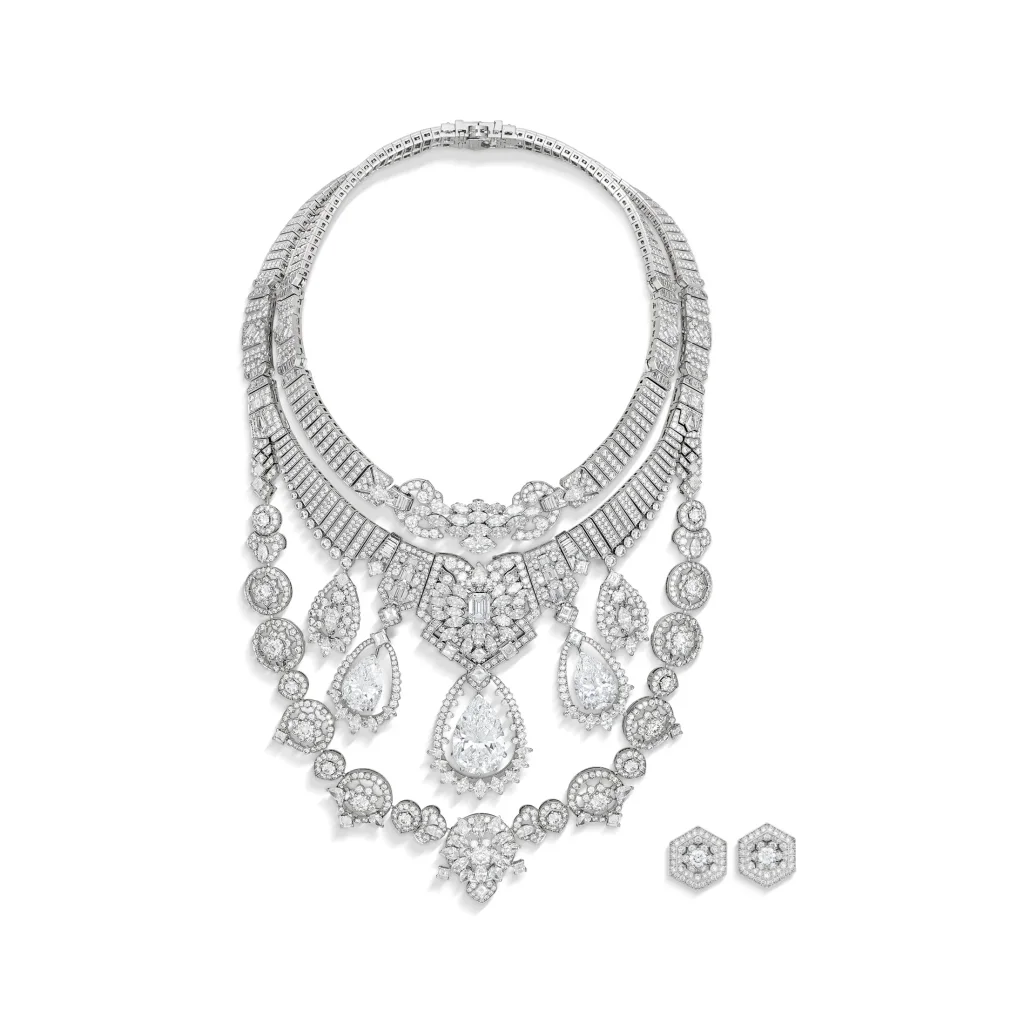
The house’s own records make the point precisely. As of 11 August 2026, 107 pieces in LEGACY’s catalogued collection carry a recorded weight of one hundred carats or more — and in every one of them the figure is carried by an ensemble: rivières of fifty-one and seventy-three graduated diamonds, tennis necklaces, fringe necklaces, full suites. The heaviest single stones inside those pieces are their anchors — centre diamonds of ten, twelve, in one necklace a heart-cut diamond of fifty carats — while the hundred belongs to the whole. And the largest single stone in the collection’s records above that line is not a diamond at all: a cushion-cut emerald of 183.47 carats, mounted in a necklace among round and pear-shaped diamonds.
A hundred carats across fifty-one stones and a hundred carats in one stone share a number and nothing else. The first is a composition — graduation, matching, rhythm. The second is a monument. Both are legitimate objects of desire; confusing them is how buyers misread the market.
What is “total carat weight,” and is it an honest number?
Total carat weight — often written ctw — is the combined weight of every stone in a piece. It is an entirely honest figure when it is stated as what it is, and the mark of a serious house is that it always is: “100 carats total,” “fifty-one round brilliant-cut diamonds.” What matters beneath the total is the anatomy — how many stones, how graduated, how matched in colour and clarity. Two hundred-carat necklaces can be built from thirty stones or from two hundred; they are different animals, and the stone count is the tell.
This is why the searched phrase “100 carat diamond price” nearly always resolves to necklaces — and why the honest answer lives with them. The numbers themselves, at fifty, seventy-five and one hundred carats, are kept current against the live collection in the house’s high-carat diamond necklace price guide; the pieces are in the necklace room.
Questions collectors ask
How much does a 100 carat diamond weigh in grams?
Exactly twenty grams. One metric carat is 200 milligrams — a fifth of a gram — fixed internationally in 1907. The measure’s ancestor was the carob seed, once used as a counterweight on gem scales, which is where the word carat comes from.
What is the largest faceted diamond in the world?
The Golden Jubilee, at 545.67 carats — a cushion-cut brown diamond. The most famous remains Cullinan I, the 530.2-carat pear at the head of the British Crown Jewels, cut from the 3,106-carat Cullinan rough of 1905.
Does a 100 carat diamond ring exist?
At a hundred carats a single stone outgrows the hand; history’s great hundred-carat diamonds live in necklaces, brooches, sceptres and museum mounts. On the finger, the grand weights run through ten and twenty carats — territory the house maps in its ten-carat and twenty-carat guides.
Why do the great diamonds have names?
Because at this weight each stone is an individual with a biography — a mine, a year, a cutter, a succession of hands — and the trade has always recorded them the way registries record ships. The name is shorthand for provenance, and provenance is the fifth C: the one that cannot be graded, only documented. It is also why the register of named hundred-carat stones grows so slowly; nature issues the raw material at her own pace, and the cutting room approves even less of it.
What should a buyer look at first in a hundred-carat necklace?
The anatomy before the total: the count of stones, the graduation, the match of colour and clarity across the run, and the certification story stone by stone. A rivière is judged the way a string quartet is judged — on the ensemble, not the loudest voice.
Methodology: the count of 107 pieces at one hundred carats and above is drawn from LEGACY’s catalogued records as of 11 August 2026, taking each piece’s principal recorded weight; where a piece carries multiple stones the figure is its stated total. Historical weights — the Cullinan rough (3,106 carats), Cullinan I (530.2), the Golden Jubilee (545.67), and the metric carat’s adoption in 1907 — are matters of public record. Figures may be quoted with attribution to LEGACY — The Record.
Last verified 11 August 2026.
The Stones in This Story
From the Legacy vault — each one-of-a-kind, independently certified.
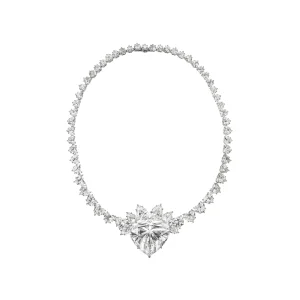
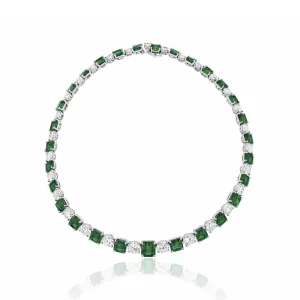
Fifty, seventy-five, one hundred carats — the high-carat necklace guide holds the numbers; the rivières wait in the vault.
More from The Stone Market
The Stone Index: Two-Thirds of the Top of the Market Weighs Five Carats or More
First edition of The Stone Index: 67.5% of catalogued stones weigh five carats or more, and above ten…
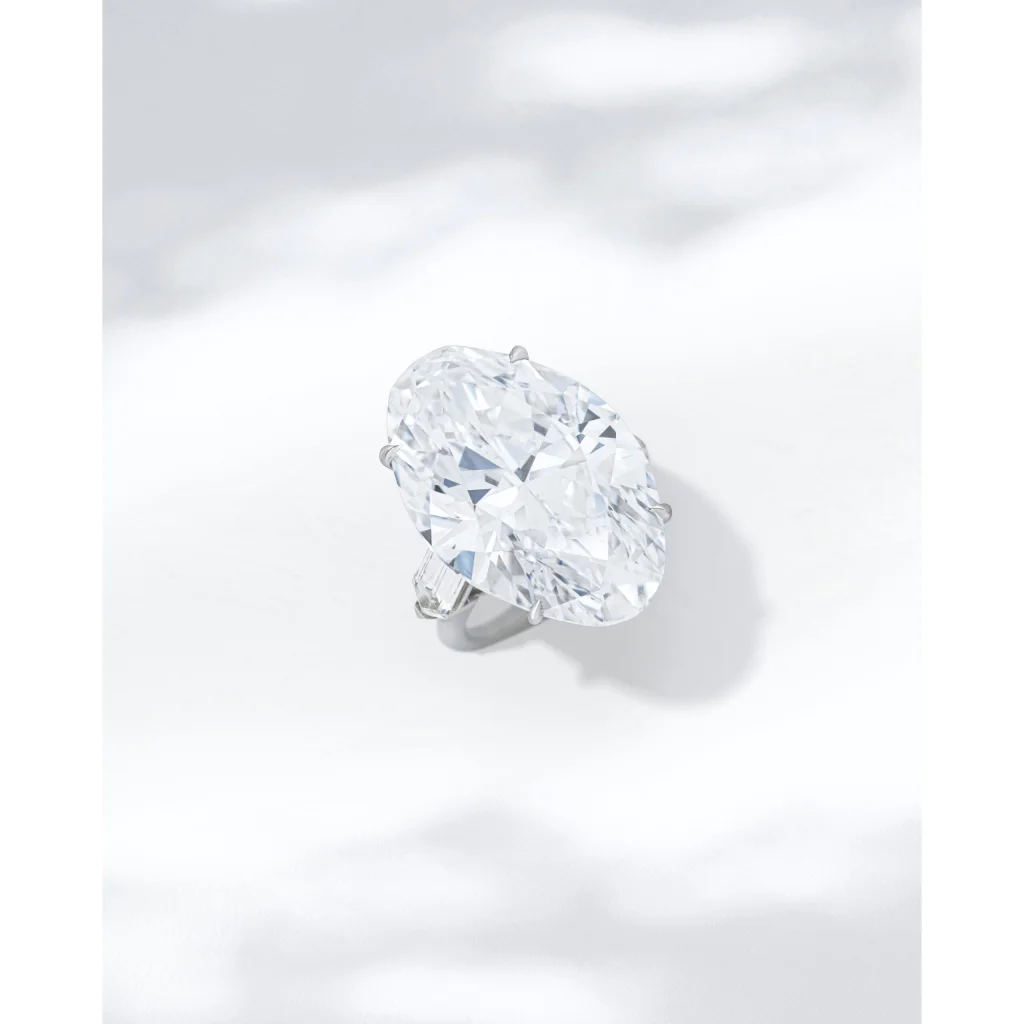 The Stone Market · Rarity
The Purest Thing on Earth
A vanishingly small share of the diamonds ever pulled from the earth belong to a chemical class so…
 The Stone Market · Provenance
The Fifth C: Provenance
Cut, colour, clarity, carat — the four Cs describe a stone the day it is graded. There is…
The LEGACY List
One letter a week — the stones, the stories, the numbers that matter. Discretion is the house rule.