
Collecting · The House Guides
Diamond Earrings: Studs, Drops and the Matched-Pair Premium
A buying guide to diamond earrings covering total weight per pair, why matched pairs carry a premium, studs versus drops, fancy color pairs and secure fittings, using real prices from the Legacy collection.
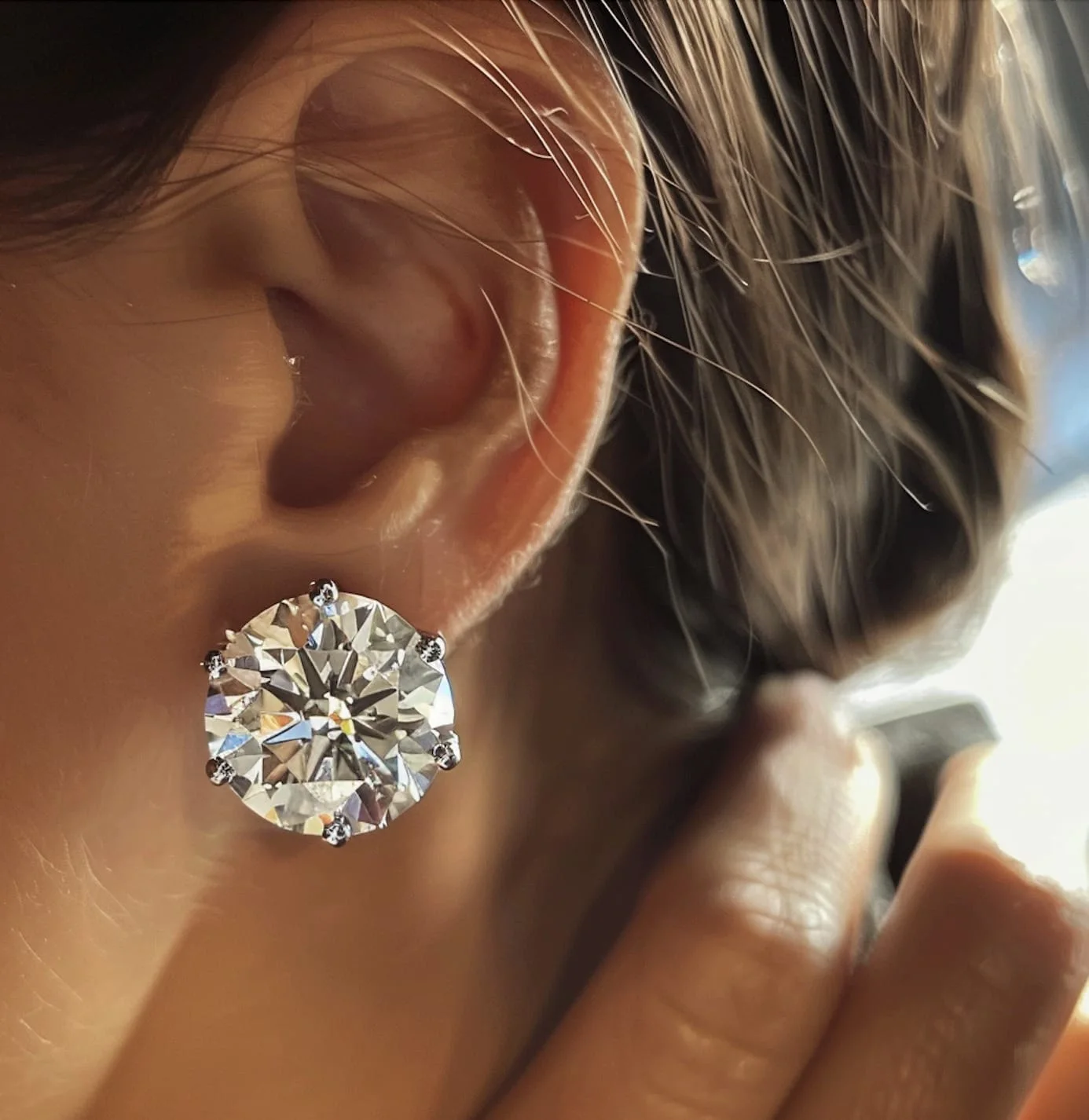
Across that entire range, one discipline separates a serious pair from an ordinary one: the two diamonds must match. A single beautiful stone is a find; two beautiful stones that read as twins on opposite sides of a face is a considerably rarer event, and it is where most of the value in a fine pair of earrings actually lives.
Total weight versus per-ear weight: read the number carefully
Earrings are priced and titled by the total weight of the pair. A “5 carat” pair of studs carries approximately 2.5 carats in each ear; a “12 carat” pair carries 6 carats per ear. This convention is universal but routinely misread, and the difference matters enormously to both appearance and price.
Why a matched pair costs more than two single stones
Diamond prices do not scale linearly with weight, and matched pairs compound that curve. To present two 6-carat stones as a pair, a house must find two diamonds cut from a similar crystal habit, matching in color to within a fraction of a grade, in clarity character, in proportions, and in the way they return light — then forgo selling either stone individually. At one carat per ear this sorting is demanding; at four carats and above it can mean holding a stone for years while its twin is sought. This is why a matched pair of D-color, internally flawless stones commands a premium over the same two diamonds sold separately, and why serious pairs are bought when they appear rather than commissioned on a timetable. When comparing prices across houses, always establish whether a quoted figure is for a genuinely matched pair or two stones of merely similar weight.
Studs, drops and pendent earrings
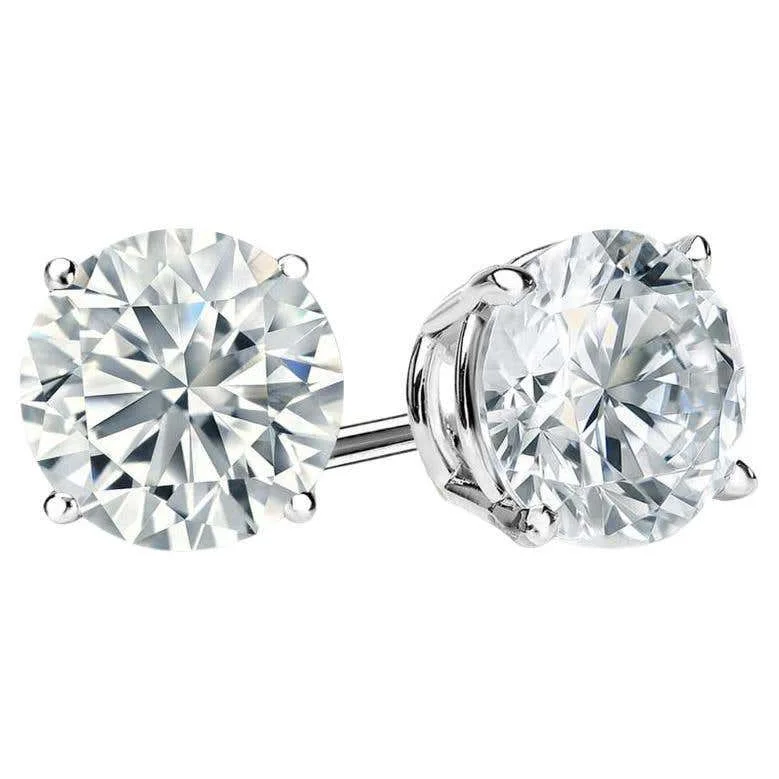
A stud places the stone directly on the lobe and is the most versatile format — worn daily, with anything, for decades. A drop suspends the principal stone below the lobe on a short articulated length, adding movement and letting light reach the pavilion from more angles, which visibly increases fire as the wearer moves. As a practical rule: studs for permanence, drops for movement, pendent formats for occasions where the earring is intended to lead the whole composition.
Fancy color in pairs
Everything said about matching white diamonds applies doubly to fancy color. Two pink diamonds must match not only in grade but in the character of the color itself — its distribution, its modifiers, the way it holds under evening light. With fancy color, insist on seeing certification for each stone individually, since the pair trades on two separate rarity events, not one.

Security: the unglamorous detail that protects everything
Above roughly two carats per ear, the fitting becomes a security decision. Friction push-backs are adequate for small studs but not for important stones; screw-backs and alpha-style locking backs hold measurably better and are the standard on heavy pairs. Weight also matters for comfort: a 6-carat stone with its setting pulls on the lobe, and well-made large studs distribute that weight with wider backs or discreet lobe supports. When acquiring a substantial pair, ask specifically what fitting is supplied and whether the House can adapt it — an inexpensive adjustment against the value it protects.
Natural stones, certified individually
Every diamond in the House’s earring collection is natural and independently certified by GIA, IGI or HRD, with certification presented on request for each stone of a pair rather than for the pair as a unit — the only honest way to certify two separate diamonds. The House’s position on certification on request is explained in full in its own guide.
Questions collectors ask
What does total carat weight mean in earrings?
The stated weight of a pair of earrings is the combined weight of both stones. A 5-carat pair carries approximately 2.5 carats per ear. Per-stone weight is what determines how the earrings read when worn.
Are 2-carat studs too big for everyday wear?
What limits everyday wear is rarely size but security: above two carats per ear, locking backs are strongly recommended.
What makes a matched pair of diamonds valuable?
Rarity of the match itself. Two stones must agree in color, clarity character, proportions and light return — and at higher weights, finding the second stone can take years. A true matched pair therefore carries a premium over the same two stones sold separately.
Legacy’s current earring collection is available to view with full certification and pricing on request. Every stone is natural, independently certified, and delivered worldwide via Brink’s-insured shipping. Clients are welcome to arrange a private viewing in person or by live video, privately suggest a price, or book a private consultation to discuss matching, per-ear weight and fittings for a specific pair.
The Pieces in This GuideThe Vault →
From the Legacy vault — each one-of-a-kind, independently certified.
A private advisor answers on the figures in this guide — and places any piece from the vault within them, certificate first.
More from CollectingAll Guides →
 The Tennis Necklace: Carat Weight and ProportionCOLLECTING · AUG 21, 2026
 The Tennis Bracelet: A Buying GuideCOLLECTING · AUG 21, 2026
 Eternity Rings: Full, Half and How to ChooseCOLLECTING · AUG 21, 2026
 The Riviera Necklace: Graduated Diamonds ExplainedCOLLECTING · AUG 21, 2026Diamond Bracelets Beyond the Tennis Line: Formats and FitCOLLECTING · AUG 21, 2026
 Collecting Diamond Brooches: The Most Undervalued Object in Fine JewelryCOLLECTING · AUG 21, 2026
The Vault, Continued
Every piece one-of-a-kind, every price published. Keep scrolling — the vault does not end here.