Diamond Education · The House Guides
Cushion Cut Diamonds: The Buying Guide
The cushion cut's antique lineage and softened outline, with a practical look at chunky versus crushed-ice facet styles across Legacy's collection.
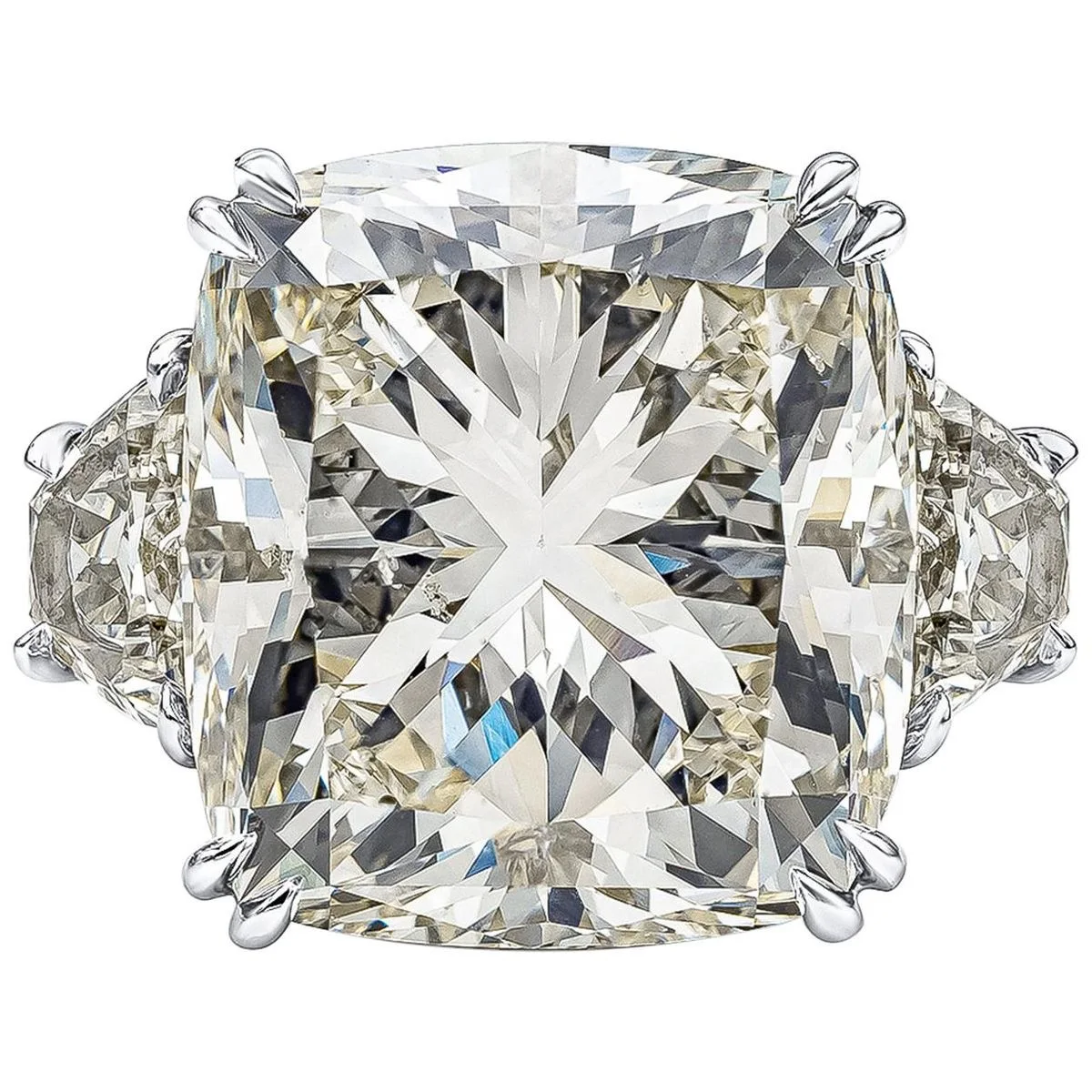
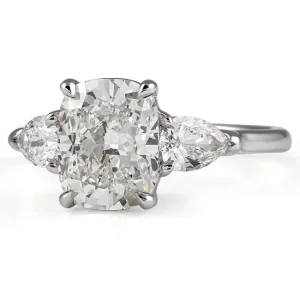
The cushion cut is the oldest diamond shape still in wide use today, tracing to early 19th-century cutting styles, and its rounded corners and softened, pillow-like outline set it apart from every sharp-cornered modern shape. It remains a fixture of Legacy’s collection precisely because it offers the vintage character serious collectors ask for without sacrificing brilliance.
Where the cushion cut comes from
The cushion cut descends directly from the old mine cut of the 1830s, itself a refinement of even earlier cushion-shaped cutting styles that predate modern faceting entirely. Where a round brilliant is a 20th-century mathematical optimisation for maximum light return, the cushion cut carries the visual signature of hand-cutting eras: a squarer or rectangular outline, rounded corners, and a larger, more open culet-facing profile. Collectors drawn to antique and Edwardian-inspired settings gravitate to cushion cuts for this reason. It is the shape that most convincingly bridges an estate-jewelry aesthetic with a newly cut, certified stone.
The pillow shape and how it wears
Because its corners are rounded rather than pointed, a cushion cut carries less chipping risk in daily wear than a sharp-cornered princess or true square emerald cut, without requiring the protective V-prong settings those shapes usually need. This makes it a practical choice for an engagement ring intended for daily use, not only a stylistic one. The rounded outline also softens the stone’s presence on the hand, reading as less geometric and more organic than a cornered shape, which is part of why it pairs so naturally with halo settings, milgrain detailing and other vintage-inspired design elements.
Square versus rectangular cushions
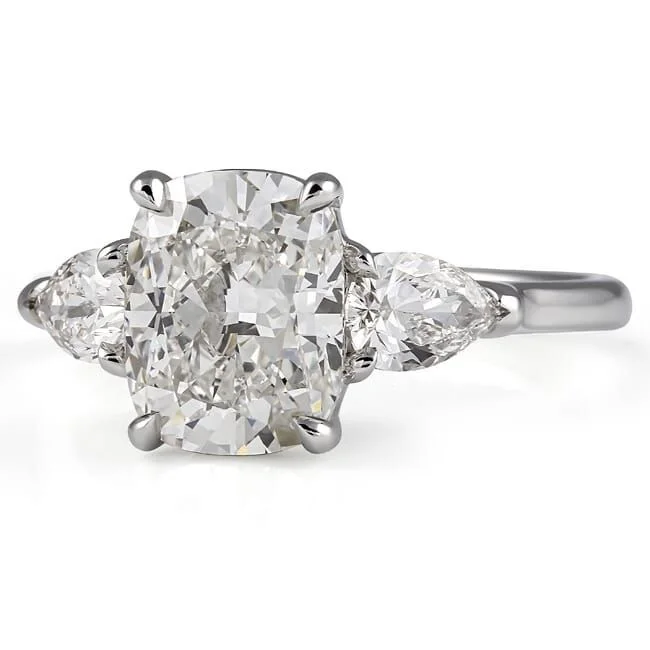
As with the radiant cut, cushions come in square (ratio close to 1.00) and rectangular (ratio 1.15 and above) proportions. A square cushion gives a compact, symmetrical pillow shape well suited to solitaire settings. A rectangular cushion elongates on the finger and is often chosen when the collector wants the antique character of a cushion with some of the length-flattering quality of an oval or emerald cut.
What sets price across Legacy’s cushion collection
Reading a cushion cut certificate correctly
Because the cushion has no single standardised facet count or proportion set, comparing two certificates side by side requires more care than comparing two round brilliants. Depth percentage and table percentage are still useful indicators, but they matter less on a cushion than crown angle and pavilion depth, since these two figures determine whether a stone leans toward the chunky or crushed-ice style before a single photograph is even taken. A cushion with a shallow pavilion can appear to leak light out of the bottom rather than reflecting it back through the table, a defect sometimes called a fish-eye or a windowed stone, visible as a grey, lifeless patch in the center when viewed face-up. This is worth checking for specifically in any video review, since it is not always disclosed clearly by proportion numbers alone.
Color and the cushion cut
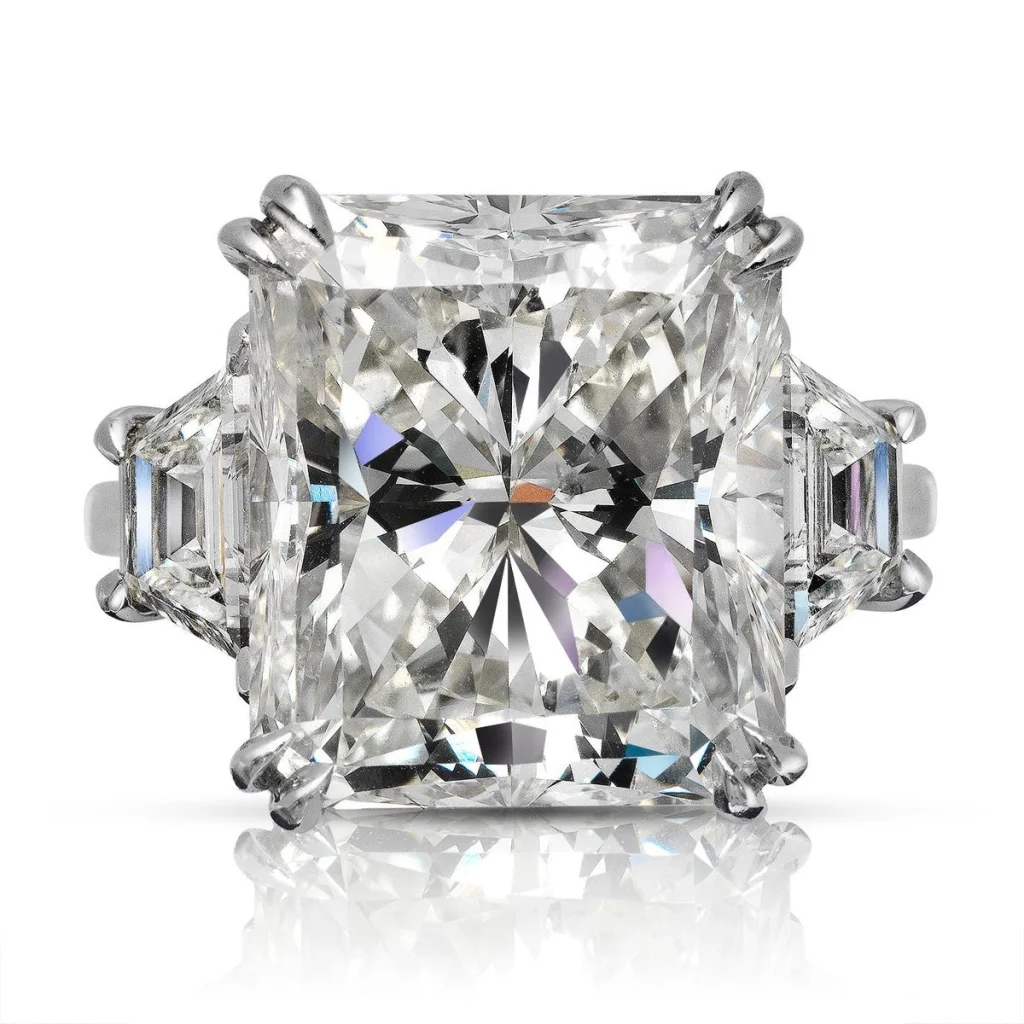
Cushion cuts tend to retain warmth of color more than round brilliants of the same grade, a consequence of the larger, more open facets allowing more of the stone’s natural body color to show through rather than being broken up by scintillation. This means a cushion graded I or J color, which would show a faint warmth in a round brilliant, can appear more noticeably warm in a cushion, particularly in a chunky-faceted stone. Collectors who want a stone that reads icy white are usually better served choosing G color or above in a cushion, one grade higher than they might select for a round brilliant aiming for the same visual effect, while collectors who like a touch of warmth can use this same property to their advantage and save on color grade without a corresponding loss in visual quality.
Cushion cut versus round brilliant for the same budget
Because a round brilliant’s cutting process discards a larger proportion of the original rough stone than a cushion’s, a cushion of a given carat weight can often be sourced for less than a round brilliant of the same weight and comparable color and clarity grade, though the exact difference varies stone by stone and cannot be treated as a fixed rule. Collectors working to a firm budget sometimes use this relationship deliberately, choosing a cushion specifically to reach a larger carat weight than a round brilliant would allow at the same price point. It is worth weighing against the round brilliant’s more universally understood resale recognition, since the cushion’s broader range of facet styles and proportions makes it a less standardised category for future valuation.
Setting a cushion to its best advantage
Halo settings are the cushion cut’s most natural pairing; a rounded halo echoes the stone’s own softened corners rather than fighting against them, unlike the sharper geometric contrast a halo creates around a princess or Asscher cut. Cathedral shanks and milgrain detailing reinforce the antique character many collectors are specifically buying a cushion for. For a crushed-ice cushion where maximum brilliance is the priority, a simpler four-prong solitaire setting keeps focus on the stone’s scintillation rather than adding competing sparkle from the mount.
Questions collectors ask
What is the difference between a chunky and a crushed-ice cushion cut?
A chunky cushion has larger, fewer facets and a more traditional antique look with broader light flashes. A crushed-ice cushion has been recut with smaller, denser facets for maximum brilliance, closer to a round brilliant’s sparkle pattern, while keeping the pillow-shaped outline.
Is a cushion cut diamond good for an antique-style engagement ring?
Yes. The cushion cut descends directly from 19th-century cutting styles and is the shape most closely associated with Edwardian and Victorian-inspired settings, particularly when paired with a halo, milgrain detail or a cathedral shank.
Are cushion cut diamonds more affordable than round diamonds?
Often, though it varies by individual stone.
Do cushion cut diamonds chip easily?
Less so than sharp-cornered shapes. The cushion’s rounded corners are inherently more resistant to chipping in daily wear than a true square or princess cut, without needing the protective corner prongs those shapes typically require.
Legacy’s cushion cut diamonds sit within the rings collection, with the largest and rarest stones concentrated in the 3-carat-and-above engagement ring collection. For collectors weighing cushion against other shapes for apparent size on the hand, the guide on which diamond shape looks biggest per carat is a useful next read. Every cushion in the collection is independently certified, with the laboratory arranged on request, and offered at one real price with Brink’s-insured delivery worldwide. To view chunky and crushed-ice cushions side by side, book a private consultation.
Shop this in the collection
Ready to view now: 3 carat cushion · 4 carat cushion · 5 carat cushion.
The Pieces in This GuideThe Vault →
From the Legacy vault — each one-of-a-kind, independently certified.
A private advisor answers on the figures in this guide — and places any piece from the vault within them, certificate first.
More from Diamond EducationAll Guides →
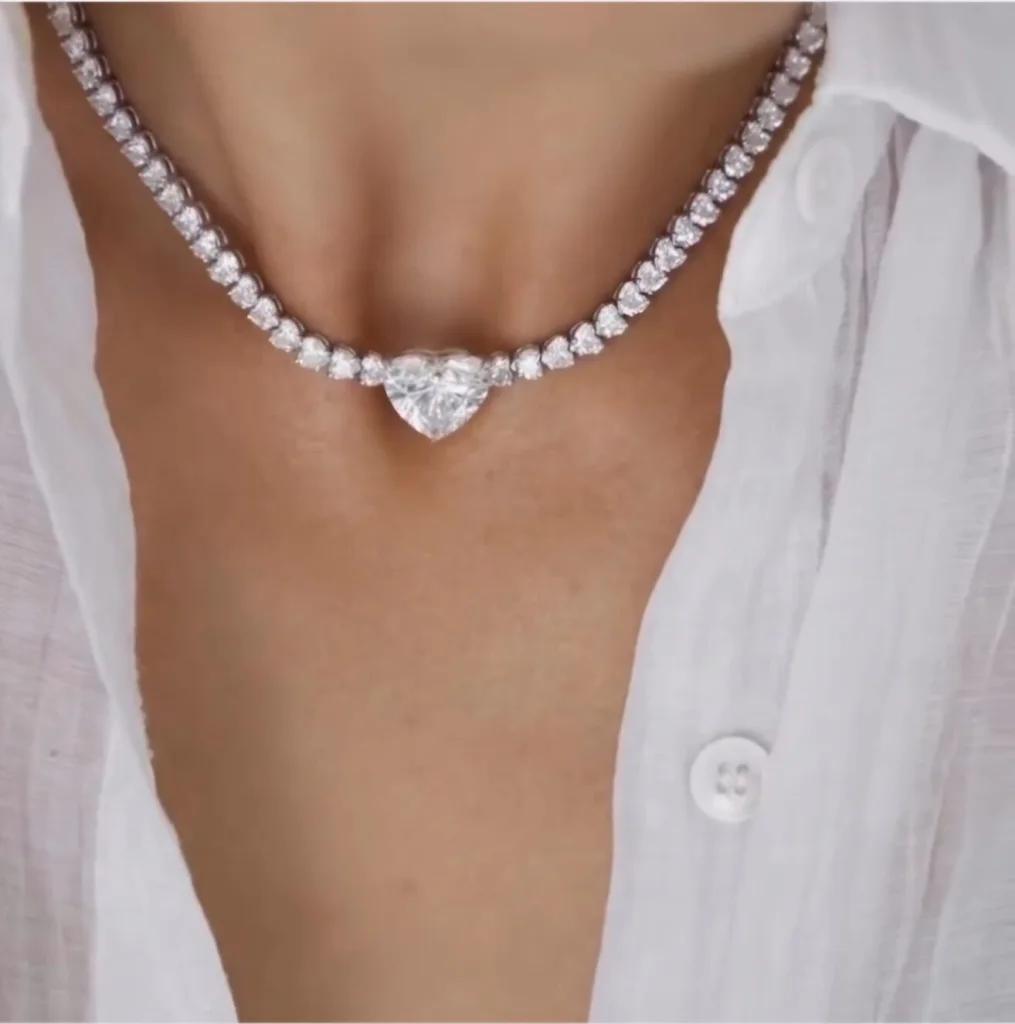 Diamond Necklace Price Guide: 50 to 100 CaratsDIAMOND EDUCATION · AUG 31, 2026
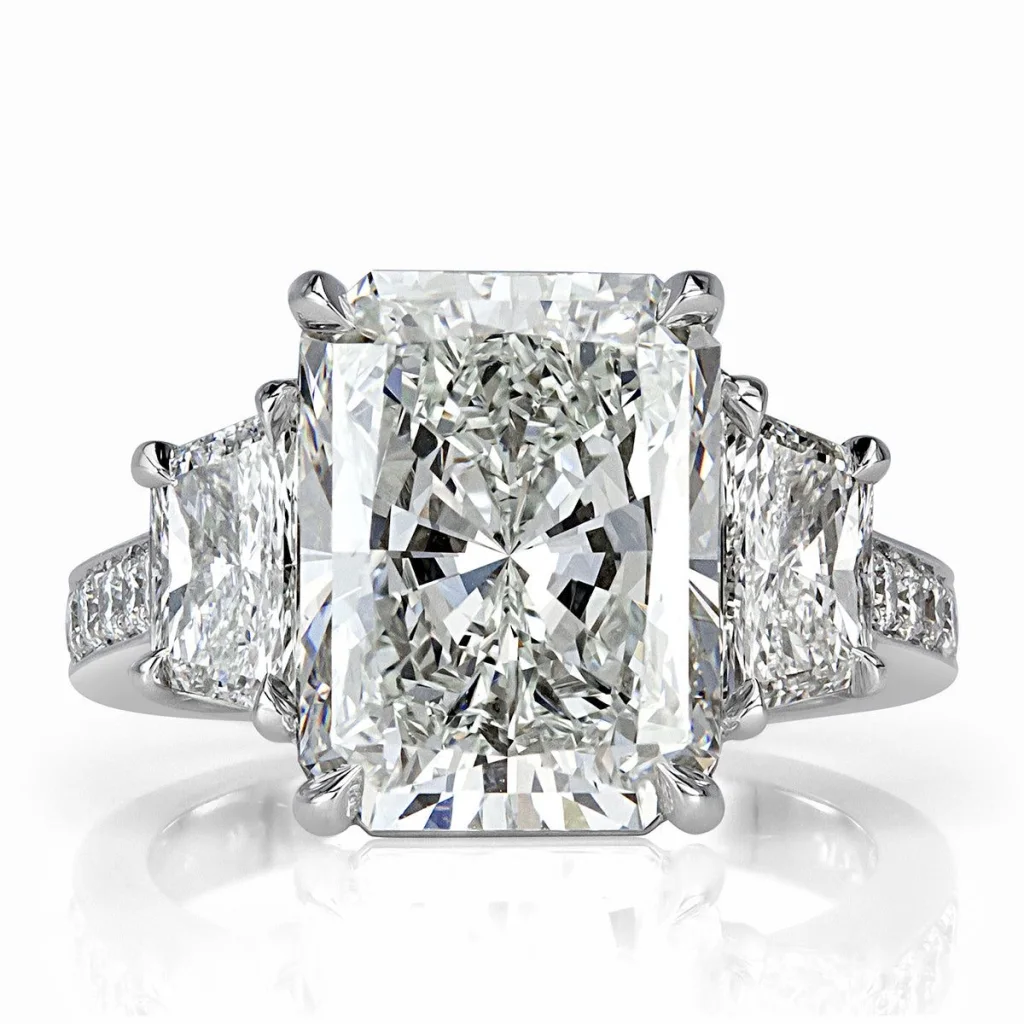 15+ Carat Diamond Price Guide: What It Actually CostsDIAMOND EDUCATION · AUG 31, 2026
 10 Carat Diamond Ring Price Guide: What It Actually CostsDIAMOND EDUCATION · AUG 31, 2026
 9 Carat Diamond Ring Price Guide: What It Actually CostsDIAMOND EDUCATION · AUG 31, 2026
 7 Carat Diamond Ring Price Guide: What It Actually CostsDIAMOND EDUCATION · AUG 31, 2026
 5 Carat Diamond Ring Price Guide: What It Actually CostsDIAMOND EDUCATION · AUG 31, 2026
The Vault, Continued
Every piece one-of-a-kind, every price published. Keep scrolling — the vault does not end here.