Diamond Education · The House Guides
Asscher Cut Diamonds: The Windmill Pattern and How to Buy
The Asscher cut's Art Deco geometry and windmill facet pattern, and how it differs from the emerald cut, across Legacy's collection.
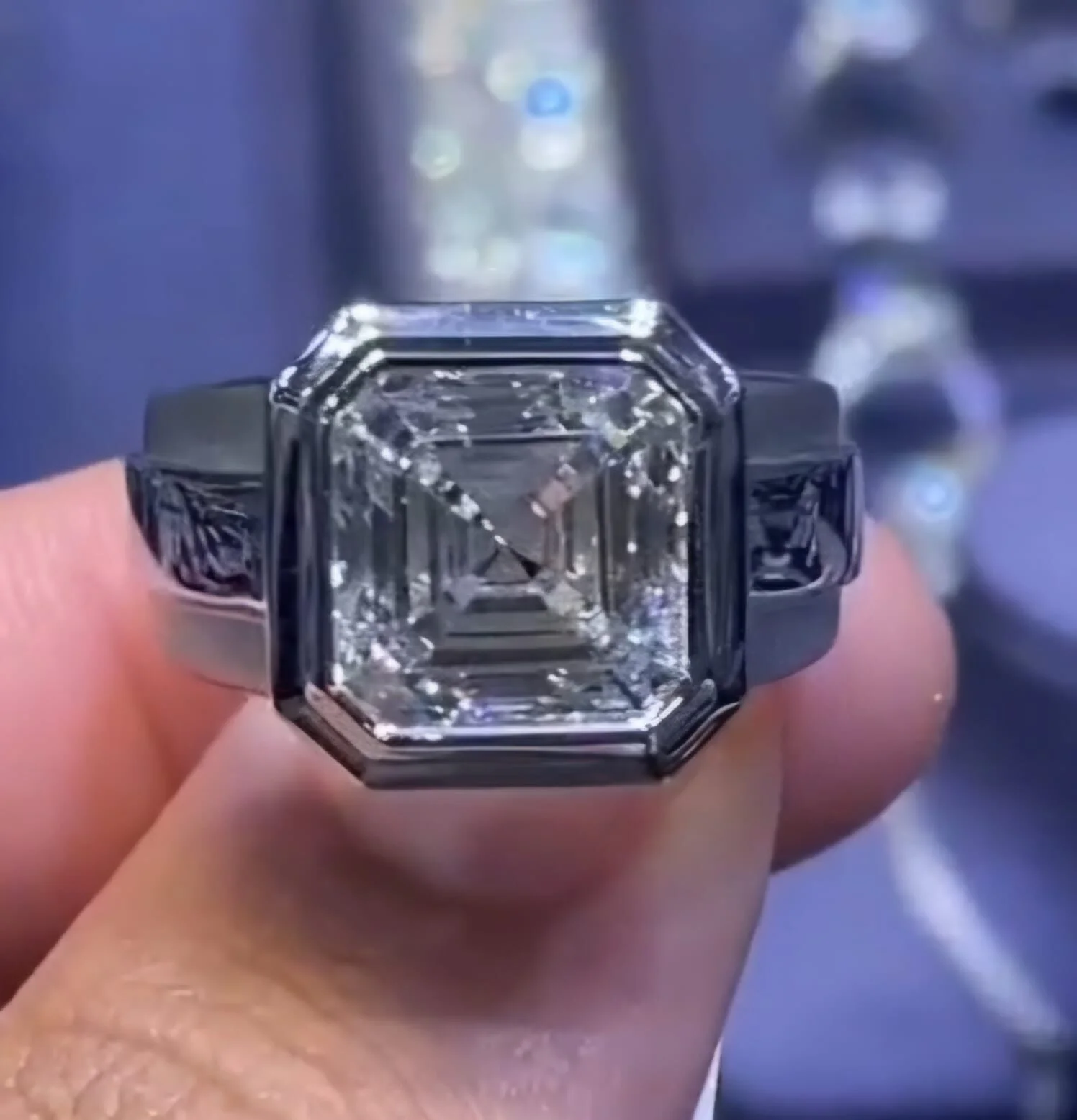
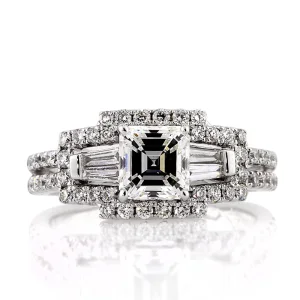
The Asscher is a square step cut, patented in 1902 by the Asscher family of Amsterdam, distinguished by cropped corners, a deep pavilion and a layered facet pattern that produces a hypnotic, windmill-like effect when viewed face-up. It is the rarest cut in Legacy’s collection by volume, and among the most historically specific.
The windmill facet pattern
What sets the Asscher apart optically is the arrangement of its step facets around the table. Rather than running in simple concentric rectangles as in an emerald cut, the Asscher’s facets are cut with a slight pinwheel rotation, radiating outward from the center in a pattern that resembles the sails of a windmill seen from above. Combined with the cut’s characteristically high crown and deep pavilion, this produces a distinctive optical effect: a kind of hall-of-mirrors depth that seems to recede into the stone, rather than the flatter, broader flash of an emerald cut. Under close inspection, the X-shaped cross pattern visible through the table is one of the clearest ways to identify a genuine Asscher at a glance.
Art Deco lineage and why it matters to collectors
The Asscher cut’s patent year of 1902 places it squarely at the origin of the Art Deco movement, and its geometric symmetry made it the signature diamond shape of that era through the 1920s and 1930s. Collectors seeking a genuinely Art Deco aesthetic, as opposed to a modern shape styled to evoke one, often choose the Asscher specifically because it is the one cut whose history and design period align exactly. A modified square emerald cut, sometimes marketed loosely as Asscher-adjacent, does not carry the same windmill facet pattern or the same historical claim, and it is worth confirming with a supplier precisely which cut a stone is before assuming the two are interchangeable.
Clarity: why it matters more with an Asscher
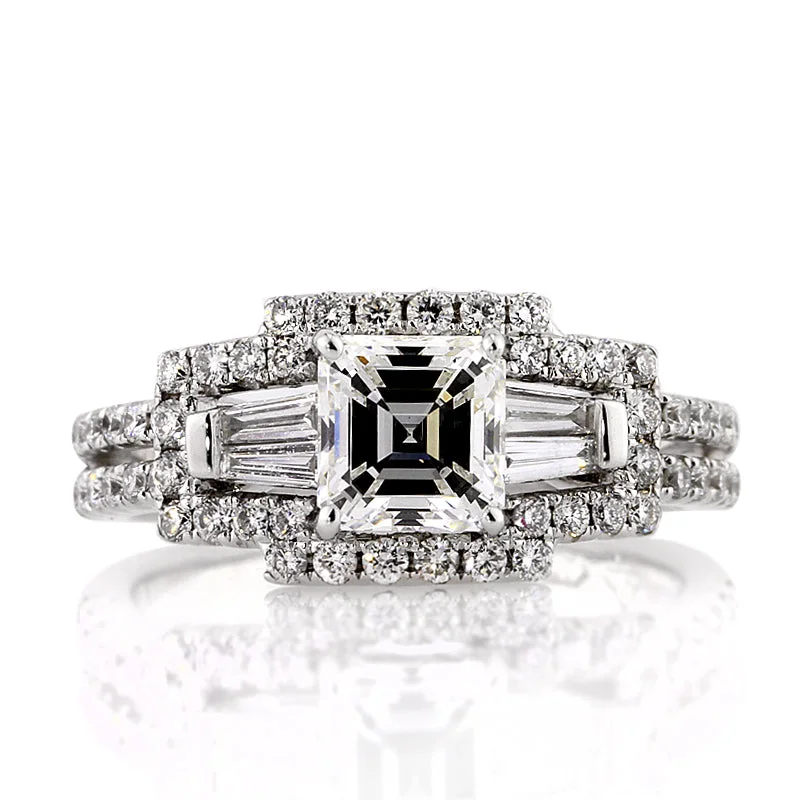
Because step facets are large, flat and open, an Asscher (like an emerald cut) offers inclusions nowhere to hide. A VS2 or SI1 stone that would look entirely clean in a round brilliant or cushion cut can show a visible inclusion in an Asscher’s broad table facet. Collectors buying an Asscher are well advised to prioritise clarity a grade or two higher than they might for a brilliant-style cut of the same carat weight, and to request close-up video of the table facet specifically before purchase, since this is where any inclusion will be most visible.
What sets price across Legacy’s Asscher collection
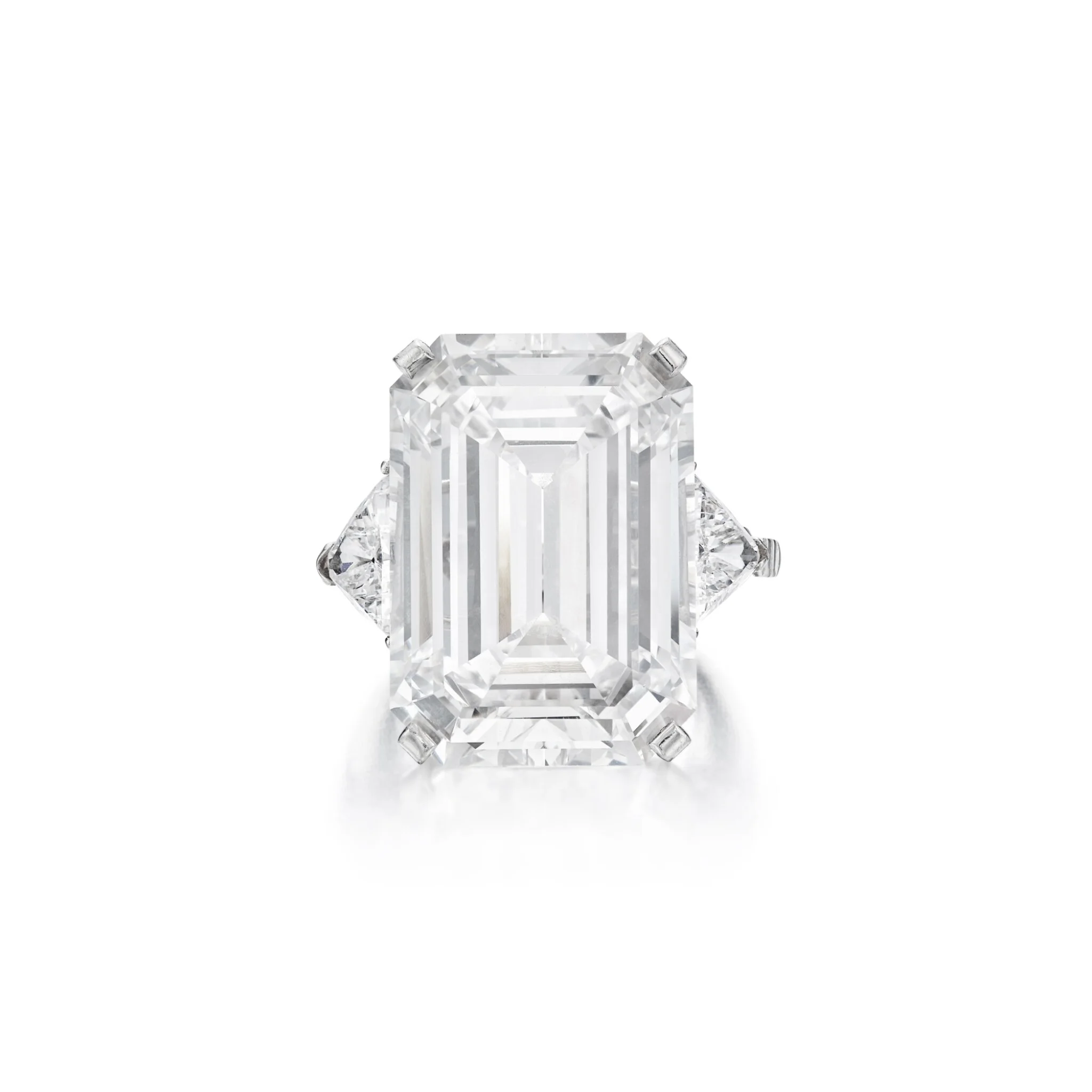
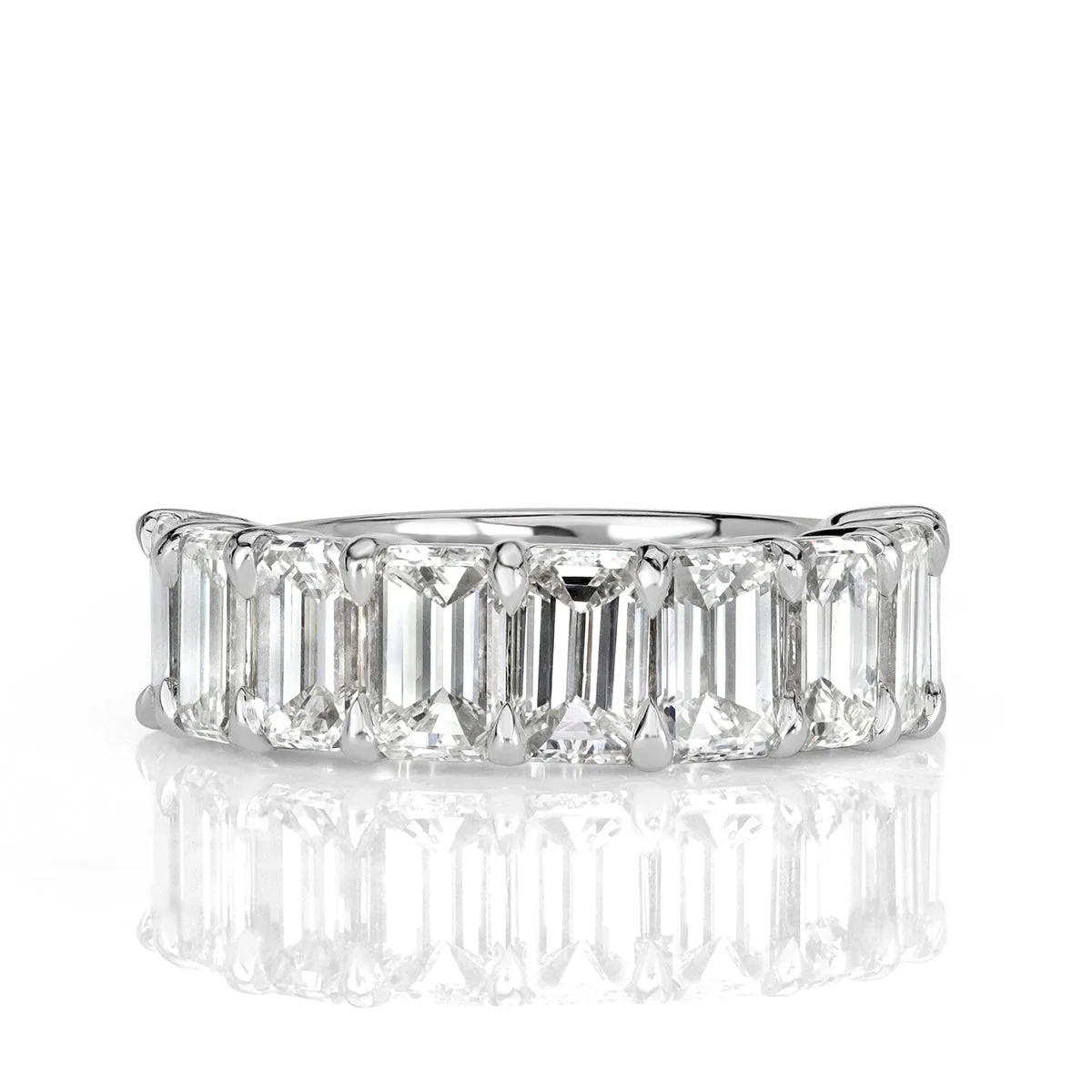
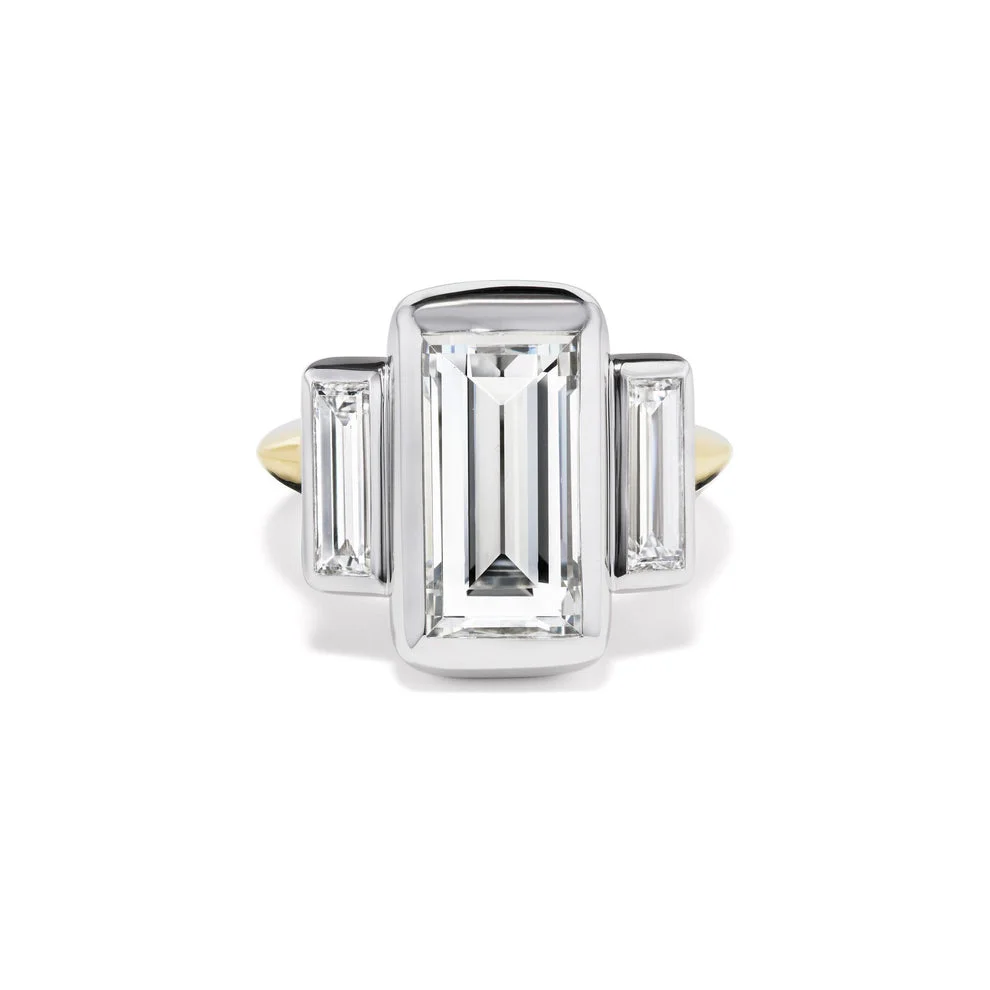
The pattern across these three pieces confirms that carat weight alone does not dictate price within the Asscher category; color, metal and clarity grading move the price independently, and a smaller, exceptionally graded stone can approach the price of a larger one.
Why Asscher cuts carry more weight per millimetre
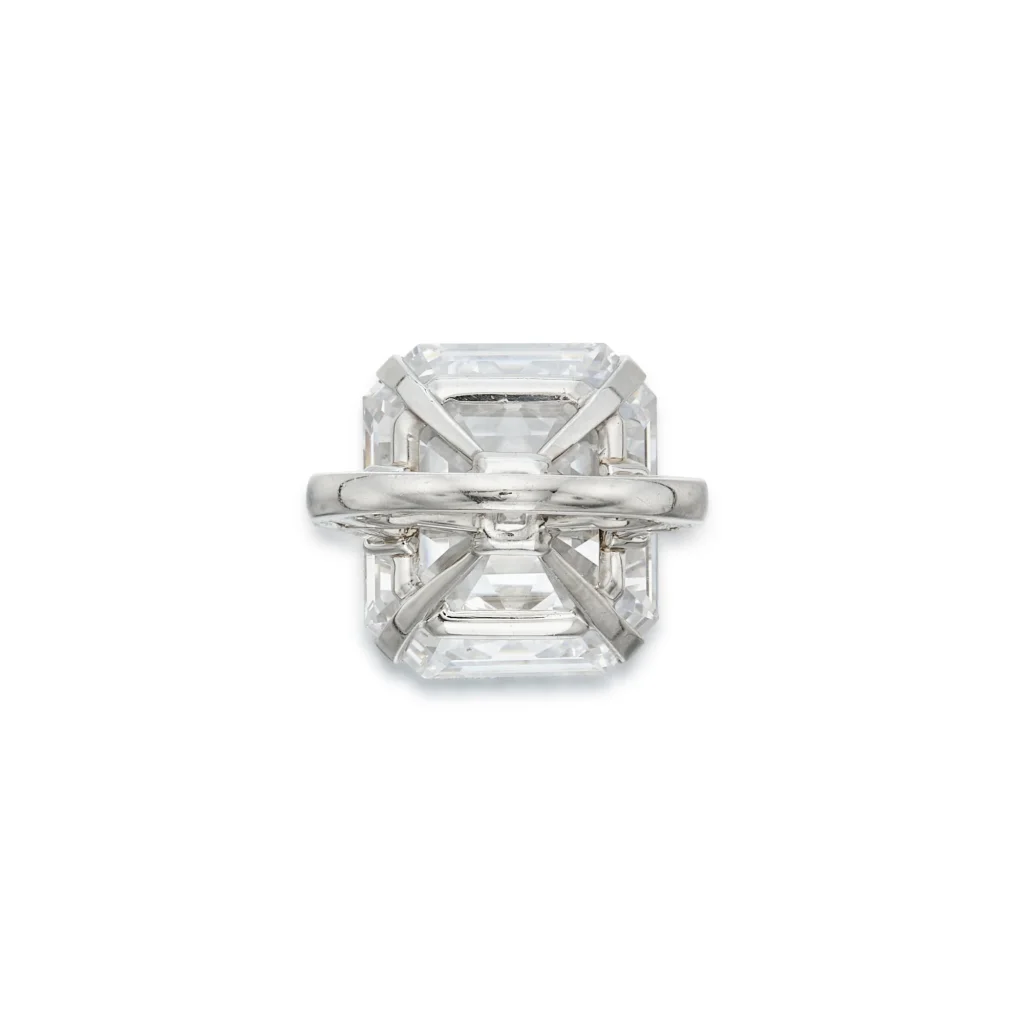
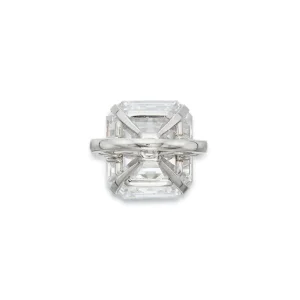
The Asscher’s deep pavilion and high crown mean it holds more of its carat weight below the girdle than most other shapes, including the emerald cut. Practically, this means an Asscher of a given carat weight will often face up slightly smaller than a shallower cut shape, such as an oval or radiant, of the same weight. Collectors accustomed to shopping by carat weight alone are sometimes surprised the first time they see an Asscher in person against a spread-focused shape of equal size on paper. It is a trade worth understanding rather than a drawback: the depth is precisely what produces the cut’s hall-of-mirrors optical effect, and shortening it to maximise face-up spread would flatten the very quality that makes an Asscher recognisable.
Setting an Asscher cut diamond
Because the Asscher’s corners are broader and less acute than a true square emerald cut, though still more angular than a cushion’s rounded pillow shape, corner protection remains a genuine consideration in mount design. Four-prong settings placed directly over the cropped corners are the standard and most protective choice, distributing pressure across the widest, most durable points of the stone rather than its more vulnerable straight edges. A bezel setting is sometimes chosen for an Asscher specifically to showcase the windmill facet pattern uninterrupted by prongs, though this trades away a small amount of light entry from the sides. Split-shank and trellis settings are common on Legacy’s larger Asscher pieces, both because they suit the stone’s geometric symmetry and because they add structural support to a heavier center stone.
Buying an Asscher for its rarity, not only its look
The Asscher is the smallest shape category in Legacy’s collection, held well behind the radiants and ovals that run through the house. Part of this scarcity is deliberate on the cutter’s side: the Asscher’s proportions demand a rough stone of unusually good shape to cut without excessive waste, which makes suitable rough less common than for shapes like the oval or radiant that adapt more readily to irregular rough. For collectors building a collection with an eye to distinctiveness as well as beauty, this scarcity is part of the Asscher’s appeal, a genuinely less common shape with a specific, documentable century-old design history behind it, rather than a modern variation marketed as rare.
Questions collectors ask
What is the difference between an Asscher cut and an emerald cut diamond?
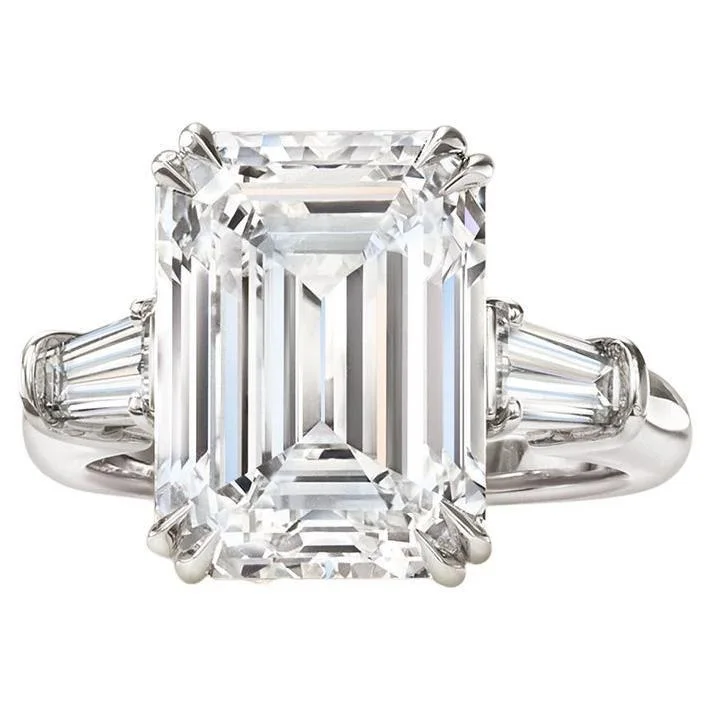
An Asscher is square with a ratio near 1.00 and shows a distinctive windmill facet pattern from its higher crown and deeper pavilion. An emerald cut is rectangular, generally flatter, and shows broader, more open flashes of light rather than the Asscher’s layered depth.
Why are Asscher cut diamonds more expensive?
Cutting an Asscher wastes more of the rough stone than most other shapes, and its open step facets demand higher clarity to look clean, both of which push the price of a well-cut Asscher above many other shapes at comparable carat weight.
Does an Asscher cut diamond hide inclusions well?
No, generally the opposite. Like the emerald cut, its large, flat step facets expose inclusions more readily than a brilliant-style cut, which is why collectors are advised to buy Asscher diamonds a clarity grade or two higher than they might choose for a round or cushion cut.
Is the Asscher cut a good choice for a vintage or Art Deco engagement ring?
Yes, more directly than almost any other shape. The cut was patented in 1902 and was the signature diamond shape of the Art Deco period through the 1920s and 1930s, giving it a genuine historical claim that other geometric cuts styled to look vintage do not share.
Legacy’s Asscher cut diamonds are held within the asscher cut diamond rings collection, with the rarest and largest pieces featured in the high jewelry collection. Collectors comparing the Asscher against its closest relative may also want the emerald cut diamond buying guide. Every Asscher in the collection is independently certified, with the laboratory arranged on request, and offered at one real price with Brink’s-insured delivery worldwide. To view the windmill facet pattern by live video before deciding, book a private consultation.
The Pieces in This GuideThe Vault →
From the Legacy vault — each one-of-a-kind, independently certified.
A private advisor answers on the figures in this guide — and places any piece from the vault within them, certificate first.
More from Diamond EducationAll Guides →
 Diamond Necklace Price Guide: 50 to 100 CaratsDIAMOND EDUCATION · AUG 31, 2026
 15+ Carat Diamond Price Guide: What It Actually CostsDIAMOND EDUCATION · AUG 31, 2026
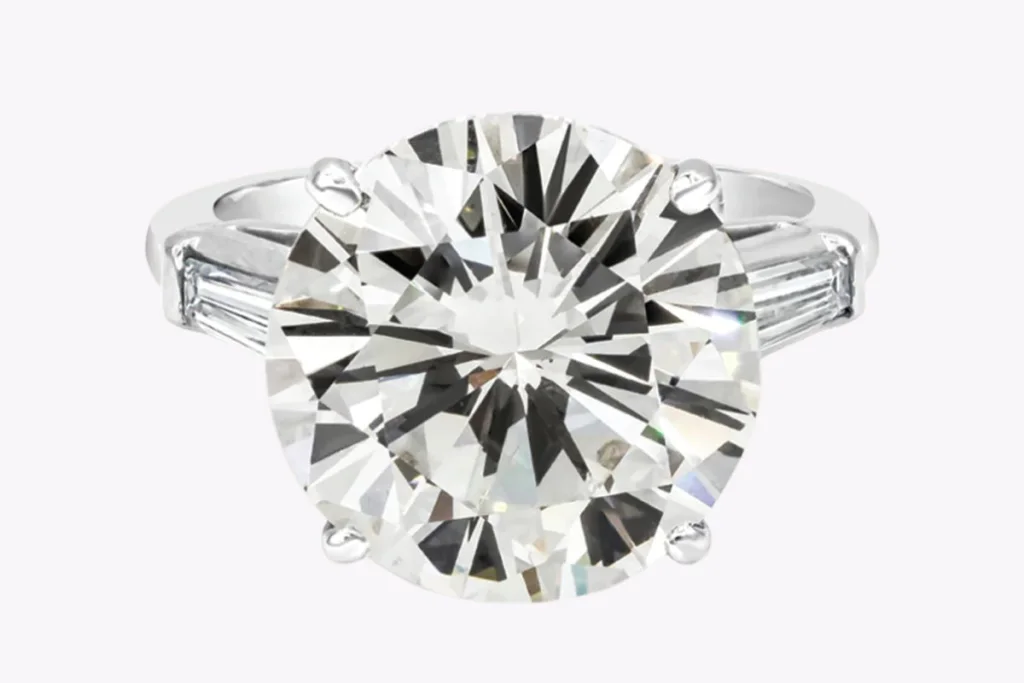 10 Carat Diamond Ring Price Guide: What It Actually CostsDIAMOND EDUCATION · AUG 31, 2026
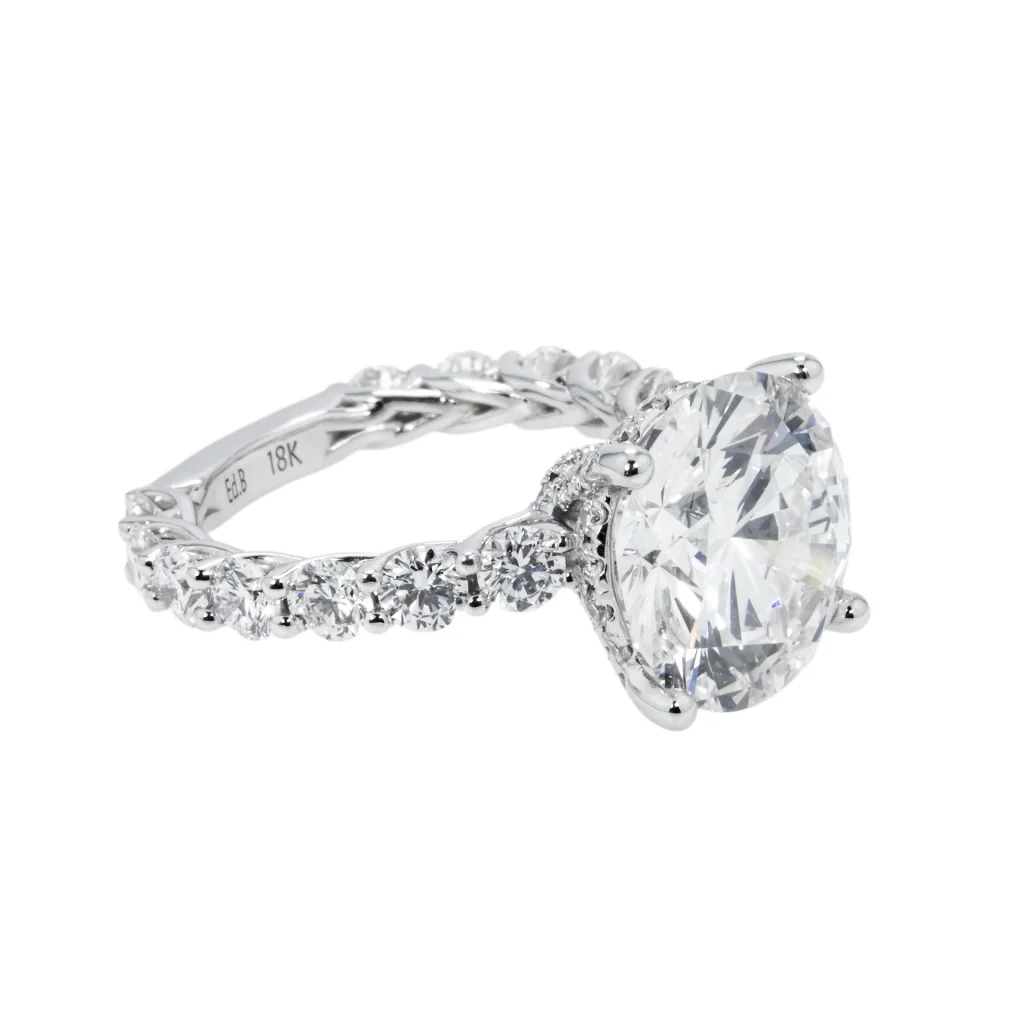 9 Carat Diamond Ring Price Guide: What It Actually CostsDIAMOND EDUCATION · AUG 31, 2026
 7 Carat Diamond Ring Price Guide: What It Actually CostsDIAMOND EDUCATION · AUG 31, 2026
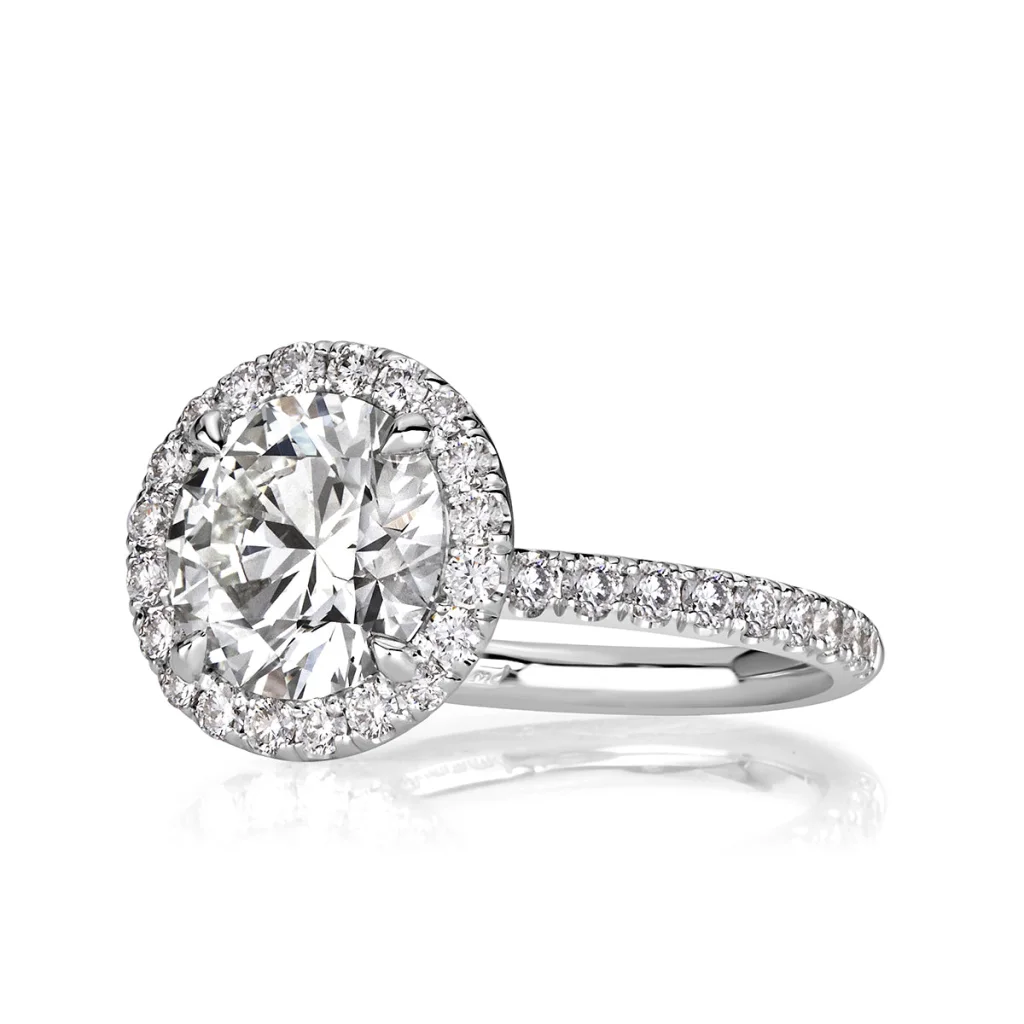 5 Carat Diamond Ring Price Guide: What It Actually CostsDIAMOND EDUCATION · AUG 31, 2026
The Vault, Continued
Every piece one-of-a-kind, every price published. Keep scrolling — the vault does not end here.