Diamond Education · The House Guides
Oval Diamonds: The Complete Buying Guide
An oval diamond's spread-per-carat advantage, honest bow-tie guidance and ratio benchmarks, grounded in Legacy's own collection.
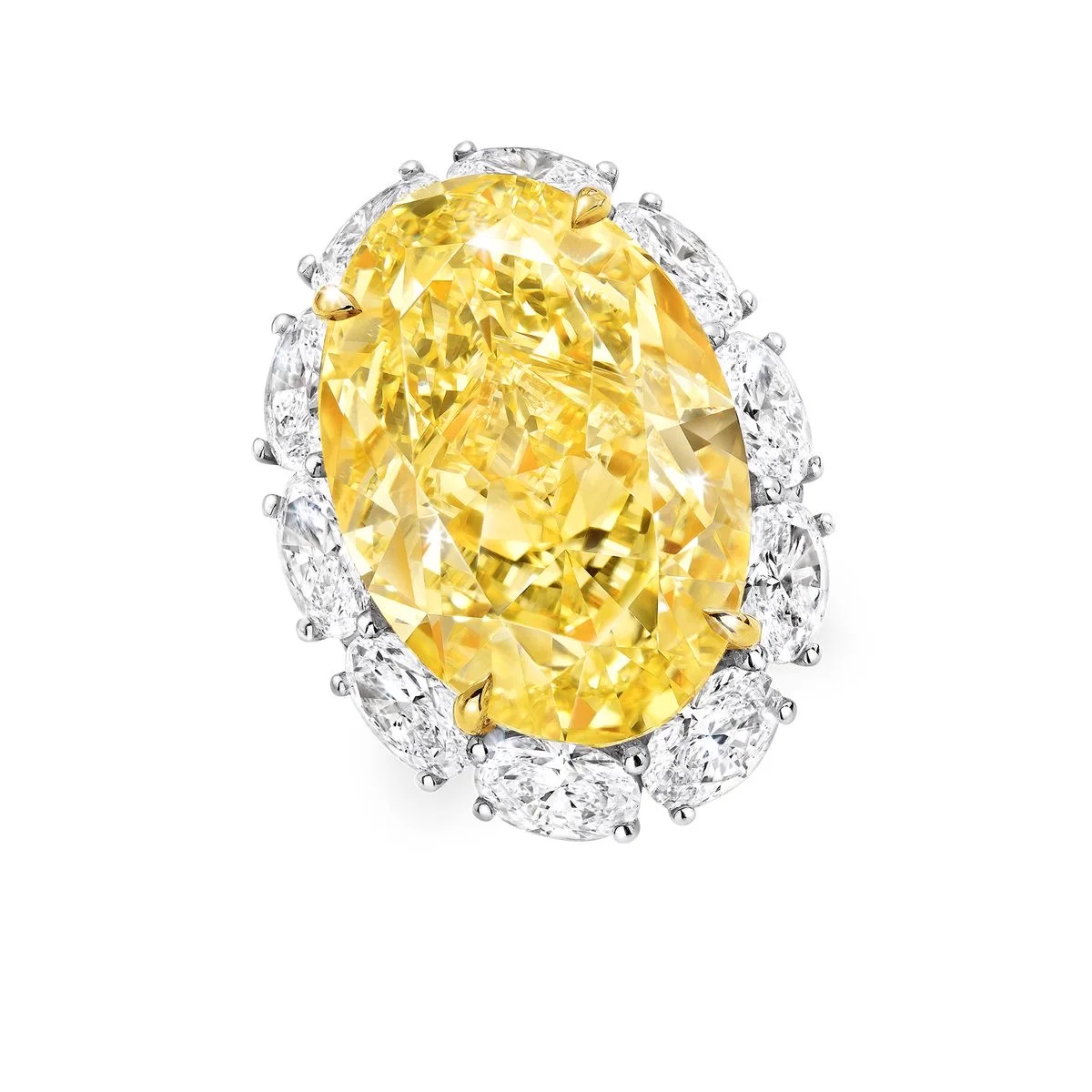
The oval shape is chosen for one reason above all others: its elongated outline returns more visible face-up surface area per carat than a round brilliant of equal weight, which is why it has become the shape collectors reach for when they want a stone that reads larger than its certificate suggests.
Why the oval looks bigger per carat
A round brilliant is constrained by its own geometry: depth and width are fixed in a fairly narrow band to preserve brilliance, so most of a round diamond’s carat weight is held in depth, invisible from above. An oval is cut long. Elongating the outline stretches the same carat weight across a larger table, so two stones of identical carat weight can differ meaningfully in apparent size depending on how elongated the cut is. This is the single most common reason collectors move from round to oval when carat weight is the goal but budget is fixed.
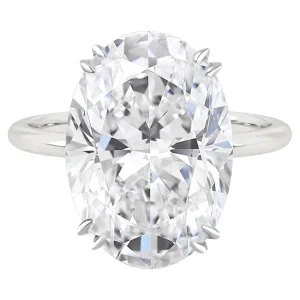
The effect compounds with mounting. A north-south set oval, or one set with a thin pavé shank, exaggerates the elongation further and reads larger again in photographs and in person, which is why so many of Legacy’s oval pieces are set this way.
The bow-tie, explained honestly
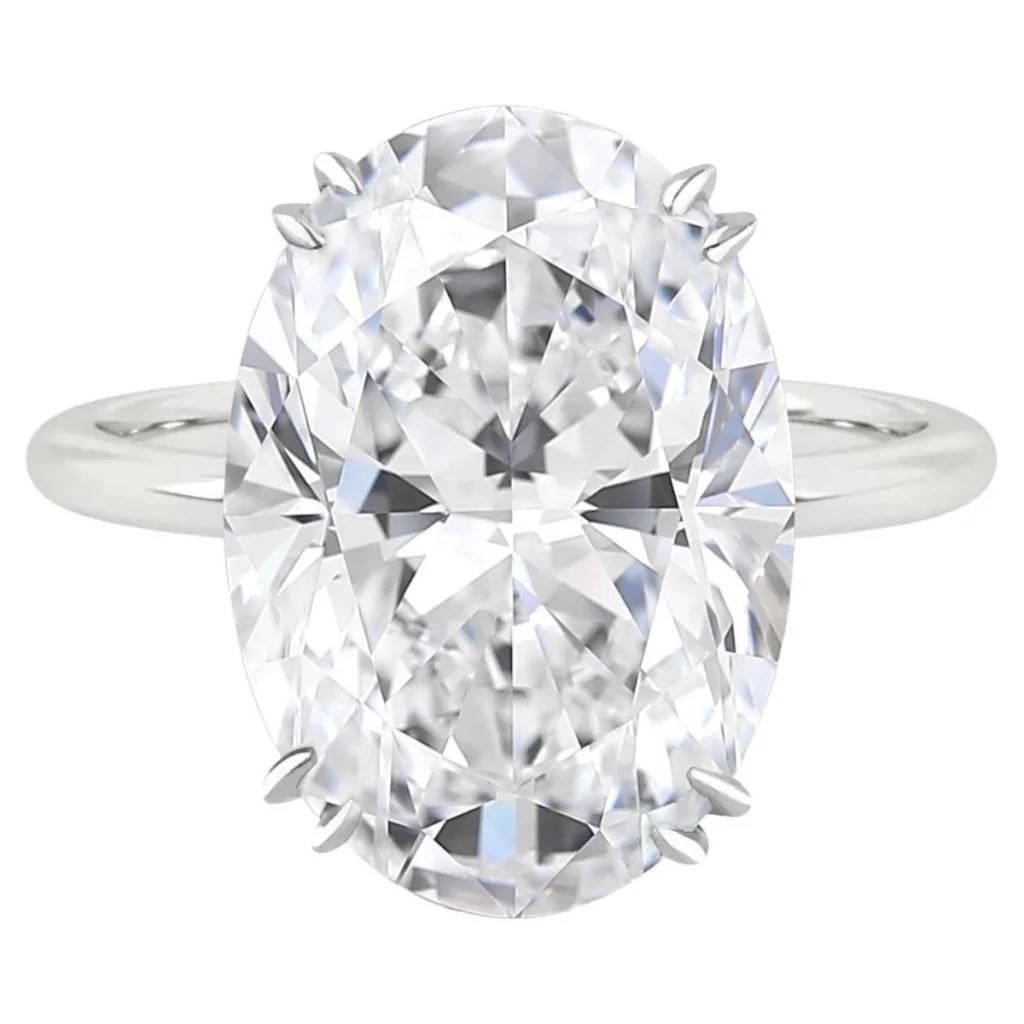
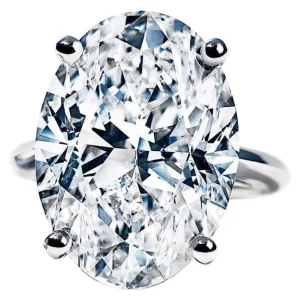
Almost every oval diamond shows some bow-tie: a darker band across the center of the stone caused by the way light travels through an elongated shape and the viewer’s own head shadow. This is not a flaw to be apologised for, and any house that tells you a particular oval has none is not being precise. The real question is degree and placement. A faint, evenly distributed bow-tie that appears and disappears as the stone moves is normal and, on well-cut stones, barely registers to the naked eye. A bow-tie that is dark, static and does not shift under movement usually points to an unbalanced cut, most often uneven pavilion facets or a length-to-width ratio pushed too far for the cutter’s angles.
The only reliable way to judge a bow-tie is to see the stone move, in video or in person, which is why Legacy offers private viewings in person or by live video before any oval leaves the workshop.
What drives price across Legacy’s oval collection
Fancy color ovals, and stones with exceptional cut precision that minimises bow-tie, command a premium over comparably sized colorless stones.
Symmetry and polish: the specs that decide how an oval actually performs
Certificates grade an oval’s symmetry and polish on the same GIA, IGI or HRD scales used for round brilliants, but the tolerance for error is tighter with an elongated shape. A round diamond cut slightly off-center is difficult to detect with the naked eye; an oval cut slightly off-axis, with one end fractionally wider than the other, is often visible without magnification, particularly once mounted and viewed face-up. Collectors comparing two ovals of identical carat, color and clarity should treat symmetry grade as the tie-breaker, since it is the specification most responsible for whether the stone reads as crisp and even or subtly lopsided.
Polish matters for a related reason. An oval’s outline includes a continuous curve rather than the straight facet junctions of a step cut or the repeating pattern of a round brilliant, so any polish lines or naturals left near the girdle are harder to disguise. Excellent polish is worth specifying explicitly when requesting a certificate review, rather than assuming it is implied by a high color and clarity grade.
Comparing oval to other elongated shapes
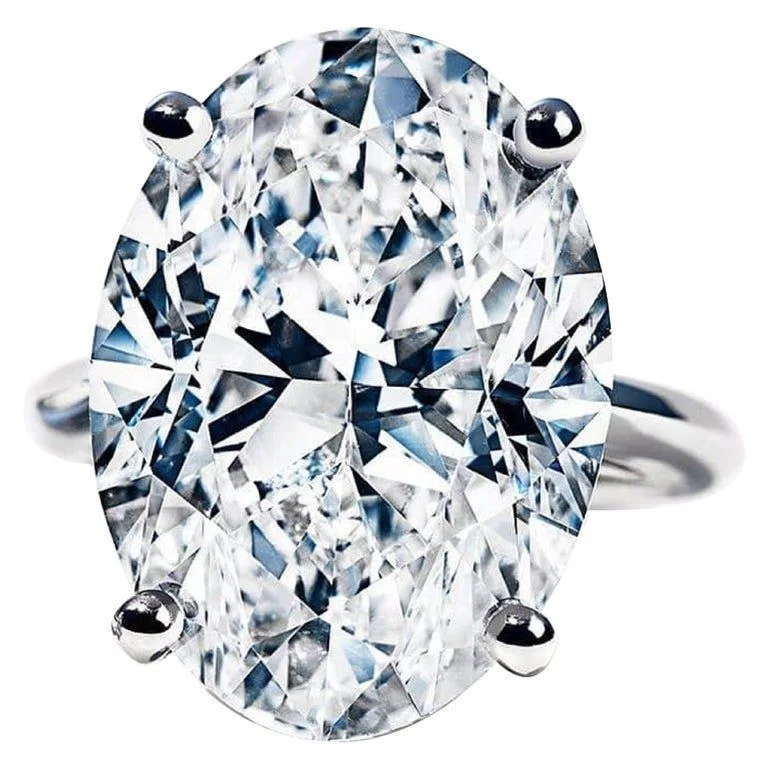
Collectors weighing an oval often have a pear or marquise in mind as well, since all three shapes share the same spread-per-carat logic. The oval’s advantage over both is stability of outline: unlike a pear, it has no single point that can chip in daily wear and requires no protective V-prong tip, and unlike a marquise, its rounded ends are far more forgiving of minor proportion variation. Where a marquise pushes elongation to its most dramatic and a pear introduces directional asymmetry, the oval is the more versatile middle ground, which is a large part of why it remains one of the most consistently requested shapes in Legacy’s own collection.
Setting an oval to its best advantage
A hidden or thin halo tightens the outline and can reduce the visual impact of a mild bow-tie by breaking up the eye’s path across the stone. A trellis or four-prong east-west setting emphasises the elongation collectors are usually paying for in the first place. Pavé on a thin band, rather than a thick polished shank, keeps the eye on the stone’s length rather than the metal, which is consistent with why so many of Legacy’s oval pieces favour slender 14K or 18K shanks over heavier mounts.
Prong placement deserves particular attention with an oval. Prongs set exactly at the widest points of the curve, at the nine and three o’clock positions, protect the stone’s most vulnerable girdle points without interrupting the eye’s read of the outline. Prongs placed even slightly off this axis can visually clip the curve and make a well-cut oval look less symmetrical than it is, a mounting detail worth checking on any oval ring under consideration, whether newly commissioned or bought as a finished piece.
Depth and table percentage for an oval
Beyond ratio, two further proportions are worth requesting before purchase: depth percentage and table percentage. An oval cut too shallow can show a dark void in the center, sometimes called a bow-tie’s more severe cousin, a fish-eye effect where light passes straight through rather than reflecting back to the eye. An oval cut too deep loses brightness and can appear smaller face-up than its carat weight suggests, undermining the very spread advantage that draws most collectors to the shape in the first place. Depth in the 58 to 62 percent range and a table between 55 and 65 percent are reasonable starting benchmarks, though the ideal figures shift slightly with the chosen length-to-width ratio, which is another reason a certificate should always be read alongside video of the stone rather than in isolation.
Questions collectors ask
Does every oval diamond have a bow-tie?
Nearly all do to some degree, because the effect is inherent to elongated cuts under normal lighting and viewing angles. What varies is how visible it is and whether it moves naturally with the stone rather than sitting as a fixed dark patch.
What is the best length-to-width ratio for an oval engagement ring?
Most collectors are happiest between 1.35 and 1.50, which reads as a clearly elongated but still balanced oval. Ratios above 1.60 are a deliberate style choice and carry more cutting risk.
Is an oval diamond cheaper than a round diamond of the same carat weight?
Often, yes, because ovals typically carry less waste from the rough stone during cutting, though the effect varies by individual stone and by color and clarity grade.
Can I choose which laboratory certifies an oval diamond?
Yes. Every stone in Legacy’s collection is independently certified, and the laboratory, GIA, IGI or HRD, is arranged on request so the choice sits with the client.
Legacy’s full range of oval diamonds sits within the rings collection, with the largest stones concentrated in the 3-carat-and-above engagement ring collection. For a side-by-side sense of how oval compares with other shapes for apparent size, the guide on which diamond shape looks biggest per carat is a useful companion. Every piece is offered at one real price, with private suggestions welcomed, and Brink’s-insured delivery worldwide. To view specific stones by live video or arrange an in-person viewing, book a private consultation.
Shop this in the collection
Ready to view now: 3 carat oval diamond rings · 7 carat oval diamond rings · 6 carat oval diamond rings.
Shop this in the collection
Ready to view now: 8 carat oval · 7 carat oval · 6 carat oval · 3 carat oval.
The Pieces in This GuideThe Vault →
From the Legacy vault — each one-of-a-kind, independently certified.
A private advisor answers on the figures in this guide — and places any piece from the vault within them, certificate first.
More from Diamond EducationAll Guides →
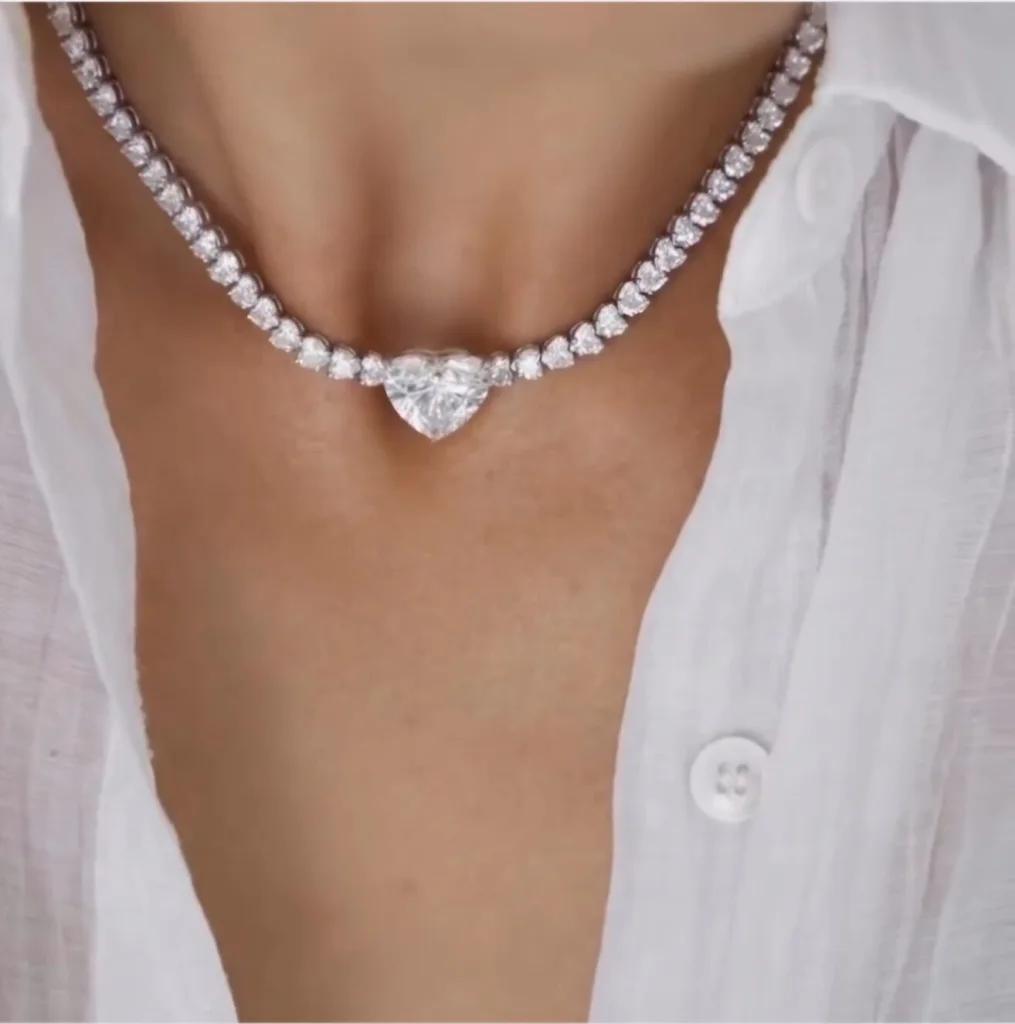 Diamond Necklace Price Guide: 50 to 100 CaratsDIAMOND EDUCATION · AUG 31, 2026
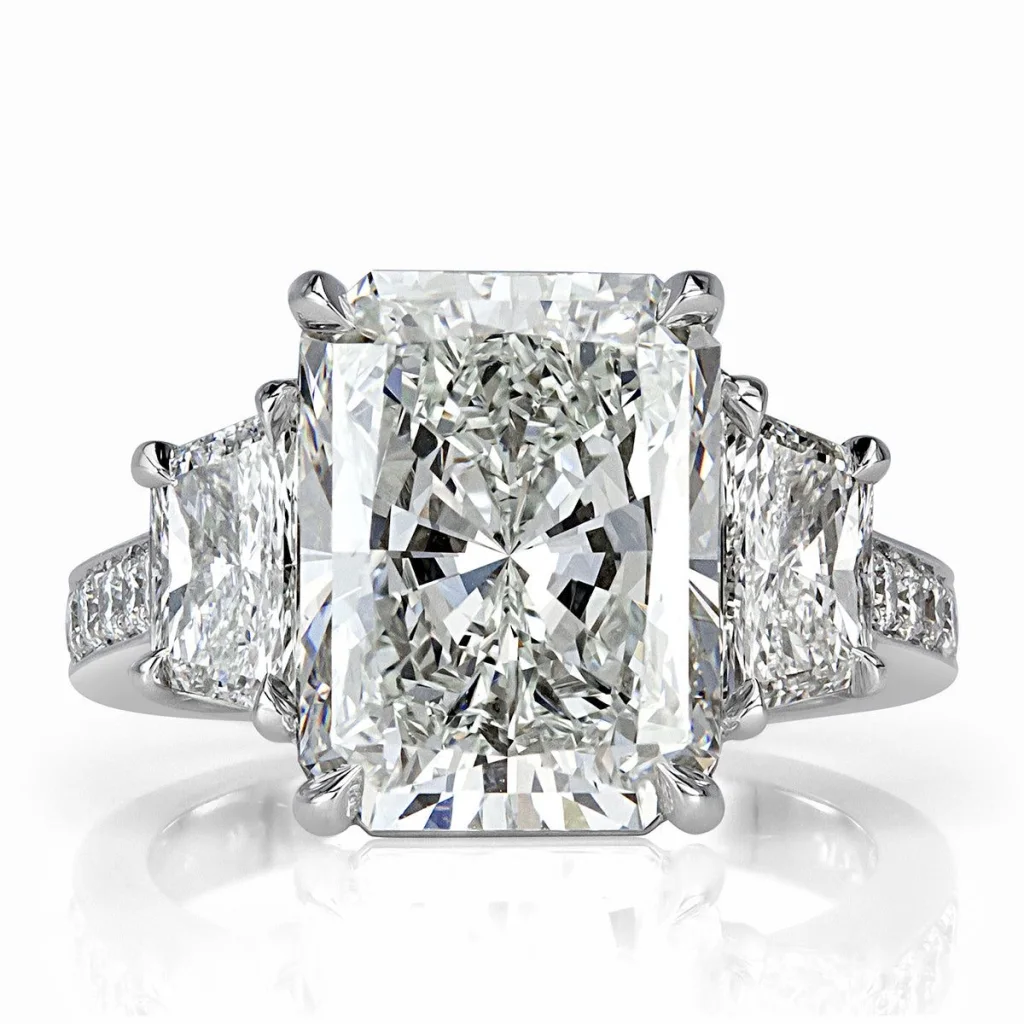 15+ Carat Diamond Price Guide: What It Actually CostsDIAMOND EDUCATION · AUG 31, 2026
 10 Carat Diamond Ring Price Guide: What It Actually CostsDIAMOND EDUCATION · AUG 31, 2026
 9 Carat Diamond Ring Price Guide: What It Actually CostsDIAMOND EDUCATION · AUG 31, 2026
 7 Carat Diamond Ring Price Guide: What It Actually CostsDIAMOND EDUCATION · AUG 31, 2026
 5 Carat Diamond Ring Price Guide: What It Actually CostsDIAMOND EDUCATION · AUG 31, 2026
The Vault, Continued
Every piece one-of-a-kind, every price published. Keep scrolling — the vault does not end here.